To put a line on a fishing rod, thread the line through the guides from the tip down to the reel, tie it to the spool using an arbor knot, and wind it on evenly under light tension.
Knowing how to put a line on a fishing rod correctly makes a real difference on the water. A poorly spooled line twists, tangles, and reduces your casting distance from the very first cast.
This guide covers everything you need to get set up fast and right. From choosing the correct line to avoiding common spooling mistakes, you will be ready to fish in just a few minutes.
What You Need Before You Start
Getting everything ready before you start saves time and prevents mistakes. Having the right tools and knowing your gear setup makes the whole spooling process much smoother from the beginning.
- Fishing rod: Any rod style works – spinning, baitcasting, or fly rod.
- Fishing reel: Match the reel type to your rod for proper fit and function.
- Fishing line: Choose monofilament, fluorocarbon, or braided line based on your target species.
- Scissors or line cutters: Used to trim the tag end cleanly after tying your knot.
- Wet cloth or glove: Helps apply light tension to the line while winding onto the spool.
- Pencil or dowel: Thread through the line spool to hold it steady while spooling.
- Line clamp or finger: Keeps tension even as you crank the line onto the reel spool.
How to Put Line on a Spinning Rod
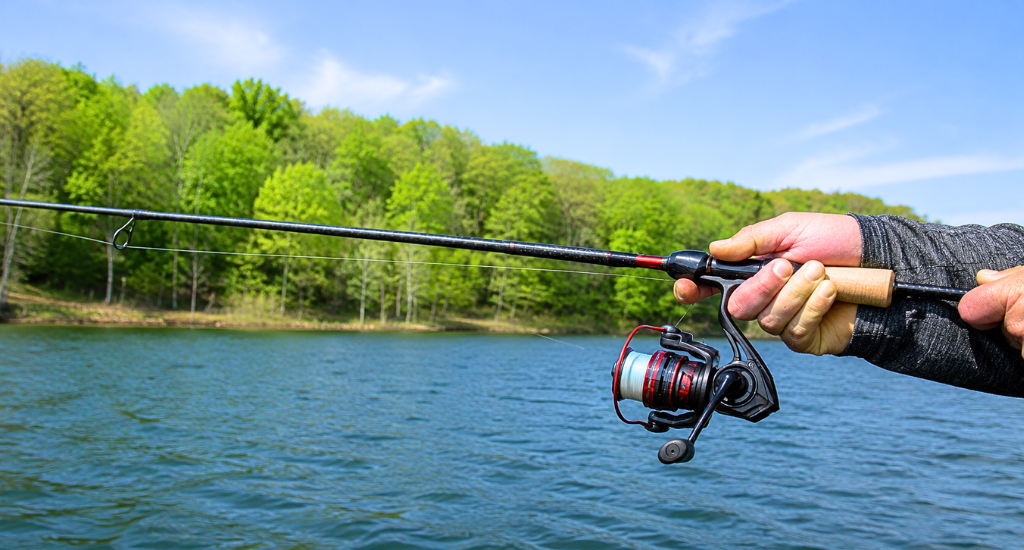
A spinning rod is the most common setup for beginners. Learning to put a line on a fishing rod starts here because the process is straightforward to repeat each time correctly.
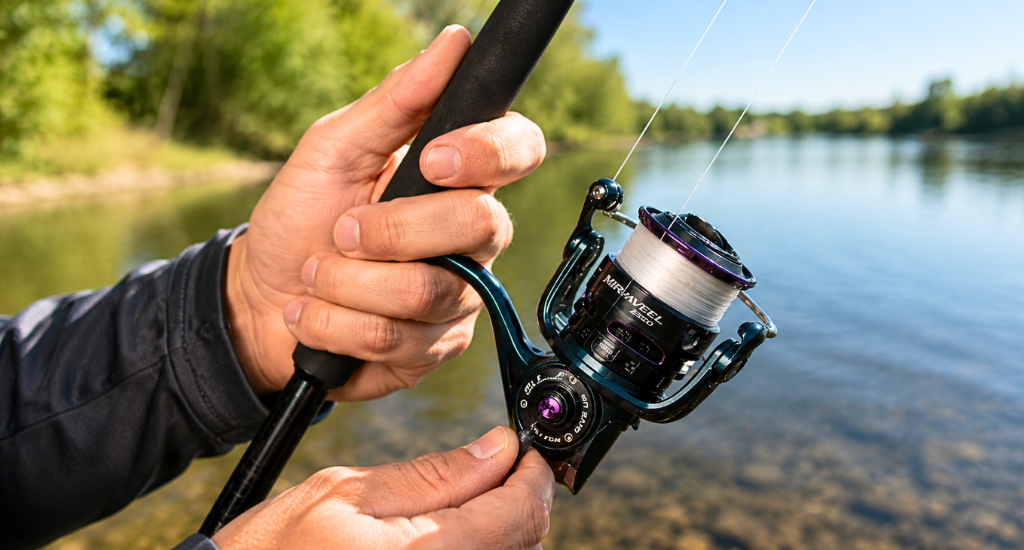
Step 1: Thread the Line Through the Guides
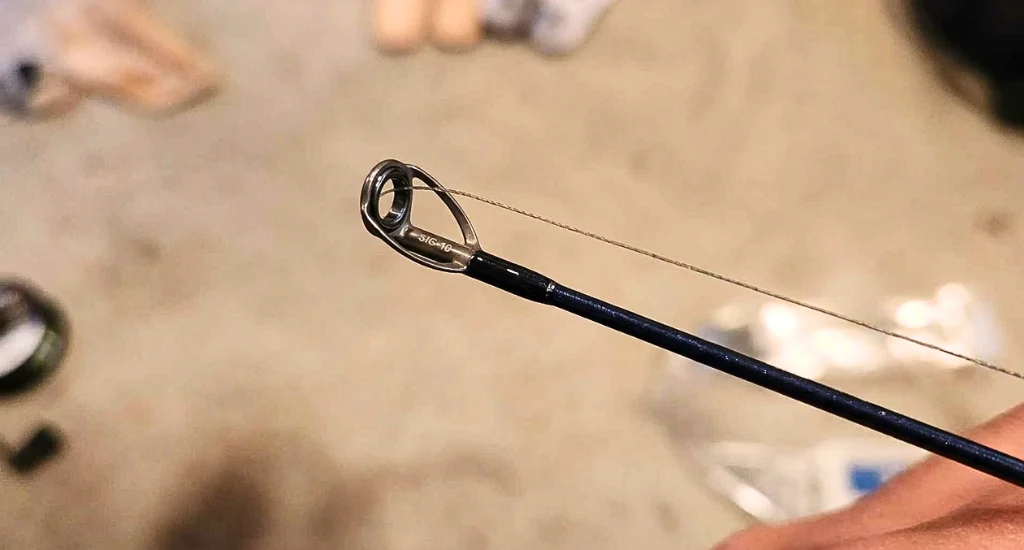
Start at the tip guide and thread the line down through each guide toward the reel. Make sure you do not miss any guides along the way. Open the bail on your spinning reel before threading the line through the last guide closest to the reel seat.
Step 2: Attach the Line to the Spool
Wrap the line around the spool and tie an arbor knot to secure it. Tie a simple overhand knot around the main line and another overhand knot at the tag end as a stopper. Pull the knot tight against the spool so it does not slip when you start winding.
Step 3: Load Line Without Twist
A spinning reel used for finesse fishing needs line loaded with the spool face pointing up toward the reel. The line should come off the supply spool in the same rotational direction as the reel winds. If you see loops forming, flip the supply spool over to fix the direction immediately.
Step 4: Check Tension and Fill Level
Hold the line between your fingers with a wet cloth to apply steady tension as you crank. Fill the spool to about one-eighth of an inch from the rim. Overfilling causes the line to spill off during casting and creates tangles that are very hard to clear quickly.
How to Put Line on a Baitcasting Rod
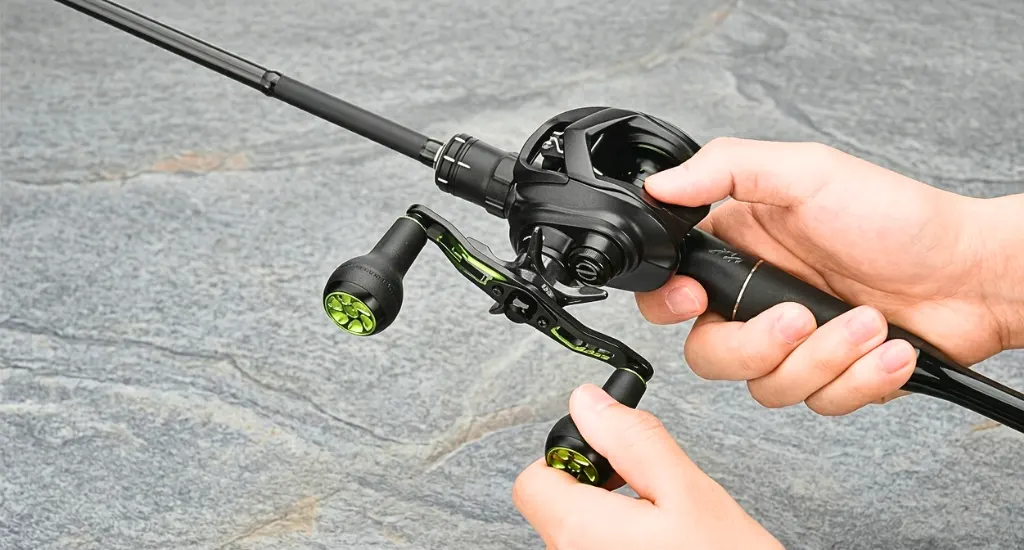
Baitcasting setups handle heavier line and offer more casting control than spinning gear. Knowing how to put a new line on a fishing rod with a baitcaster takes a little more care, but it is not complicated.
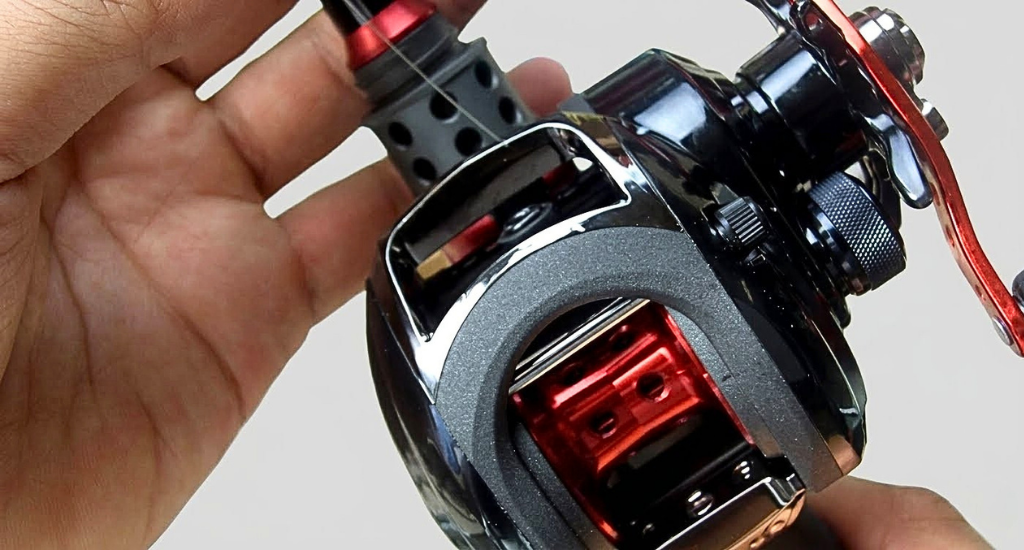
Step 1: Understand the Differences from Spinning
Action or power fishing rods paired with baitcast reels require the line to feed straight off the supply spool. Unlike spinning reels, baitcasting spools rotate during casting. This means line twist is less of an issue, but even tension during spooling is more important.
Step 2: Thread the Line Through the Guides
Run the line through the level wind guide on the reel first, then thread it back through each rod guide from bottom to top. The level wind guide is the small moving piece that distributes line evenly across the spool as you reel in. Missing it causes uneven line lay and casting problems.
Step 3: Tie Off and Start Winding
Tie the line to the spool using an arbor knot, just like you would on a spinning reel. Hold the supply spool so the line feeds off the top with the label facing up. This keeps the line feeding in the correct direction and reduces the chance of memory coils forming on the spool.
Step 4: Fill the Spool Evenly Under Tension
Apply firm, steady tension with a cloth as you wind the line onto the baitcast spool. Fill to about an eighth of an inch from the rim, the same as a spinning reel. An uneven or loose line on a baitcaster leads to backlash on the very first cast of the day.
Common Mistakes to Avoid When Spooling a Fishing Rod
Most spooling problems come down to a few repeatable errors. Learning to put fishing line on a rod and reel correctly means knowing what to watch for before these mistakes affect your fishing.
Overfilling the Spool
Filling the spool past the recommended level causes the line to fall off the rim in loose coils during a cast. This creates instant tangles at the guides and wastes the first few minutes of your fishing session untangling line before you can even make a proper cast.
Underfilling the Spool
Too little line on the spool reduces casting distance significantly and puts extra stress on the knot at the spool arbor. Most reels cast best when filled to within one-eighth of an inch of the rim. Check the reel body for the recommended line capacity printed directly on it.
Line Twist During Loading
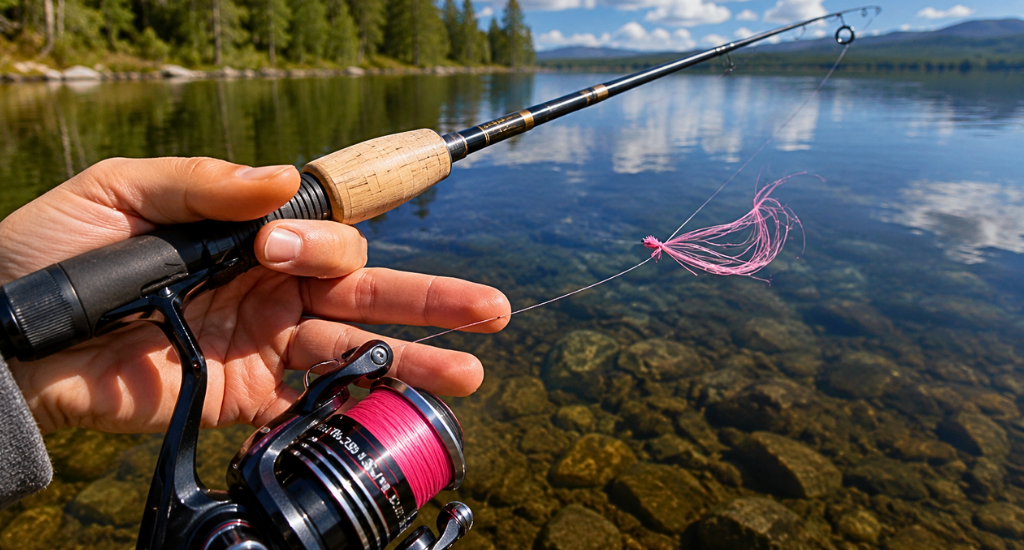
Line twist happens when the supply spool and reel spool rotate in opposite directions. Always check the rotational direction before you start winding, and flip the supply spool if you see loops forming. Twisted line causes knots and wind knots that shorten the useful life of your line quickly.
Using the Wrong Knot
A loose or slipping knot at the spool arbor means the entire line spins freely instead of winding on. Always use an arbor knot with a stopper overhand knot at the tag end. Pull the knot snug before winding so it grips the spool core firmly from the very first wrap.
Skipping Tension During Winding
A winding line, even if loose, causes it to dig into itself under the pressure of a fighting fish. If you use a fishing reel with no anti-reverse trigger and a loose spool, the line beds in deep and causes mid-fight tangles. Always apply firm finger tension throughout the entire spooling process.
How to Choose the Right Fishing Line for Your Rod
Using the wrong line for your rod causes problems with casting, sensitivity, and hook sets. Matching your line to your rod rating is one of the most important decisions you make before spooling up.
Matching Line Weight to Rod Rating
Every rod has a recommended line weight printed on the blank near the handle. Using a line that is too heavy makes the rod stiff and reduces casting distance noticeably. Using a line that is too light puts extra stress on the rod and risks breakage during a hard fight with a fish.
Monofilament Line
Monofilament is the most beginner-friendly option because it is affordable, easy to knot, and forgiving under pressure. It has a natural stretch that absorbs sudden runs from fish, which helps protect light tippets and hooks. Mono works well on both spinning and baitcasting reels for most general freshwater applications.
Fluorocarbon Line
Fluorocarbon is nearly invisible underwater, which makes it a strong choice for clear water and pressured fish. It is denser than monofilament and sinks faster, which helps with bottom fishing presentations. Fluoro has less stretch than mono, so hooksets feel more direct and immediate on the rod tip.
Braided Line
Braid has zero stretch and an extremely thin diameter relative to its breaking strength. This makes it ideal for feeling subtle bites and fishing heavy cover where pulling power matters most. Braid also lasts much longer than mono or fluoro before needing replacement, which makes it cost-effective over a full season.
Final Thought
Spooling a rod correctly takes less than ten minutes once you know the steps. Thread the guides, tie a solid arbor knot, apply steady tension, and fill to the right level. Getting these basics right means fewer tangles and better casts from the moment you hit the water.
Practice spooling at home before your next trip so it feels natural. Check your line regularly for wear, twist, or damage and replace it when needed. A fresh, properly loaded line is one of the simplest ways to improve your fishing results right away.
FAQs
How much line should you put on a fishing rod?
Fill the spool to within one-eighth of an inch from the rim. Most reels need between 100 and 200 yards, depending on line weight. Check the line capacity stamped on your reel body for the exact recommended amount before spooling up.
Which way do you wind the line onto a spinning reel?
Wind the line in the same direction the bail rotates when you turn the handle. Hold the supply spool face up and check that the line comes off in the same rotational direction. Flip the supply spool over if you notice twisting forming during the first few wraps.
What is the best knot to attach a line to a reel spool?
The arbor knot is the standard choice for attaching line to any reel spool. Wrap the line around the arbor, tie an overhand knot around the main line, and add a stopper knot at the tag end. Pull everything snug before you begin winding line onto the spool.