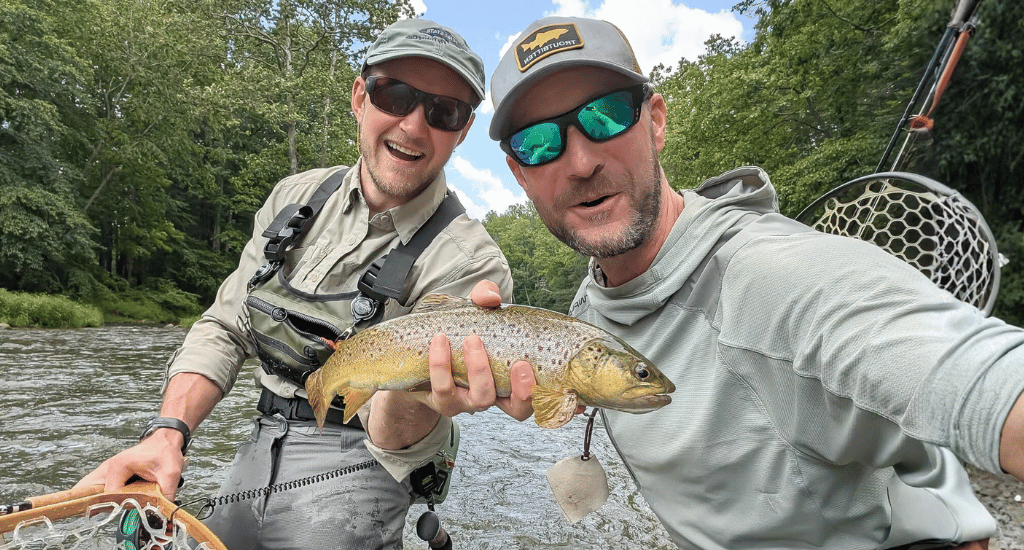
I have guided on Gulf Coast rivers for over two decades, and the most common mistake I see is not a bad cast or a wrong fly. It’s too much gear.
One July morning, running late, I left most of it in the truck. Rod in hand, dry fly on the leader, floatant and nippers in one shirt pocket, a small fly puck and tippet in the other. That was everything.
I caught fish. Good ones. And by the time I walked back to the truck, I understood something that 24 years on the water had not fully taught me yet. Carrying less does not limit your fishing. It sharpens it.
What Does Shirt Pocket Fishing Actually Mean?
Shirt pocket fishing means carrying only what fits in the pockets of your fishing shirt and leaving everything else behind. It is not a gear philosophy or a challenge. It is a deliberate choice that changes how you approach the water before you even make a cast. This stripped-down approach works especially well in calm, stillwater environments, similar to the techniques discussed in fly fishing in a float tube for quiet and controlled presentations.
Most anglers, myself included for most of my career, treat versatility as the goal. Every box, every rig, every contingency covered. The problem is that all those options create noise. When you can reach for something different at any moment, you rarely commit fully to what is already on the end of your line.
Leaving the pack at the truck removes that noise. Your mindset shifts the moment you close the tailgate and walk away. You stop managing options and start fishing.
What Goes in the Pockets and What Stays at the Truck
After 24 years of guiding, I can tell you exactly what fits and what does not.
In the pockets: floatant, nippers, forceps, a slim fly puck with four or five dry flies, and a short coil of tippet. That is one pocket for tools, one pocket for flies and line. Everything within reach, nothing to dig for.
At the truck: the full fly box collection, split shot, tippet spools, nymph rigs, streamer wallets, the landing net, and the wading pack. All of it stays. If it does not fit in those two pockets, it does not come.
The contrast between those two lists tells the whole story better than I can. When you cannot reach for something else, you fish with what you have with full commitment. That is when things get interesting.
What Are Fishing Shirt Pockets Actually Designed For?
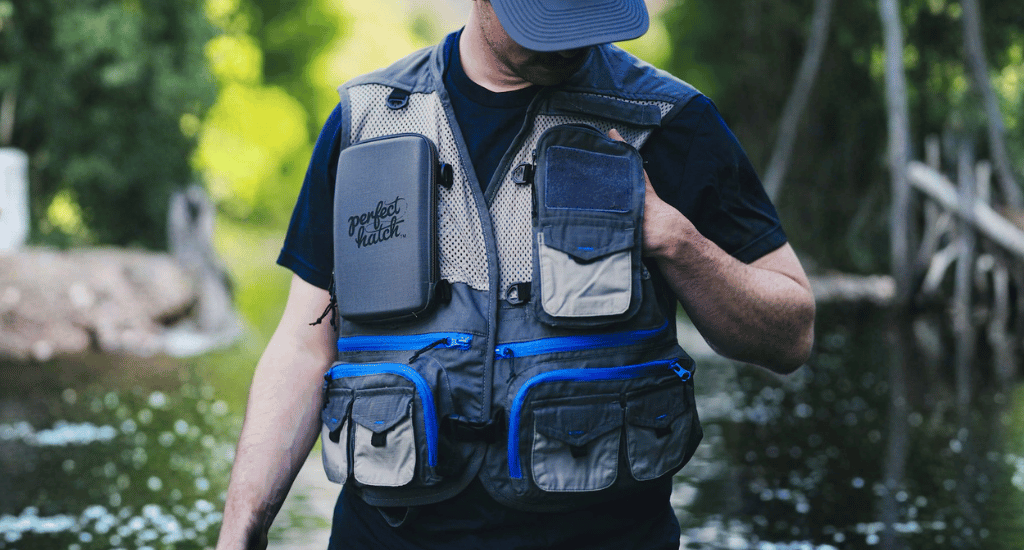
Fishing shirt pockets are designed to keep essential tackle, tools, and personal items within one-handed reach without the bulk of a vest or pack. They are purpose-built for deeper, more structured, and secured with a proper closure. Unlike the shallow, open pocket on a regular t-shirt that drops your forceps the moment you lean over a fish.
I have worn both on the water. The difference is not subtle. A purpose-built fishing shirt pocket holds its shape, stays closed when you need it to, and puts everything exactly where your hand expects it.
What Is the Loop on a Fishing Shirt Pocket For?
The loop sewn onto the flap of a fishing shirt pocket is a rod holder. You slip the rod handle through it so the rod stays against your body, hands-free, while you tie a knot, unhook a fish, or work through a fast wading section.
What it does well is distribute the rod’s weight evenly across the shirt rather than letting it hang from one point and pull. On a long morning session, that matters more than it sounds. I use the rod loop most when I am landing a fish alone, without a net. Both hands go to the fish, the rod stays put, and nothing gets dropped or dragged through the current.
Do You Need a Zipper Pocket on a Fishing Shirt?
A zipper pocket is worth having in specific situations. If you are deep wading, fishing in rough water, or carrying a phone or cards, a zipper keeps everything locked in place through bends, reaches, and the occasional stumble in fast current.
For a standard shirt-pocket fishing session in calm, familiar water, a button or Velcro flap holds everything well enough. The flies stay put, the forceps do not shift, and you never need to fight a zipper with wet hands.
My recommendation after years of fishing both: get a shirt with at least one zippered pocket and one standard chest pocket. Use the zipper for your phone and anything you cannot afford to lose. Use the open pocket for the gear you are reaching into all morning.
How to Fish a Full Session From Two Shirt Pockets
The mechanics of shirt pocket fishing are simple. The discipline is not.
Choose One Fly and Commit to It
The most important decision in a shirt pocket session happens at the tailgate, not at the water. Before I walk away from the truck, I look at the time of year, think about what has been hatching on that stretch of river, and pick two flies at most. Usually one.
In July, on my home water, that means a dry ant in size 18 or 20. Maybe a small beetle if the morning has been calm and the fish are sitting tight to the bank. I put them in the puck and close it.
What that choice does is remove the negotiation. On a fully loaded day, the moment a fish refuses, most anglers start cycling through options. With one fly in your pocket, you cycle through your presentation instead. You slow down, you reread the water, you figure out what the cast got wrong. That is where the skill actually builds.
Get the First Cast Right Because You May Not Get a Second
Clear summer water punishes hesitation. I have watched clients blow a rising fish by rushing the setup, placing the tippet across the fish’s sightline, or letting the fly drag two inches after it landed. The fish saw all of it and pulled off position before the fly had a chance. Mastering clean presentations like this becomes even more important when targeting trout, which is covered in high-sticking fly fishing techniques for achieving better drifts.
In conditions like that, the first cast is the only cast that counts.
I approach from downstream and below the fish, keeping low and moving slowly. I want the tippet to land upstream of the fly with enough slack to buy the dry a clean drift through the feeding lane. Two or three seconds of dead drift is usually all you get on a bank seam in low, clear water.
If the fly drags, I do not immediately pick up and recast. I wait. Let the fish settle. Let the drag-induced ripple dissipate. Then I reposition before I cast again, because dropping a line over a fish that just watched your fly skate across the surface is a guaranteed refusal.
One good cast to the right spot beats five casts to the wrong one. That is true on any day of fishing. On a shirt pocket day, it is the only option you have.
When Shirt Pocket Fishing Works and When It Does Not
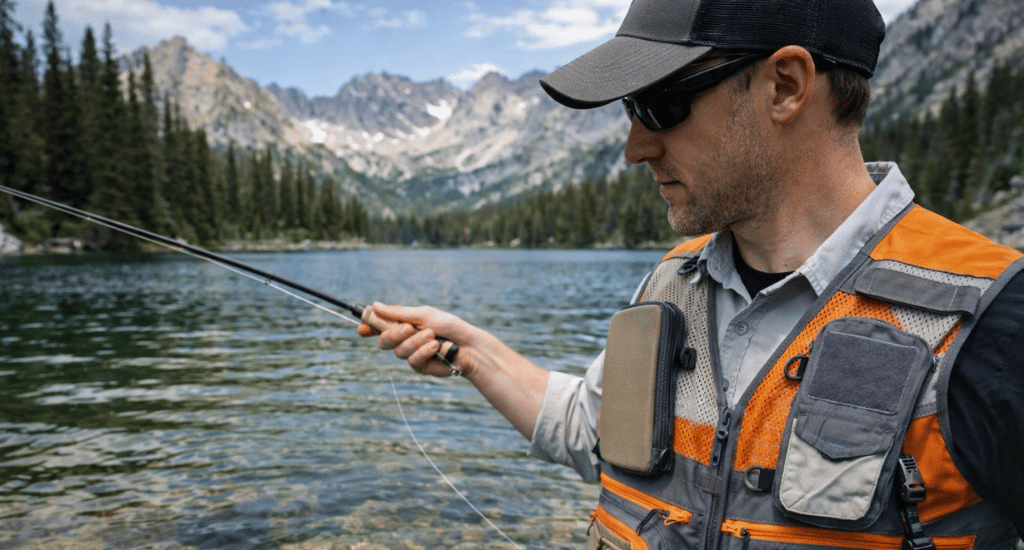
Shirt pocket fishing is not a method for every day on the water, and I would not tell you otherwise. After 24 years of guiding, I have learned that the anglers who get the most out of minimalist fishing are the ones who know exactly when to use it and when to leave it alone. Many anglers apply similar simplified approaches when learning how to fly fish alpine lakes in clear high-elevation water.
It works best when:
- Water is clear, and fish are visibly rising to the surface.
- A single hatch is dominant, and fly choice is straightforward.
- You are fishing in familiar water; you already know well enough to read without thinking.
- The session is short – two to four hours, morning only, before conditions shift.
Skip it when:
- Water is high, cold, or off-color, and nymphing becomes the only realistic option.
- You are in unfamiliar waters where conditions can change without warning.
- The session runs a full day with multiple hatches and no predictable pattern.
The method rewards preparation and punishes assumptions. Know your water, know the hatch, and know when the two shirt pockets are enough. If you have any doubt, bring the pack.
What Fishing From Your Shirt Pockets Teaches You That a Full Vest Never Will
The vest gives you options. The shirt pocket gives you answers.
When you strip the setup down to what fits in two pockets, you stop managing gear and start managing your fishing. Every decision on where to stand, how to approach, where to place the tippet, and when to wait lands entirely on you. There is no box to open, no rig to switch to. Just the fly, the water, and what you know. This mindset is similar to the focused techniques I discussed in fly fishing mountain lakes, where stealth and precision matter most.
That is the thing a full vest never quite teaches you. It is too forgiving.
I walked back to the truck that July morning with the same dry ant still sitting in my shirt pocket, the water still moving behind me, and the kind of quiet satisfaction that does not come from catching the most fish. It comes from fishing well with almost nothing.
If that kind of fishing interests you, there is more where this came from. At All for Fishing, we cover the methods, mindset, and practical experience that help anglers fish smarter at every level. Come find us.