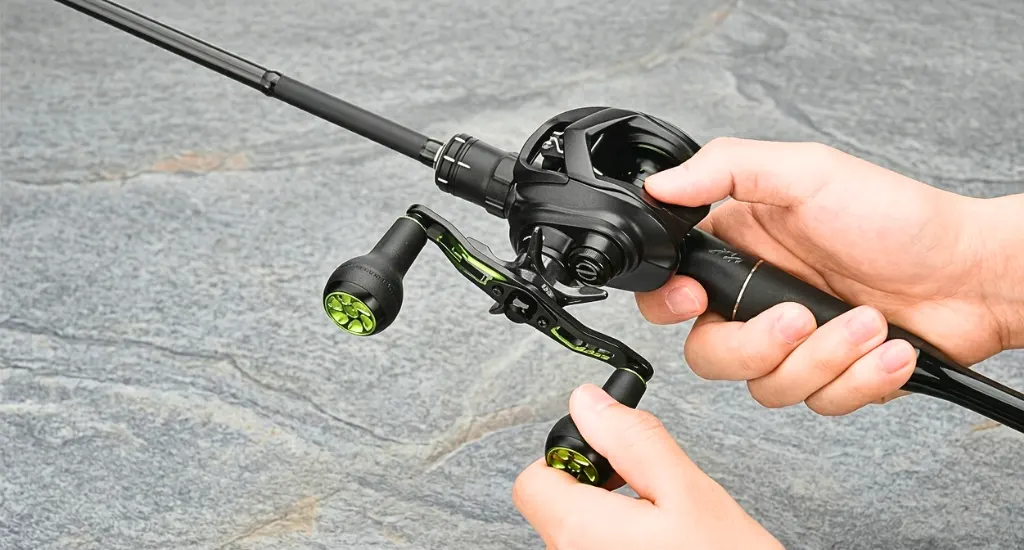
The best all-around rod size for bass fishing is 7 feet with medium-heavy power and fast action. This length balances casting distance, accuracy, and hookset power across most bass techniques. The ideal length varies with your technique, your water, and your target species.
Shorter rods give better accuracy for close-range work. Longer rods give more leverage for heavy cover. After 24 years guiding bass anglers across Gulf Coast lakes, rivers, and coastal flats, I have watched rod length make or break a day on the water. This guide maps the right rod size to every bass technique, location, and species.
Here is the fast decision table.
| Technique | Rod Length | Power | Action |
|---|---|---|---|
| All-around bass | 7’0″ | Medium-heavy | Fast |
| Jigs, Texas rigs, finesse | 6’10” to 7’2″ | Medium to medium-heavy | Fast |
| Crankbaits, spinnerbaits | 7’0″ to 7’6″ | Medium | Moderate |
| Flipping and pitching | 7’4″ to 8’0″ | Heavy | Fast |
| Topwater and jerkbaits | 6’6″ to 6’10” | Medium | Fast |
| Deep cranks, swimbaits, A-rigs | 7’6″ to 8’0″ | Medium-heavy to heavy | Moderate |
What Rod Length Is Best for Each Bass Fishing Technique?
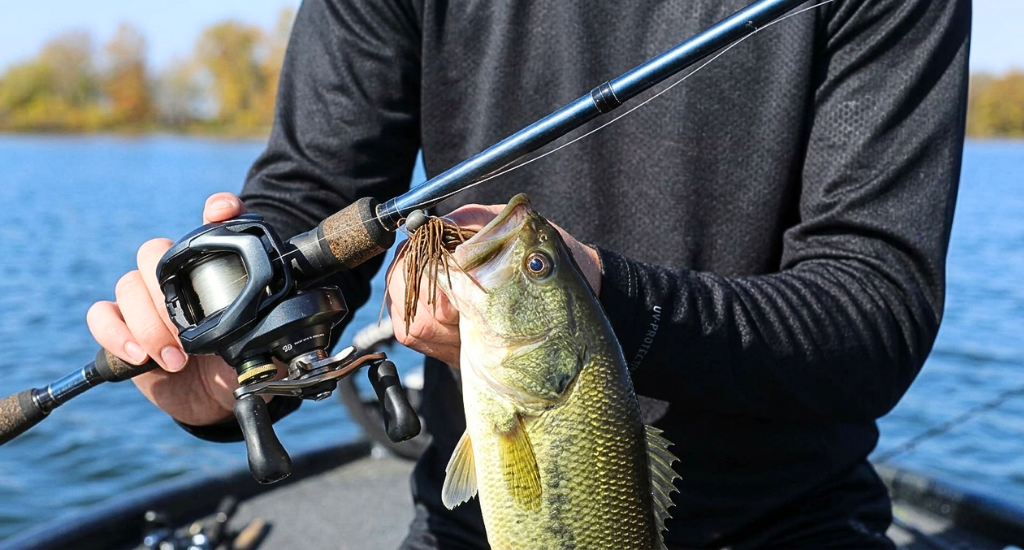
Rod length should match your technique first. Every bass technique loads the rod differently. The wrong length costs you casting distance, accuracy, or hookset power. Here is how each technique maps to the right rod length.
1. Jigs, Texas rigs, and soft plastics (6’10” to 7’2″):
These single-hook techniques need pinpoint casting accuracy and sharp hooksets. A 7-foot medium-heavy fast-action rod drives the hook through a bass jaw on the first sweep. The shorter length improves accuracy around docks, laydowns, and isolated cover where jigs land best.
2. Crankbaits and spinnerbaits (7’0″ to 7’6″):
Reaction baits with treble hooks need longer rods and moderate action. The extra length increases casting distance, allowing you to cover more water. The moderate action absorbs head shakes and keeps treble hooks pinned during the fight. A heavy rod tears treble hooks out of the fish’s mouth.
3. Flipping and pitching (7’4″ to 8’0″):
Heavy cover demands the longest bass rods. A 7’6″ heavy fast-action rod gives maximum leverage to pull bass out of thick grass, lily pads, and timber before they wrap your line. The extra length also keeps the line off the water during the pitch.
4. Topwater and jerkbaits (6’6″ to 6’10”):
Shorter rods keep the tip above water during walking and twitching motions. A 6’8″ medium fast-action rod lets you work a Zara Spook or Megabass Vision 110 with clean wrist action. Longer rods dip the tip into the water, killing the lure’s action.
5. Drop-shot, Ned rig, and wacky rig finesse (6’8″ to 7’2″ spinning):
Finesse bass fishing uses light line and subtle presentations. A 7-foot medium-fast-action spinning rod detects the lightest bites on 6- to 10-lb fluorocarbon. The spinning reel for finesse fishing covers the matching reel setup.
6. Deep cranks, swimbaits, and A-rigs (7’6″ to 8’0″):
Heavy lures need long rods to generate casting momentum. A 7’10” medium-heavy moderate-action rod loads under a 1 oz swimbait and launches it 60+ yards. The moderate action cushions the fight on these treble-heavy lures.
How Does Fishing Location Change the Best Rod Size for Bass?
Where you fish changes your rod length as much as what you throw. Open water rewards longer rods. Tight spaces punish them. Match rod length to your fishing environment for the best results.
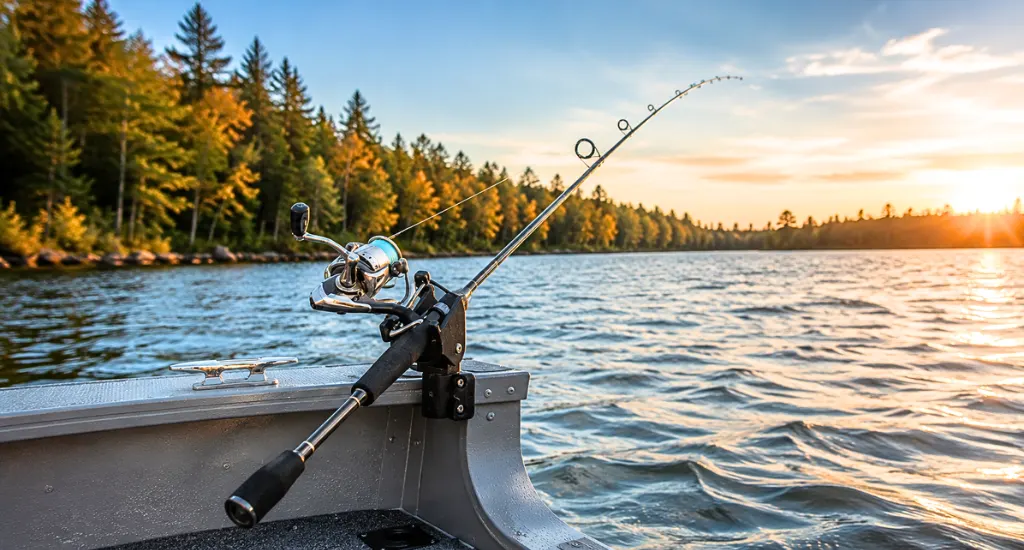
A. Bass boat on open water (7’0″ to 7’6″): The standard bass boat setup runs a 7-foot rod for most techniques. The elevated casting deck gives you extra height. Longer rods add distance for covering flats, points, and offshore structures.
B. Bass boat in heavy cover (7’4″ to 8’0″): Flipping grass mats, punching lily pads, and pitching to laydowns all demand the longest rods. The leverage pulls the bass away from the cover before they tangle your line.
C. Kayak bass fishing (6’6″ to 7’0″): Tight space limits rod length. A 6’8″ or 7-foot rod clears the kayak edges during side-arm casts. Longer rods hit the water or your body, ruining the cast. The best rod size for kayak fishing is covered in detail.
D. Shore and bank fishing (7’0″ to 7’6″): Bank anglers need extra casting distance to reach bass holding in deeper water. A 7’3″ to 7’6″ rod gives that distance without losing accuracy on shorter pitches to bank cover.
E. Small ponds and dock fishing (6’6″ to 7’0″): Small water needs short, accurate casts. A 6’8″ rod skips jigs under docks and places soft plastics next to pilings with precision. Longer rods overshoot the target in small water.
How Do Power and Action Work Together With Rod Length for Bass?
Rod length alone does not determine performance. Power and action must match the technique. Power is lifting strength. Action is where the rod bends. The right combination of all three lands more bass.
| Technique | Length | Power | Action | Why This Combo |
|---|---|---|---|---|
| Texas rig in grass | 7’2″ | Medium-heavy | Fast | Hook drive plus pull from cover |
| Crankbait open water | 7’4″ | Medium | Moderate | Absorbs fight, keeps trebles pinned |
| Topwater walking bait | 6’8″ | Medium | Fast | Wrist control, tip stays above water |
| Flipping heavy cover | 7’6″ | Heavy | Fast | Maximum leverage for extraction |
| Drop-shot finesse | 7’0″ | Medium | Fast (spinning) | Sensitivity for subtle bites |
| Jerkbait | 6’10” | Medium | Fast | Twitch control, clean short pauses |
| Swimbait and A-rig | 7’10” | Heavy | Moderate | Handles heavy lure weight on cast |
| Frog in matted grass | 7’6″ | Heavy | Extra-fast | Punch through the mat, drive the hook home |
Fast action bends in the top third of the rod. It gives sharp hooksets on single-hook lures like jigs and Texas rigs. Moderate action bends deeper into the mid-section. It cushions the fight on treble-hook lures like crankbaits. Extra-fast action bends only at the tip. It punches through heavy mats for frog fishing. Understanding action vs power fishing rods makes every rod selection easier.
What Size Rod Is Best for Largemouth vs Smallmouth Bass?
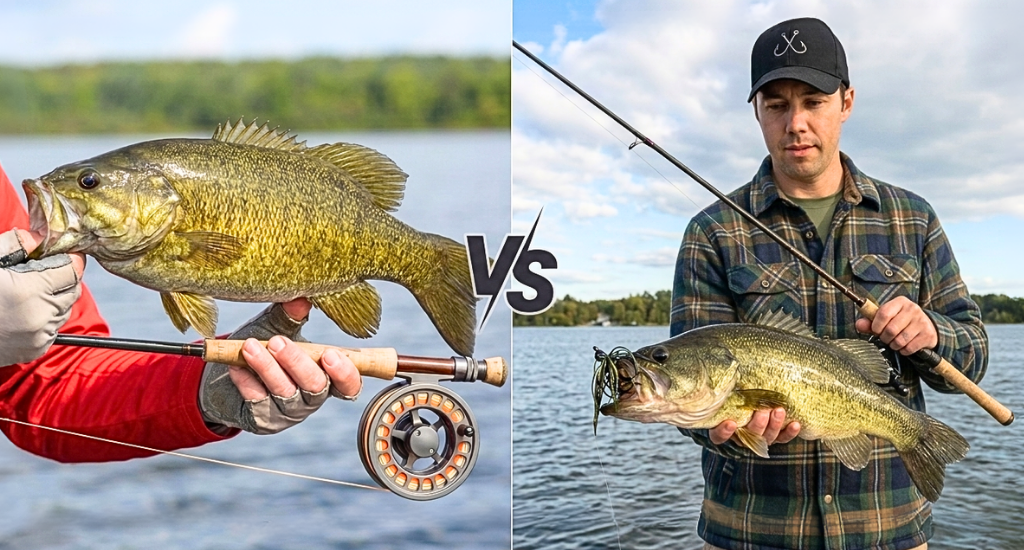
Largemouth and smallmouth bass demand different rod setups because they live in different water and eat different lures.
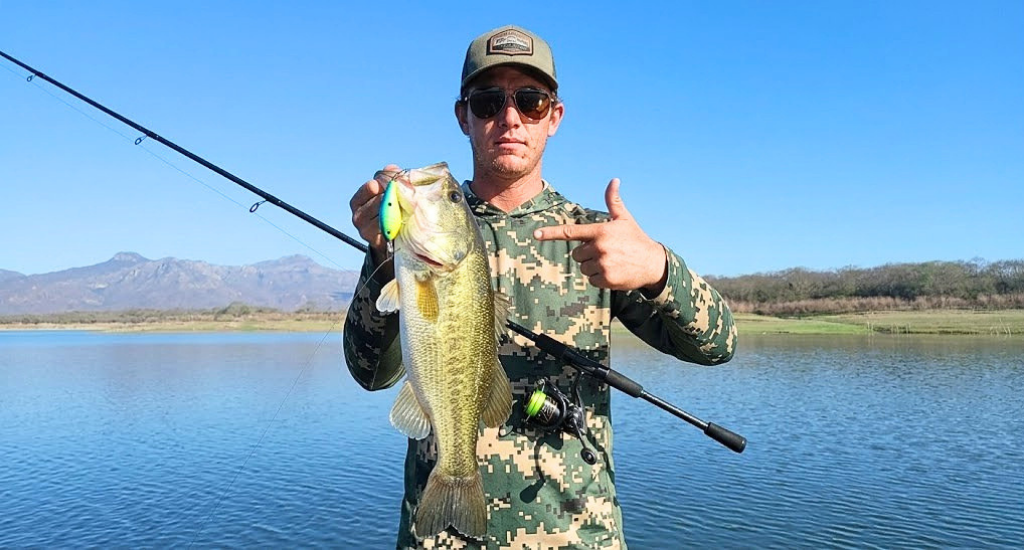
Largemouth bass rods run 6’10” to 8’0″ depending on technique. Largemouth live in heavy cover. They eat bigger lures. They fight with raw power and head for structure the moment they feel the hook. Flipping rods with a 7’6″ heavy fast-action handle handle the worst cover. A 7-foot medium-heavy fast-action handles everything else. Most serious largemouth anglers own 3 to 5 rods rigged for different techniques.
Smallmouth bass rods run 6’6″ to 7’2″ with a lean toward finesse. Smallmouth live in clearer water. They eat smaller lures. They fight with speed and acrobatics more than brute force. A 7-foot medium-fast-action spinning rod handles drop shot, Ned rigs, and small tubes in current. Step up to a 7-foot medium-heavy casting rod only when throwing heavier jerkbaits or small swimbaits.
The crossover rod for both species is a 7-foot medium-heavy fast-action casting rod. It handles jigs, Texas rigs, spinnerbaits, and topwater for largemouth. It handles jerkbaits and small swimbaits for smallmouth. One rod, two species, solid performance across both.
What Are the Best Bass Fishing Rods by Price Tier?
The best bass rod at every price tier is a 7-foot medium-heavy fast-action casting rod. This spec handles the widest range of techniques. Here are the rods I recommend across four price tiers.
1. Budget ($50 to $100):
The Ugly Stik GX2 7′ medium-heavy casting rod and KastKing Perigee II 7′ medium-heavy casting rod cover the under-$100 range. Both use composite blanks with serviceable sensitivity. The Abu Garcia Black Max combo ships a rod and reel together for around $80.
2. Mid ($100 to $200):
The St. Croix Mojo Bass 7’1″ medium-heavy fast, the Shimano SLX 7′ medium-heavy fast, and the Dobyns Fury 7′ medium-heavy fast are the workhorses of bass fishing. Real sensitivity, quality guides, and blanks that last for years of weekend use.
3. Premium ($200 to $400):
The St. Croix Legend Tournament 7′ medium-heavy, the Shimano Expride 7′ medium-heavy, the Dobyns Champion XP 7’3″ medium-heavy, and the G. Loomis E6X 7′ medium-heavy sit at the top of the bass rod market. Tournament-grade blanks, Fuji guides, and weight savings that matter on 8-hour days.
4. Best finesse spinning picks:
For drop-shot and Ned rig work, the St. Croix Mojo Bass 7′ medium spinning at $150 and the Shimano SLX 7′ medium spinning at $130 deliver the sensitivity and finesse demands. Match either one with a reel sized for bass fishing in the 2500 to 3000 range.
How Do You Pick the Right Bass Rod? A 5-Question Decision Test
Answer these five questions honestly. The right rod becomes obvious.
1. Do you fish heavy cover like grass, timber, or docks more than open water?
If yes, buy a 7’2″ to 7’6″ medium-heavy to heavy fast-action casting rod. Heavy cover demands the leverage to pull bass out before they wrap your line.
2. Do you primarily throw crankbaits or spinnerbaits?
If yes, buy a 7′ to 7’6″ medium-moderate-action casting rod. Treble-hook lures need a softer action to keep hooks pinned during the fight.
3. Do you fish from a kayak or a small boat with limited space?
If yes, buy a 6’6″ to 7′ medium-heavy fast-action casting rod. The shorter length clears tight quarters and still casts accurately.
4. Do you use finesse techniques like drop-shot, Ned rig, or wacky rig?
If so, buy a 7′ medium-fast-action spinning rod. Finesse work needs a light line, subtle presentations, and a spinning reel. The medium vs. medium-heavy fishing rod comparison helps you dial in the right power class.
5. Do you want one all-around bass rod to start?
If yes, buy a 7′ medium-heavy fast-action casting rod. It handles jigs, Texas rigs, spinnerbaits, topwater, and light crankbaits. Add a second rod only after you fish regularly enough to need technique-specific gear.
The Bottom Line
A 7-foot medium-heavy fast-action rod is the best all-around size for bass fishing. Pick length by technique, power by cover, and action by hookset needs. The technique table at the top of this guide maps every common scenario to the exact rod spec.
Before buying any bass rod, check the lure weight range printed on the blank. That number tells you whether the rod matches your most common lure. For more rod selection guides across every species and environment, visit All for Fishing.
FAQs
What is the best all-around rod length for bass fishing?
The best all-around rod length for bass fishing is 7 feet. A 7-foot medium-heavy fast-action casting rod handles jigs, Texas rigs, spinnerbaits, topwater, and most bass techniques. It works from boats, shore, and kayaks without major compromise.
Is a 6'6" rod good for bass fishing?
Yes, a 6'6" rod is good for topwater, jerkbaits, skipping jigs under docks, and kayak bass fishing. It trades casting distance for accuracy and tight-space control. Choose 6'6" when your water demands close-range precision.
What size rod is best for bass fishing from shore?
A 7-foot to 7'6" medium-heavy rod with fast action is best for shore bass fishing. Bank anglers need the extra length to reach bass in deeper water or around cover that boat anglers reach more easily. The added length generates the casting distance shore fishing demands.
What rod length is best for flipping and pitching bass?
A 7'4" to 8'0" heavy power fast-action rod is best for flipping and pitching. The extra length gives maximum leverage to pull big bass from thick grass, lily pads, and timber. Shorter rods lack the reach and the backbone this technique demands.
Should I get a spinning or casting rod for bass?
Casting rods handle most bass techniques, including jigs, Texas rigs, crankbaits, topwater, and flipping. Spinning rods handle finesse techniques like drop-shot, Ned rig, and wacky rig with lures under 3/8 oz. Most serious bass anglers own both. Start with a 7-foot medium-heavy fast-action casting rod and add a 7-foot medium spinning rod for finesse.