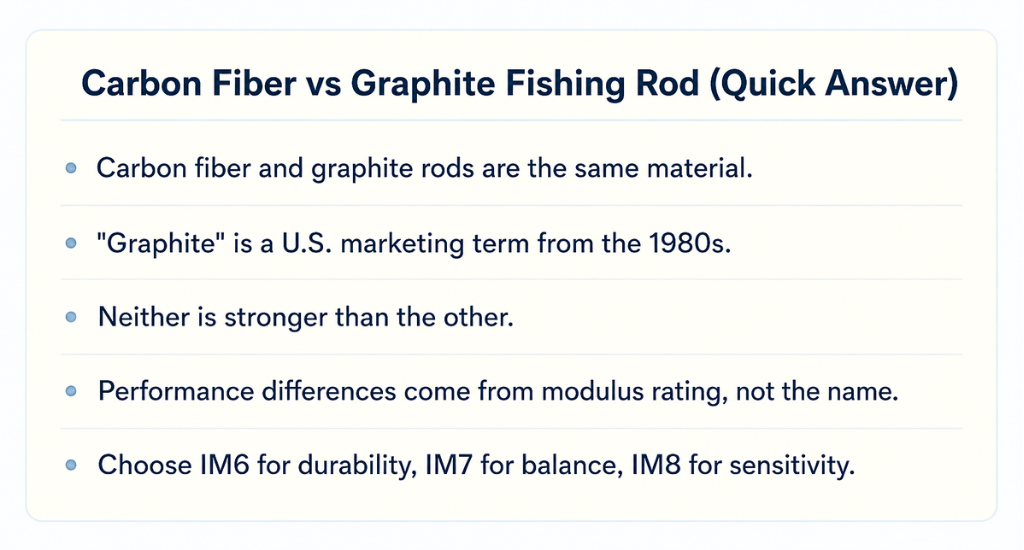
Carbon fiber and graphite fishing rods are made of the same material. The fishing industry uses both names for identical carbon blanks. One is not stronger or better than the other. The real performance difference comes from the modulus rating inside the blank. Modulus controls weight, sensitivity, and durability. Pick the right modulus for your fishing style, and you will feel it on the first cast.
I have guided anglers for 24 years on the Gulf Coast. In this guide, I break down the difference between carbon fiber and graphite rods, explain what modulus means for your fishing, and help you pick the right rod for your style and budget.
Carbon Fiber Rod vs Graphite Rod Difference: Modulus Ratings Explained
Modulus measures how stiff a carbon fiber is per unit weight. Higher modulus creates a lighter, more sensitive blank. It also creates a more brittle blank at a higher cost. This is the real performance difference.
Rod makers rate modulus as IM6, IM7, and IM8. Each step up changes how the rod feels and performs. The table below breaks down the differences.
| Modulus | Weight | Sensitivity | Durability | Price Range | Best For |
|---|---|---|---|---|---|
| IM6 (Standard) | Heavier | Good | Most durable | $50 to $100 | Beginners, heavy cover |
| IM7 (Intermediate) | Medium | Very good | Good | $100 to $200 | All-around fishing |
| IM8+ (High Modulus) | Lightest | Highest | Most brittle | $200 and up | Finesse, tournament |
IM6 blanks handle abuse well. I hand these to first-time clients every trip. An IM6 rod survives door slams and clumsy hook sets. It forgives mistakes that would snap IM8 blanks. For beginners, carbon fiber is better than fiberglass
IM7 blanks hit the sweet spot for most anglers. You get solid sensitivity without a fragile feel. A 7-foot medium power IM7 rod covers bass, redfish, and trout. I recommend IM7 to 80% of my clients.
IM8 and above suit experienced anglers only. Drop shot, shaky head, and light jigging demand this feel.
The biggest mistake beginners make is buying high-modulus rods too early. An IM8 rod feels amazing, but punishes bad habits. Clumsy hook sets and car door bumps snap IM8 blanks fast. Start with IM6 or IM7. Build your technique first. The rod upgrade comes later.
Starting? Check our guide to fishing rods under $100 for solid IM6 and IM7 options.
In 24 years of guiding, I have broken two IM8 rods. Both snapped on hook sets into heavy cover. I have never broken an IM6. That tells you everything about the trade-off.
How Does Resin Ratio Change Rod Performance?
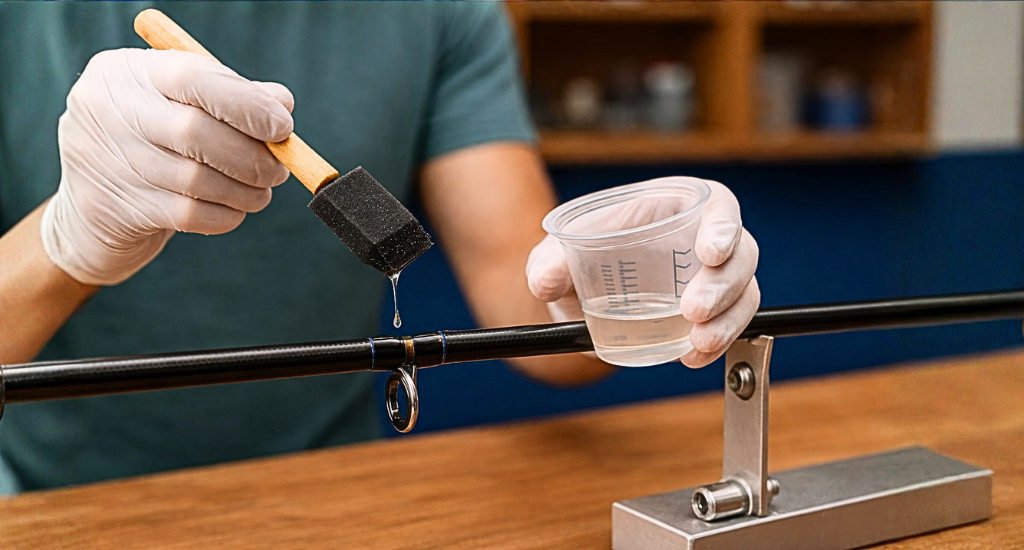
Carbon fiber content varies between 30% and 80% in rods. The rest is binding resin. More carbon means lighter weight and more sensitivity. More resin means more durability and lower cost.
Budget rods use 30% to 50% carbon fiber content. Premium rods push 60% to 80% carbon. My logbooks show that 50% to 65% hits the sweet spot. That range gives a solid feel without fragile blanks.
Manufacturers rarely list the exact carbon percentage. They use terms like “high carbon” or “advanced carbon.” Look at the modulus rating instead. It tells you more about performance than vague labels.
Some brands list “ton” ratings like 24T, 30T, or 40T. These numbers refer to the stiffness of carbon fiber. Higher tons equal higher modulus. A 40T blank is stiffer and lighter than a 24T blank.
Why Do Brands Call the Same Rod Different Names?
“Graphite” is a marketing term. Rod makers in the USA adopted it in the 1980s. It sounded high-tech and sold well. In Europe and Australia, the same rods are called “carbon fiber.” Both names describe the exact same blank material.
The myth that graphite is different from carbon fiber is wrong. The myth that graphite is stronger is also wrong. These claims spread because brands used different labels for the same product. Decades of separate marketing created a false divide.
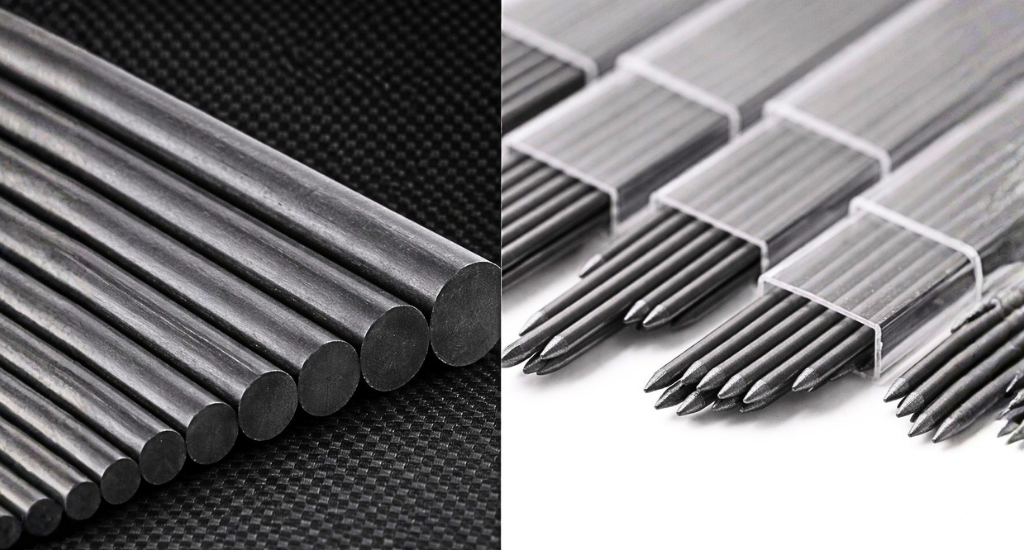
Rod blanks start as polyacrylonitrile (PAN) fibers. PAN is a synthetic polymer heated to extreme temperatures. Manufacturers bond these fibers with resin into pre-preg sheets. Workers wrap the pre-preg around a tapered steel mandrel. Heat and pressure fuse everything into a hollow carbon tube.
This process is identical whether the box says “graphite” or “carbon fiber.” Real graphite is the soft carbon in pencils. It has zero connection to fishing rods.
Some brands add confusion with vague labels like “advanced carbon” or “premium graphite.” These terms mean nothing without a modulus rating. Ignore the marketing name. Read the modulus spec instead.
Understanding rod action and power matters more than the material name on the box.
Carbon Fiber vs Graphite vs Fiberglass: Quick Comparison
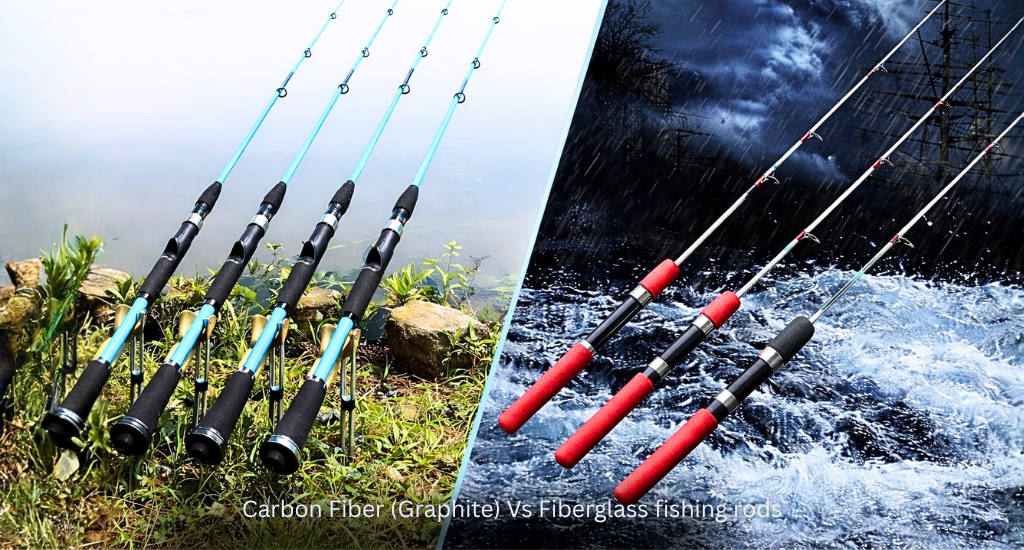
Three materials dominate rod construction today. Carbon fiber (graphite) leads in sensitivity and weight. Fiberglass leads in durability and forgiveness. Composite blends both for balance.
| Property | Carbon Fiber (Graphite) | Fiberglass | Composite | Winner |
|---|---|---|---|---|
| Weight | Lightest | Heaviest | Medium | Carbon fiber |
| Sensitivity | Highest | Lowest | Medium | Carbon fiber |
| Durability | Good (brittle) | Excellent | Very good | Fiberglass |
| Price | $50 to $500+ | $30 to $150 | $80 to $300 | Fiberglass |
| Best Techniques | Finesse, jigging, soft plastics | Crankbaits, trolling | Multi-technique | Depends |
| Hook Set Speed | Fast | Slow | Medium | Carbon fiber |
Fiberglass still wins for crankbaits and moving baits. The slower action keeps hooks pinned during hard runs. Read our carbon fiber vs fiberglass fishing rod comparison for a deeper breakdown.
Composite rods combine carbon fiber and fiberglass in a single blank. They offer decent sensitivity with added forgiveness. Choose composite for multi-technique trips. One rod covers more water that way. Many surf rods use composite blanks for this reason.
Graphite vs Carbon Fiber: Which Rod Material Fits Your Fishing Style?
Your target species and technique pick the best material. Here is what I recommend after years of matching rods.
Bass Fishing
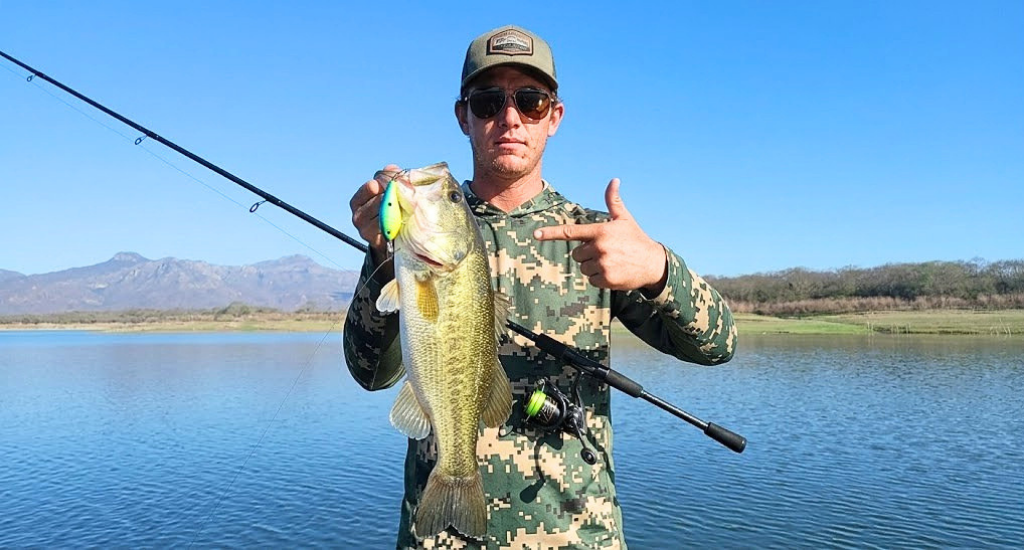
Carbon fiber dominates bass fishing. A 7-foot medium-heavy, fast-action rod handles 90% of techniques. Use IM7 for all-around performance. Step up to IM8 for drop shot and shaky head.
Largemouth in heavy cover need fast hook sets. A closed face reel paired with a stiff rod works well for beginners learning power fishing.
I use IM7 rods for 80% of my bass trips. Texas rigs, jigs, and spinnerbaits all perform well on IM7. Save IM8 for finesse-only days on clear lakes.
Inshore Saltwater (Redfish, Snook, Trout)
Carbon fiber handles Florida inshore species perfectly. A 7-foot medium power, fast action spinning rod covers the big three. Redfish, snook, and spotted seatrout all fall to this setup.
Redfish pull hard near oyster bars and mangroves. You need a backbone with enough tip feel for strikes. Target 8 to 15-foot depths along grass flats and bars. IM7 gives the best balance for this work.
Rinse all saltwater rods after every trip. Salt eats guide inserts and reel seats over time. A 30-second freshwater rinse doubles the life of your rod.
Freshwater Trout and Panfish
Lighter rods work best for trout and panfish. A 5 to 6-foot ultralight rod gives the most control. Carbon fiber transmits faint bites from 4 to 8-inch panfish. Our best-size rod for trout fishing guides covers exact lengths.
IM6 works fine for casual trout fishing. Step up to IM7 for a light 2- to 4-lb test line. Moving water demands better bite detection. IM7 delivers that extra feel.
Crappie anglers benefit most from ultralight carbon fiber. A 5-foot ultralight rod detects the lightest nibbles. Crappie have soft mouths that tear easily. Sensitive rods prevent the hook from being pulled free.
Fly Fishing
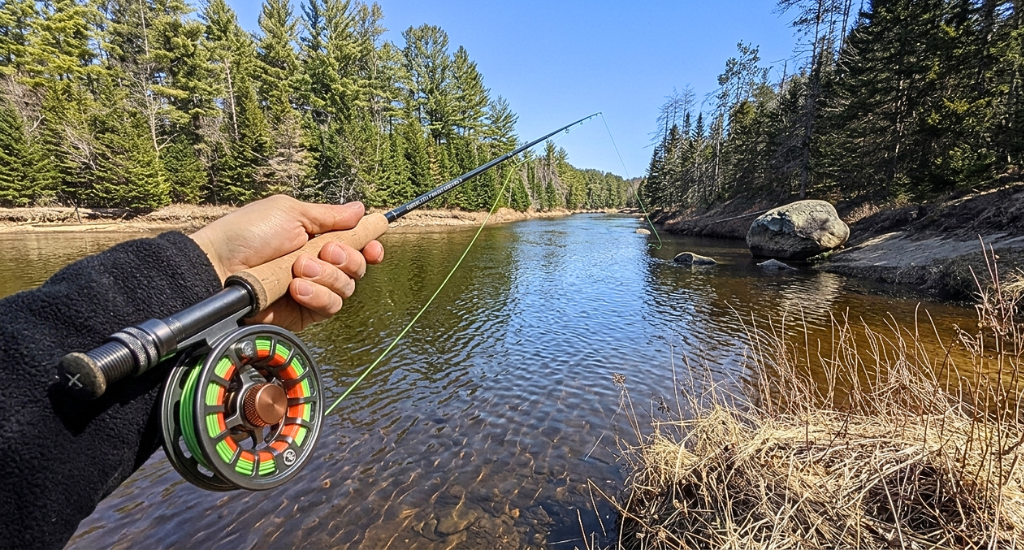
Carbon fiber changed fly fishing forever. A 9-foot, 5-weight carbon rod weighs under 3 ounces. That is half the weight of fiberglass fly rods. Less fatigue means more accurate casts at hour five.
High-modulus blanks excel at long-distance fly casting. A 40-foot cast feels easy on IM7 or IM8. For trout on small streams, a 7-foot, 3-weight rod is ideal. Match your rod weight to your target species for the best result.
Offshore and Heavy Game
Tarpon and tuna demand serious lifting power. Carbon fiber gives the strength-to-weight ratio for 2-hour battles. A 7-foot heavy-duty power rod rated for 20-50 lb line is standard. See our best tuna rods guide for top picks.
IM6 and IM7 blanks work better offshore than IM8. Durability matters when a 100 lb tarpon jumps on your rod. Brittleness is a real concern at sea. Choose forgiveness over sensitivity.
Best Carbon Fiber Fishing Rods Worth Buying
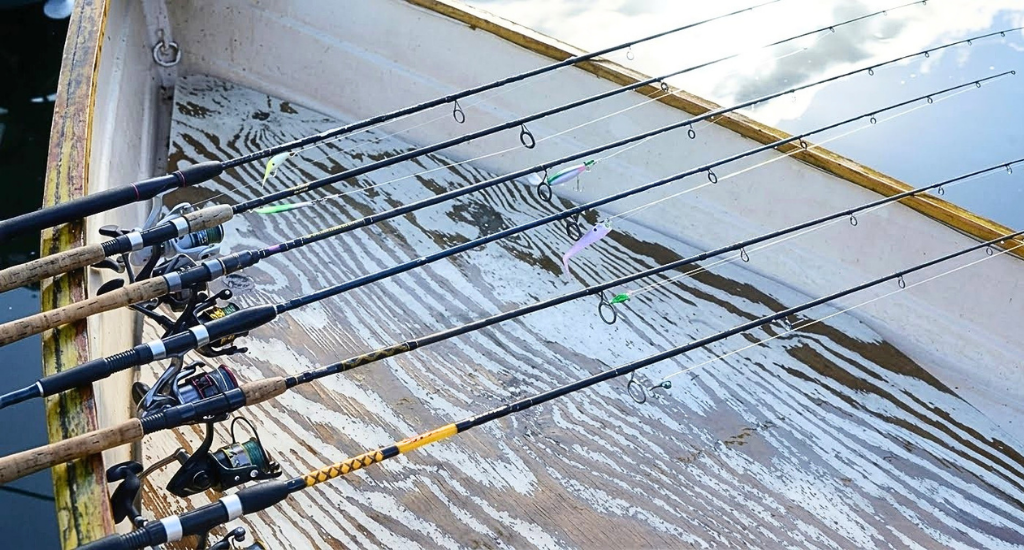
These rods cover every budget and fishing style. I have tested or guided with each on the water.
Budget ($50 to $100)
- Ugly Stik Elite: IM6 blank, 6 to 7-foot lengths, medium power. Handles abuse that breaks other rods. Best starter rod for beginners in the $50-$80 range.
- KastKing Perigee II: 24-ton carbon blank, 6 to 7-foot lengths. Solid sensitivity for the price at $60 to $100. Good for bass and inshore.
- Daiwa Aird-X: IM6 graphite blank with braiding-X technology. Reduces blank twist on hook sets. Strong value at $50-$70.
Mid-Range ($100 to $200)
- Fenwick HMG: IM7 blank, TAC handle for better grip. Available in 6 to 7-foot lengths. Strong sensitivity at $130 to $150.
- Abu Garcia Veritas: SubLayer Armor protects the blank from impact. IM7 performance in a lightweight package at $100 to $130.
- Shimano SLX: IM7 carbon blank with Hi-Power X wrapping. Reduces blank flexing during casts. Great bass rod at $120 to $160.
Premium ($200 and Up)
- St. Croix Avid: IM8 blank with Integrated Poly Curve technology. Smooth action and top-tier sensitivity at $200 to $260.
- G. Loomis E6X: High-modulus blank with Recoil guides. Maximum casting distance and feel at $190 to $300.
For more options, see our full list of the best fishing rods under $100 that punch above their price.
How to Care for a Carbon Fiber Fishing Rod
Carbon fiber rods last 10+ years with basic maintenance. Most rod damage happens during transport and storage, not on the water. A few simple habits keep your blank, guides, and reel seat in top shape between trips.
- Rinse with fresh water after every saltwater trip.
- Store rods vertically in a rack or rod tube; never lean them against walls or car bumpers.
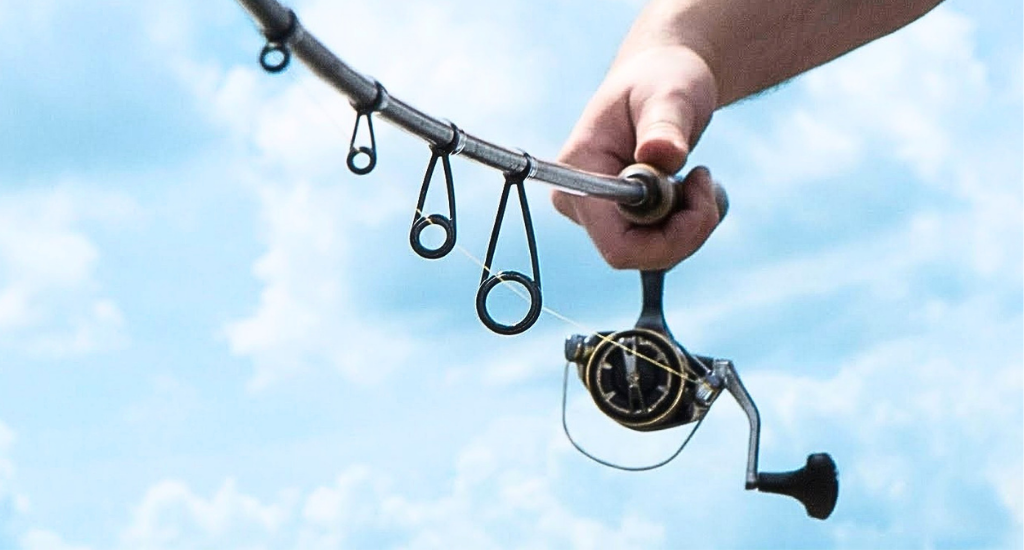
- Check guides for cracks before each trip. A cracked insert cuts braided line fast.
- Run a cotton ball through each guide ring. If it snags, replace that guide right away
- Transport rods in hard cases for long drives, door slams, and trunk loads cause 90% of rod breaks.
- A $20 rod tube saves a $200 rod, cheap insurance for expensive gear
Conclusion
Carbon fiber and graphite fishing rods are made of the same material. Modulus rating is what separates rod performance. Pick IM6 for durability, IM7 for versatility, and IM8 for maximum feel.
Match your rod to your target species and technique. Start with a mid-range IM7 if you fish multiple styles. Explore more rod guides and gear reviews on All for Fishing.
FAQs
What Is the Strongest Fishing Rod Material?
What Are the Negatives of Carbon Fiber Rods?
Is a Graphite Rod Better Than Fiberglass for Beginners?
Do Carbon Fiber Rods Work in Saltwater?