A fishing rod not reeling in is almost always a reel problem, not a rod problem. The most common causes are an open bail, loose drag settings, tangled line, an engaged release mechanism, or a reel that has not been cleaned in a while.
Most of these take less than five minutes to fix once you know what to look for. Why is my fishing rod not reeling in is one of the most searched questions among beginners, and the answer is usually simpler than expected.
Knowing what to check first saves time and prevents unnecessary trips to a tackle shop. Read through each section below, and you will find the fix.
Why Is My Fishing Rod Not Reeling In? The Most Common Causes
Most retrieval problems come down to a few basic issues that are easy to identify once you know where to look.
The Bail Is Open
The bail is the metal arm on a spinning reel that controls whether line feeds out or gets retrieved. When the bail is open, the spool spins freely, and the line comes off instead of winding back on.
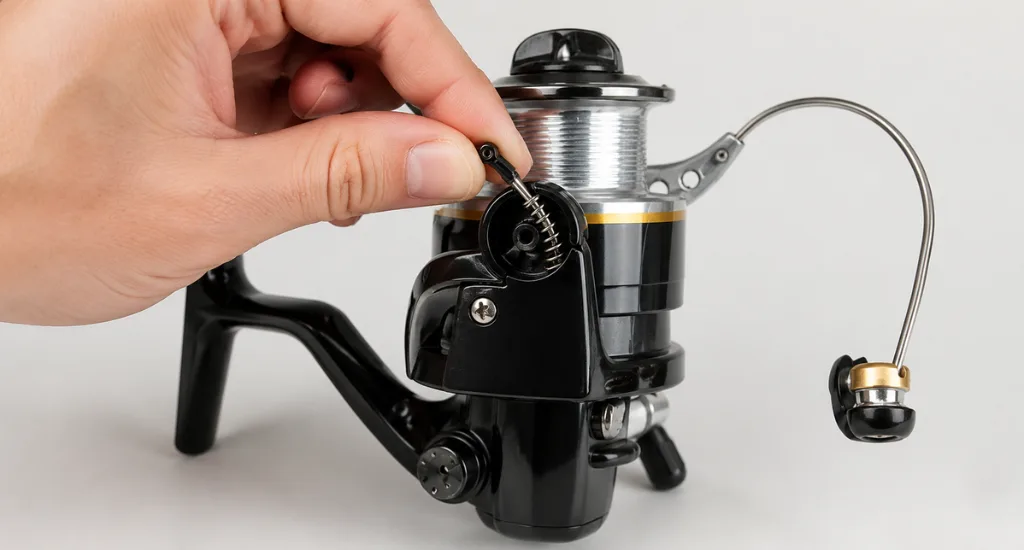
This is the most common spinning reel mistake beginners make, and it looks like the reel is broken when it is actually just one flip away from working correctly.
Close the bail by hand before turning the handle. Most spinning reels also close the bail automatically on the first crank, but doing it by hand prevents line twist from building up over time.
The Line Is Not Under the Bail
During respooling or after a tangle, the line sometimes ends up routed outside the bail wire instead of sitting underneath it where it belongs. When this happens, turning the handle does nothing because the line has no contact with the spool.
You will notice the line feels loose or falls off the front of the spool without any real resistance. Open the bail, rethread the line underneath the bail wire, close it again, and the reel should retrieve normally.
The Drag Is Set Too Loose
The drag system controls how much resistance the spool gives when the line is pulled. A drag set too loose allows the spool to spin backward under light pressure, which means turning the handle moves the internal gears, but the spool itself does not wind line in.
A fishing reel not holding tension is a clear sign that the drag needs adjustment. Turn the drag knob clockwise to tighten it, then test retrieval. Set it firm enough that the spool does not spin freely but still gives line under strong, steady pulling pressure.
The Reel Is in Reverse Mode
Most spinning reels have an anti-reverse switch, usually a small lever on the bottom of the reel body. When this switch is flipped to the off position, the handle can turn both forward and backward, which makes it feel like the reel is not catching or retrieving anything.
Check the underside of the reel for the switch and flip it to the on position. The handle should lock into forward retrieval only, and the line should wind onto the spool normally from that point.
Fishing Reel Problems That Can Stop Line Retrieval
Understanding how to fix a fishing reel that won’t reel in also means knowing the less obvious problems that develop over time with regular use.
Tangled or Wrapped Fishing Line
The line can work its way under the spool during a cast or after a bad tangle, wrapping around the spool axle and locking everything up. You will feel resistance when turning the handle, but nothing winds in.
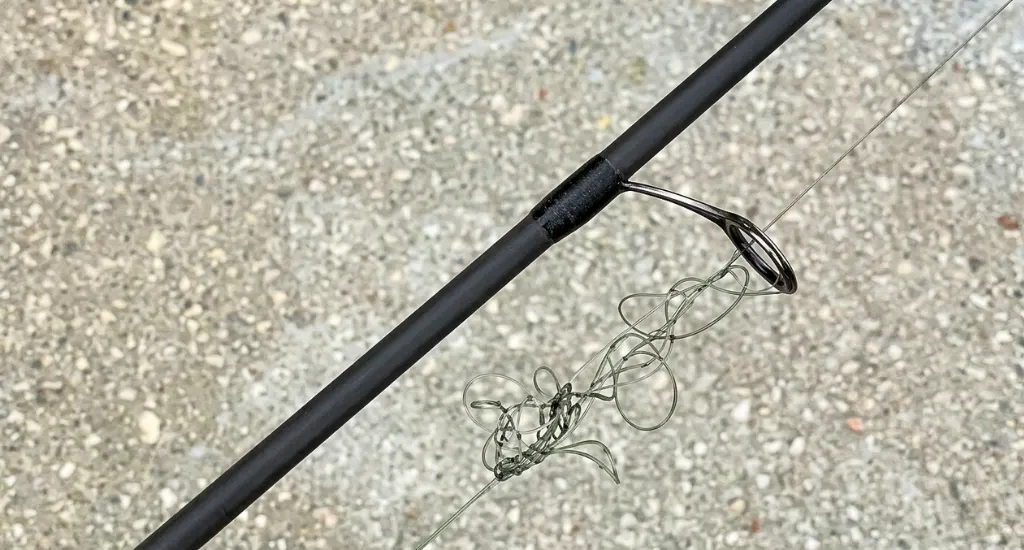
Remove the spool from the reel body and check underneath it for wrapped line. Cut away any trapped line carefully, reseat the spool, and rethread before fishing again.
Spool Tension Issues
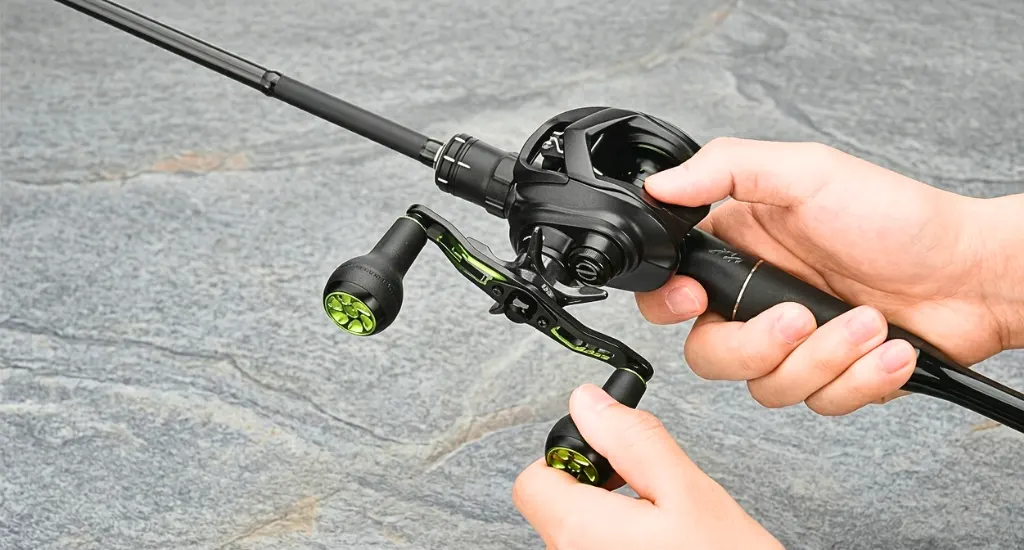
Spool tension problems are most common on baitcasting reels. If the tension knob is set too loose, the spool overruns during a cast and creates a backlash that jams the retrieve. Signs include a handle that turns but feels soft with no line coming in.
Tighten the spool tension knob slightly and clear any existing backlash before adjusting further. Most baitcasters have a small knob on the side plate next to the spool for this purpose.
Release Mechanism Still Engaged
On baitcasting reels, pressing the thumb bar releases the spool for casting. If the mechanism does not reset after the cast, the spool stays in free spool mode and will not retrieve. Press the thumb bar again or turn the handle firmly to re-engage the retrieve mechanism.
Worn or Damaged Reel Components
Internal wear eventually affects retrieval. Stripped gears slip under load and feel soft when cranking. Worn bearings create grinding or rattling sensations during the retrieve. A loose or cracked handle assembly can also prevent the internal drive from engaging the spool correctly during retrieval.
How to Fix a Fishing Reel That Won’t Reel In
How to fix a spinning reel that won’t reel in follows a logical order of checks that rules out simple problems before moving to internal repairs. This process covers both spinning and baitcasting setups.
Step 1: Inspect the Bail and Line
Check that the bail is fully closed and the line runs underneath the bail wire correctly. Pull a few inches of line off the spool by hand and confirm it feeds back on when you turn the handle with the bail closed.
Step 2: Check the Drag Setting
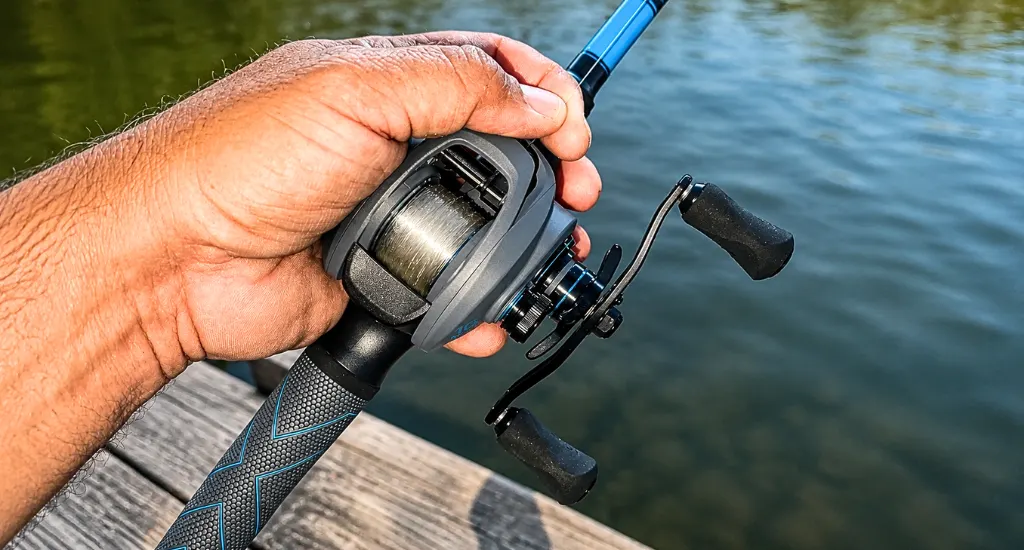
Turn the drag knob clockwise until you feel firm resistance. Pull the line off the spool by hand to test the setting. Tighten gradually until the spool holds steady during a normal retrieve without giving line under light pressure.
Step 3: Examine the Spool
Remove the spool by pressing the spool release button or unscrewing the drag knob. Look underneath and around the spool axle for any line wrapped around it. Clear any obstruction before reseating the spool.
Step 4: Clean and Lubricate the Reel
Fishing rod reel repair often comes down to basic cleaning. Apply reel oil to the bail wire hinges, handle knob, and any visible moving parts. Remove dirt, dried salt, and debris from the exterior with a soft cloth. Avoid applying too much oil directly into the gear housing without proper disassembly knowledge.
Step 5: Test the Reel Function
Rotate the handle and listen for grinding or skipping. Confirm the anti-reverse switch locks the handle into forward retrieval only. Pull the line off the spool under light pressure and reel it back in to confirm the drag and retrieve are both working correctly before heading out.
How to Prevent Fishing Reel Retrieval Problems
A small amount of regular maintenance prevents most of the issues covered above and keeps your fishing rod repairs at home repairs to a minimum.
Spool Line Correctly
Always spool line with the bail open and keep light finger tension on the line as it fills the spool. This prevents loose coils that cause tangles and wind knots during the cast.
Maintain Your Reel Regularly
Rinse spinning reels with fresh water after every saltwater trip. Apply reel oil to moving parts every few months and check for corrosion or buildup around the bail and drag system. An open vs. a closed face fishing reel both benefit from regular cleaning, though closed face reels trap debris more easily and need attention more often.
Check Drag Before Every Trip
Test the drag before you start fishing by pulling the line off the spool by hand. Adjust it for the line strength and species you are targeting before the first cast rather than after losing a fish.
Store Your Gear Properly
Store reels in a dry location away from direct humidity. Loosen the drag slightly before storage to prevent the drag washers from compressing and losing tension over time.
Replace Worn Parts Early
Replace bearings, gears, and springs at the first sign of grinding, slipping, or unusual resistance. Waiting too long turns a five-dollar bearing replacement into full reel damage that cannot be repaired at home.
Final Thought
A reel that will not retrieve line almost always comes down to an open bail, loose drag, incorrect line placement, a tangled spool, or a disengaged anti-reverse switch. These are all straightforward problems with straightforward solutions that any angler can handle at home.
Routine cleaning, proper spooling, and drag checks before each trip prevent most retrieval problems before they start. A few minutes of basic maintenance is almost always cheaper and faster than replacing a reel that just needed a little attention.