A modern 2-piece fishing rod performs at about 95% of a comparable 1-piece rod, with only a 2–5% gap in real-world performance. The decision between the two comes down to transport, storage, and budget, not performance. Pick a 1-piece for finesse fishing and direct boat access. Pick a 2-piece for portability, smaller vehicles, and tighter storage.
Most of my expert angling friends and I agree on this after years on the water. On 1990s-era ferrules, the joint dampened vibration and created real dead spots. Carbon fiber, tighter ferrule tolerances, and refined graphite blanks have closed that gap. After 24 years of guiding anglers on the Gulf Coast and testing rods across rivers, lakes, and surf, I have stopped recommending 1-piece rods to most people who ask.
Here is the fast decision table. Pick your column.
| Buy a 1-Piece If: | Buy a 2-Piece If: |
|---|---|
| You drive a truck, SUV, or have a boat with a rod locker | You drive a sedan, hatchback, or compact car |
| You fish from a tournament boat or have drive-up access | You hike, kayak, bike, or use public transit to your spot |
| You finesse-fish with drop-shots, Ned rigs, or ultralight jigs | You throw moving baits, bottom-fish, or fish casually |
| You have a garage rod rack or vertical wall storage | You store rods in a closet, under a bed, or in a backpack |
| You can spend $150+ to get a quality 1-piece | You want maximum rod quality under $100 |
What Is a 1-Piece Fishing Rod?
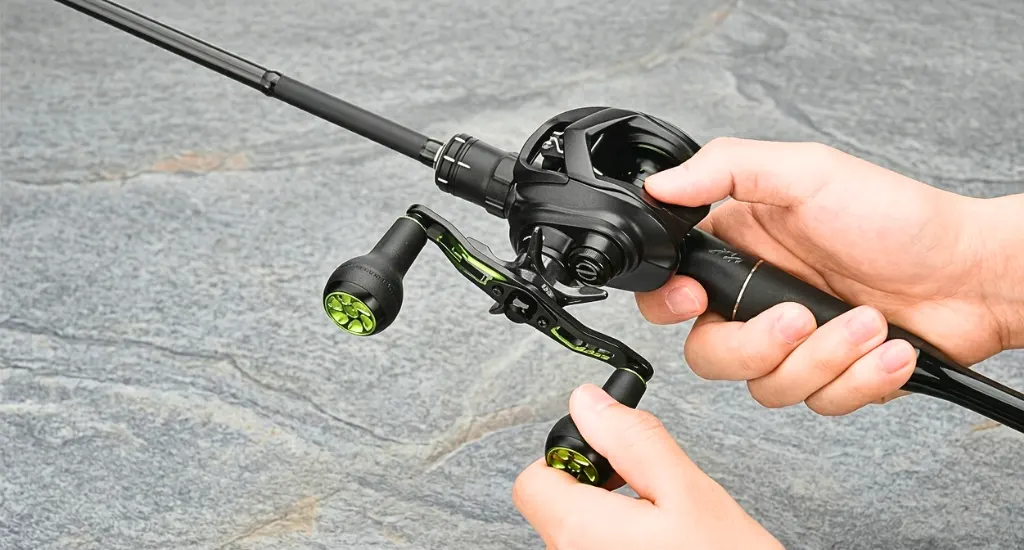
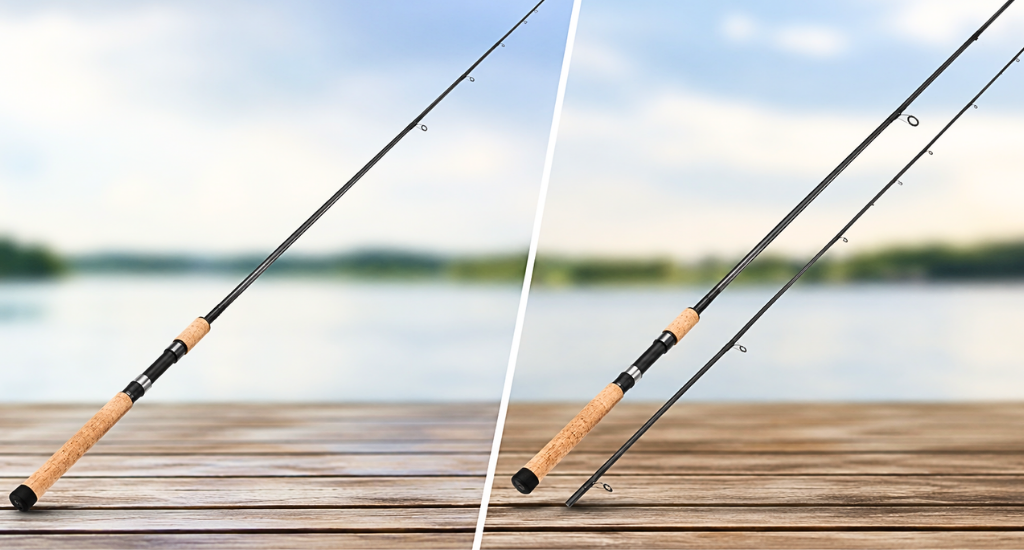
A 1-piece fishing rod is a single, continuous rod blank that runs from butt to tip with no joints or ferrules. The blank is built from a single material, typically graphite, carbon fiber, or fiberglass, and formed in a single mold. Most 1-piece rods fall between 5 and 8 feet in length, with 6’6″ and 7′ being the most common sizes on tackle-shop shelves. The 6ft vs 7ft fishing rod breakdown covers when each length earns its place.
Uninterrupted construction matters because vibration travels through the blank without a physical break to dampen it. There is no ferrule to slip, misalign, or wear down over time. When a fish strikes, the load is distributed evenly across the uniform wall thickness from tip to handle.
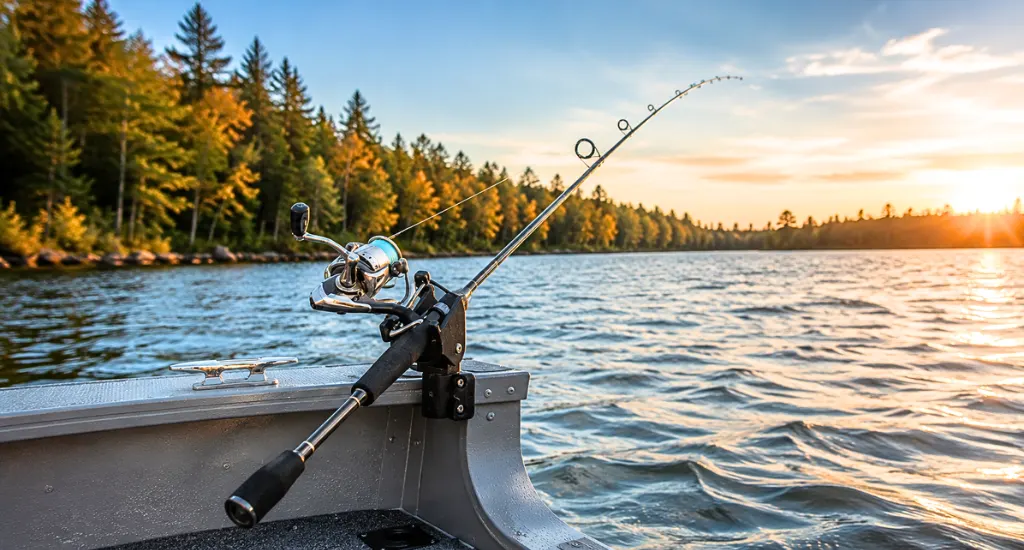
The design predates modern ferrule technology. Before manufacturers could engineer a tight, vibration-friendly joint, a single blank was the only way to build a rod that did not lose feel at the connection point. Most premium tournament bass rods are still built as 1-piece for this reason, paired with rod-locker boats designed to hold them.
What Is a 2-Piece Fishing Rod?
A 2-piece fishing rod is a rod built in two separate sections that connect at a ferrule joint near the middle of the blank. The two halves slide together for fishing and pull apart for transport and storage. A 7’6″ 2-piece rod breaks down to roughly 4 feet, which fits inside almost any vehicle, suitcase, or backpack.
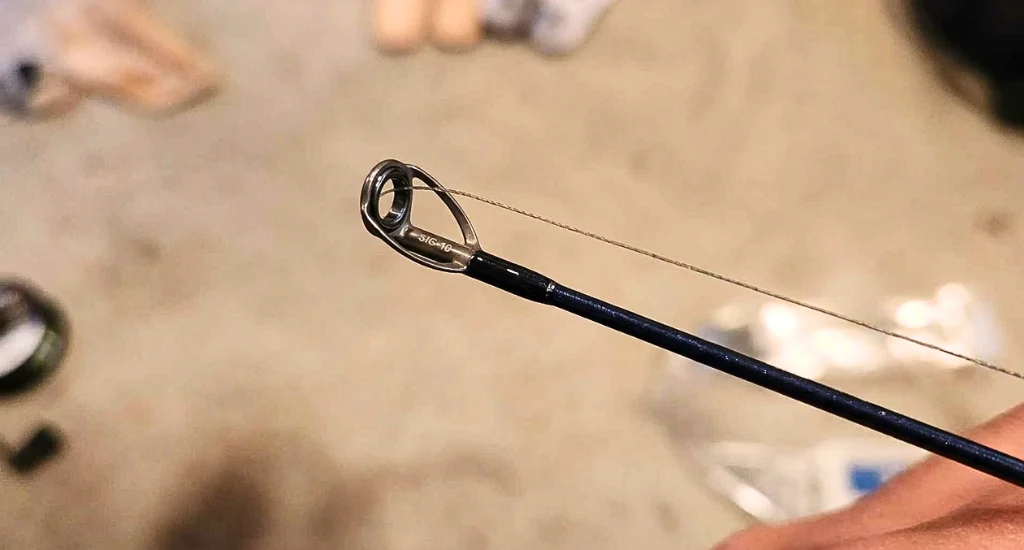
The ferrule is the connection point where the two sections meet. Modern ferrules use either a spigot design (a solid internal peg) or a put-over design (one hollow section sliding over the solid tip of the other). Both designs deliver tight, vibration-friendly connections when properly seated and waxed.
About 90% of fishing rods sold at tackle shops are 2-piece. The format dominates retail because it covers the largest customer base: anglers without trucks, anglers who travel, and anglers with limited home storage. Brands like Shimano, Daiwa, Penn, and Abu Garcia build the vast majority of their freshwater and inshore lineups as 2-piece rods. For a full breakdown of rod and reel categories, see the types of fishing rods and reels guide.
1 Piece vs 2 Piece Fishing Rod – An In-Depth Comparison
The 1-piece vs 2-piece choice affects nine real-world factors that shape how the rod performs, travels, and lasts. Each factor below shows what you actually get with each rod type, not vague pros and cons.
| Serial | Factor | 1-Piece Rod | 2-Piece Rod |
|---|---|---|---|
| 1 | Blank Construction | Single continuous graphite or carbon fiber blank from butt to tip | Two sections joined at a spigot or put-over ferrule near the middle |
| 2 | Sensitivity | Full vibration transfer with no dampening at any joint | 95% of 1-piece feel on quality rods, 80% on budget models |
| 3 | Casting Distance | Marginal edge on lighter lures under 1/4 oz | Equal distance on quality rods, shorter on misaligned guides |
| 4 | Hookset Power | Uniform power transfer with no hinge effect during sweeps | Strong hookset on quality rods, slight hinge on budget rods |
| 5 | Durability | Stronger overall, no joint to slip or shatter under load | Strong blank, the ferrule is the main failure point if neglected |
| 6 | Length When Assembled | 6 to 8 feet, typical bass and inshore range | 6 to 8 feet, same as 1-piece when assembled |
| 7 | Length When Broken Down | Same as assembled, no breakdown option | About half assembled length; a 7’6″ rod becomes 4 feet |
| 8 | Maintenance | Same as assembled, no breakdown option | Wipe down plus ferrule wax every 4 to 6 trips |
| 9 | Repair Options | Snapped tip means replacing the whole rod | Many brands sell replacement tip sections at a lower cost |
| 10 | Vehicle Fit | Needs a truck bed, SUV cargo, or boat rod locker | Fits sedans, hatchbacks, motorcycles, and public transit |
| 11 | Home Storage | Requires 7+ feet of vertical wall space or a tall rack | Fits closets, under beds, and standard rod bags |
| 12 | Travel | Cannot fly without paying oversized baggage fees | Fits checked luggage and most carry-on size limits |
| 13 | Retails Selection | About 10% of tackle-shop inventory, often online-only | About 90% of tackle-shop inventory across all brands |
| 14 | Typical Price Range | $80 to $400+, fewer budget options | $40 to $400+, friendlier entry pricing |
| 15 | Best Use Cases | Tournament bass, surf fishing, finesse drop-shot, Ned rigs | Travel rods, kayak fishing, bank fishing, casual freshwater |
The split is clear on paper. A 1-piece rod gives you raw performance edge and structural simplicity. A 2-piece rod fits your life, your car, and your storage, while modern carbon fiber keeps it within 2–5% of the performance of a comparable 1-piece.
For most anglers fishing the Gulf Coast bays I work, the rod that comes out of the truck most often is the 2-piece, because it is the one that fits. Blank material plays a bigger role in rod feel than piece count, which the carbon fiber vs fiberglass fishing rod comparison breaks down in depth.
Are 1-Piece Rods More Sensitive Than 2-Piece Rods? The Honest 2026 Answer
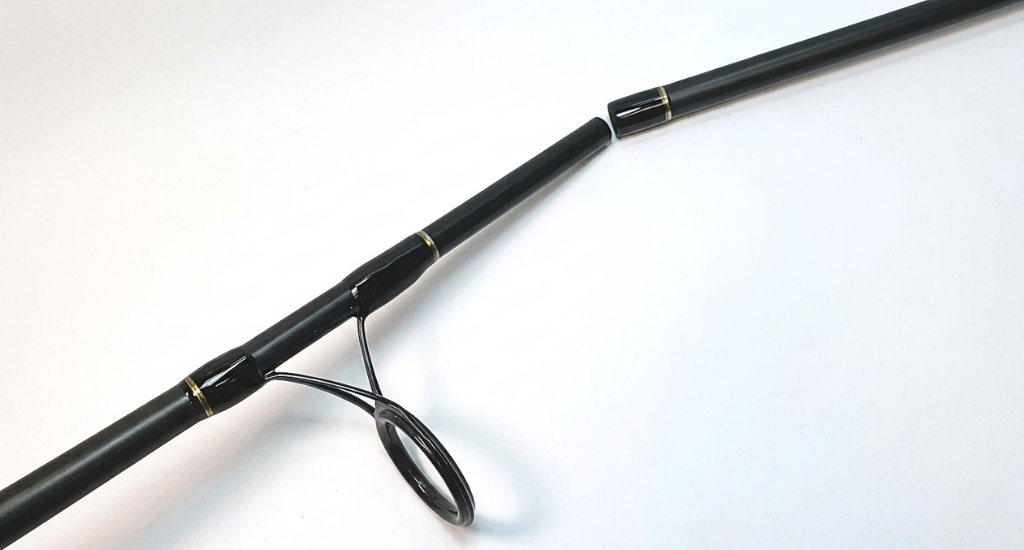
A 1-piece rod is more sensitive than a 2-piece rod, but the difference is roughly 2–5% on modern carbon-fiber blanks. A 1-piece transmits full vibration from tip to handle with no break in the blank. A 2-piece transmits about 95% of that same vibration on quality rods. Only experienced finesse anglers running drop shots or Ned rigs in deep water can reliably feel the difference.
Sensitivity is vibration traveling down the rod blank to your hand. Every physical break in the fibers acts as a small dampener. On 1990s-era ferrules, that dampening was severe. The joints used thick epoxy, loose tolerances, and brass inserts that absorbed vibration before it reached the trigger finger. The “1-piece is dramatically sharper” guidance comes from that era of rod building.
Rod technology has changed. Modern carbon fiber and nano-resins close the physical gap at the joint. Multi-axis carbon wrapping transfers sonic waves through the ferrule with microscopic precision. Manufacturing tolerances tightened to the point where premium 2-piece rods from Daiwa, Shimano, and St. Croix feel almost identical to their 1-piece equivalents.
The guys I fish with and I have tested this in side-by-side casts, dragging a 1/8 oz jig across oyster-shell bottom in Gulf Coast bays. The 1-piece told the truth a half-second faster on the lightest takes. On crankbait strikes, redfish thumps, or any reaction bite, neither of us could call which rod was which with our eyes closed. The gap is real for finesse work and invisible for everything else.
How Ferrules Work (and How to Stop Your 2-Piece From Failing)
A ferrule is the joint where the two sections of a 2-piece rod connect. Ferrule failure is the single biggest reason anglers lose faith in 2-piece rods, and it is almost always preventable with one product (ferrule wax) and a 30-second routine before each trip.
Modern fishing rods use two ferrule designs. Knowing which one your rod has changes how you maintain it.
Spigot vs. Put-Over Ferrules
A spigot ferrule uses a solid carbon peg glued into the bottom section that slides into the hollow top section. The peg sits flush inside the blank, keeping the rod profile slim and uniform. Spigot ferrules feel closest to a 1-piece blank when properly seated.
A put-over ferrule (also called over-sleeve) is the opposite. The hollow top section slides over the solid tip of the bottom section. The connection is stronger and easier to engineer, but it thickens the rod profile slightly at the joint. Most budget and mid-range 2-piece rods use put-over ferrules because the design is more forgiving of manufacturing tolerance.
Why Ferrules Slip and Snap?
Ferrules fail for three reasons. Casting torque slowly loosens the top section, especially during repetitive roll casts or sidearm casts with heavy lures. Temperature swings shrink or expand the carbon fiber, which loosens the joint in cold morning air and locks it tight in hot afternoon sun. Grit and salt residue work into the connection, grinding the carbon fibers down with every assembly cycle.
When a ferrule slips mid-cast, the top section launches off the line. I have watched a rod tip sink into 12 feet of Gulf water after one careless cast with a loose joint. The fix is not stronger glue or different rods. The fix is ferrule wax and a routine.
H3: The 3-Step Ferrule Wax Routine That Saves Rods
This routine takes 30 seconds before each trip and prevents 90% of 2-piece ferrule failures.
1. Clean the male end. Wipe both sides of the ferrule with a dry microfiber cloth. Any grit, salt, or dried mud acts as a grinder during assembly. A damp cloth works for saltwater residue, but dry the joint completely before moving on.2. Apply ferrule wax to the male end. Rub a thin layer of paraffin-based ferrule wax (Loon Outdoors and Tiemco both make good ones) onto the solid section. Standard candle paraffin works in a pinch. The wax fills microscopic gaps, creates friction, and repels moisture.
3. Seat the joint with a quarter-twist. Align the guides slightly off-center. Push the two sections together with steady pressure, then twist the top section a quarter turn to lock the guides in line. Check the joint every hour while fishing, and reseat it if you feel any wobble.
If your ferrule locks up in summer heat and will not separate, do not pull behind your knees; that snaps blanks. Wrap an ice cube around the female section for two minutes to shrink the carbon, then twist free with a cloth for grip. If a tip section has already snapped or a guide is damaged, the ” How to fix a fishing rod guide” walks through the at-home repair steps.
How to Choose Between a 1 Piece & a 2-Piece: A 5-Question Decision Test
The choice between a 1-piece and a 2-piece rod is not about which is “better.” It is about which one best fits your vehicle, your fishing style, your storage needs, and your budget. Answer these five questions honestly, and the right rod becomes obvious.
1. Do you drive a sedan, hatchback, or compact car (not a truck or SUV)?If yes, buy a 2-piece. A 7-foot 1-piece rod will not fit inside a sedan without bending the tip against the windshield or rear glass. Car-door tip breaks are the most common rod casualty I see at Gulf Coast launches.
2. Do you hike, kayak, bike, or use public transit to reach your fishing spot?
If yes, buy a 2-piece. Hiking through brush with an exposed 7-foot tip snaps rods on low branches. Kayaks have no clean spot to lay a 1-piece without tip damage. A 2-piece breaks down into a sling bag or backpack rod tube. For full kayak rod sizing guidance, see the best size rod for kayak fishing guide.
3. Do you target finesse species with drop-shots, Ned rigs, or ultralight jigs?
If yes, lean toward a 1-piece. The 2–5% sensitivity edge matters most when bites are subtle, and lures weigh under 1/4 oz. Trout, crappie, walleye, and pressured bass on finesse rigs all benefit from a continuous blank.
4. Do you fish competitively or in tournaments with a boat?
If yes, buy a 1-piece. Tournament boats come with built-in rod lockers sized for 7- to 8-foot 1-piece rods. The marginal sensitivity advantage and zero-prep readiness matter when a single fish decides the standings.
5. Is your budget under $80 per rod?
If yes, buy a 2-piece. Sub-$80 1-piece rods are rare and usually inferior in components. A $70 Shimano or Ugly Stik 2-piece outperforms most budget 1-piece options on every metric except raw blank simplicity.
If you answered yes to questions 1, 2, or 5, the 2-piece is the right rod regardless of how you answered the others. The practical factors override the marginal performance edge for almost every angler.
Beyond the Binary: 3-Piece, 4-Piece, and Telescopic Rods
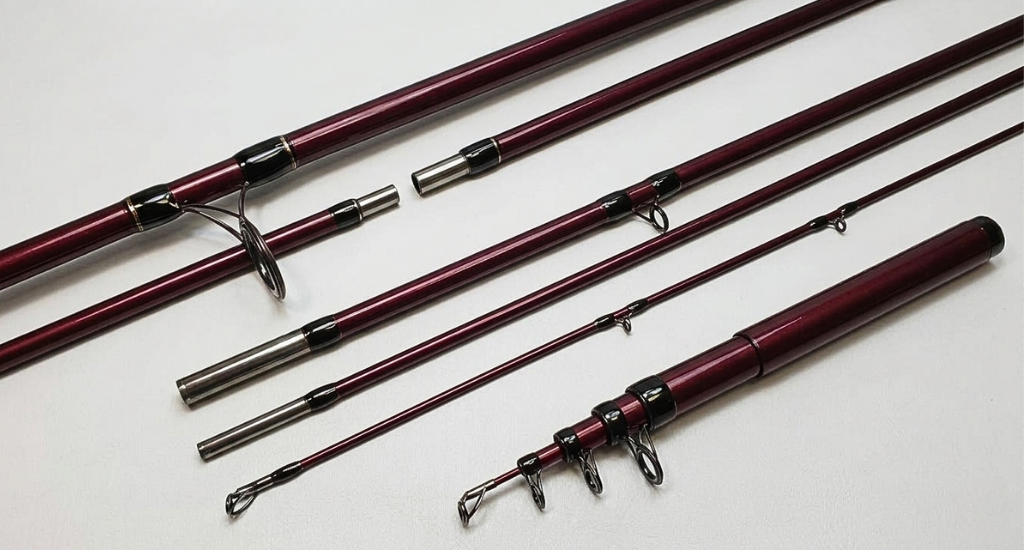
The 1-piece vs 2-piece debate ignores the rods that solve the portability problem completely. A 3-piece, 4-piece, or telescopic rod breaks down small enough to fit a backpack, a carry-on suitcase, or a bike pannier. For traveling anglers, these formats are the real answer.
Most premium fly rods are built as 4-piece by default. A 9-foot 4-piece fly rod breaks down to about 30 inches and ships in a hard tube that fits airline carry-on dimensions. Brands like Sage, Orvis, and G. Loomis treat 4-piece as the standard, not the compromise. The ferrule technology in modern fly rods is so refined that the casting feel matches a 1-piece for almost every angler.
Travel spinning and casting rods follow the same pattern. A 3-piece or 4-piece travel rod from Daiwa, Shimano, or St. Croix collapses to roughly 24 inches and slides into checked luggage without oversize fees. Japanese Domestic Market (JDM) brands like Megabass build 3-piece tournament-grade rods that veteran anglers cannot distinguish from 1-piece blanks by feel alone.
Telescopic rods take portability to the extreme. A 6’6″ telescopic rod collapses to under 18 inches by sliding each section inside the next. The trade-off is real; telescopic rods have more potential failure points and less consistent action than spigot or put-over ferrule rods. They work for backpacking, emergency rods, or kids learning the sport, not for serious fishing.
For airline travel, kayak fishing, or backcountry trips, skip the 1-vs-2 question. Buy a 4-piece travel rod and stop fighting the geometry.
When 1-Piece Rods Truly Win – Trout, Panfish, and Finesse Bass
A 1-piece rod earns its sensitivity edge in one specific scenario: ultralight finesse fishing for species that bite softly with light line and tiny lures. Trout, crappie, panfish, walleye, and pressured bass on finesse rigs are where the 2–5% sensitivity gap turns into real bites detected and real fish landed.
A 1-piece trout rod in the 6′ to 7′ ultralight range transmits the subtle tick of a trout sipping a size-18 nymph in cold spring water. The same bite-on-a-budget 2-piece feels like nothing reaches your hand. Brands like St. Croix Avid and G. Loomis IMX-Pro build dedicated 1-piece trout and panfish blanks specifically because the target bites are too soft for ferrule dampening to forgive.
Drop-shot bass fishing pushes the same principle. A 7′ medium-light 1-piece spinning rod tells you when a smallmouth inhales a 3-inch Roboworm at 22 feet of depth. The bite registers as a faint change in pressure, not a thump. Tournament finesse anglers run 1-piece rods for exactly this reason; every detected bite that competitors miss becomes a counted fish.
Crappie and panfish anglers fishing 1/32 oz jigs under bobbers benefit in the same way. The bite registers as a faint stop in the fall, and a continuous blank delivers that signal most cleanly. Walleye anglers vertical-jigging in 30+ feet of water see the same payoff on light biters.
For everything heavier, like moving baits, bottom-fishing, surf casting, and redfish on cut bait, the sensitivity edge disappears. Reaction strikes the telegraph through any rod. The 1-piece advantage lives in the finesse world, and that is where the extra hassle is worth it.
For finesse rod selection by species, the best size rod for trout fishing guide breaks down length and power matchups in detail.
The Honest Truth – It’s Mostly a Price Question
The 1-piece vs 2-piece debate is mostly a price question in disguise. A $200 2-piece outperforms a $50 1-piece on every metric that matters, including sensitivity. The real variable is rod quality and components, not piece count.
At the budget tier ($40 to $80), cheap 2-piece rods earn their bad reputation. The ferrules are sloppy, the joints click under load, and the blanks use heavy fiberglass-wrapped over-sleeves that deaden the action. Ugly Stik GX2 and KastKing Perigee II are honest options here, but neither feels close to a quality 1-piece.
At the mid-tier ($120 to $200), the gap between 1-piece and 2-piece shrinks to almost nothing. A Shimano SLX 2-piece, a Daiwa Tatula 2-piece, or a St. Croix Premier 2-piece delivers ferrule quality tight enough that side-by-side feel testing requires careful attention. This is the sweet spot for most anglers.
At the premium tier ($250+), the gap closes completely. G. Loomis NRX+, Megabass JDM 3-piece, and St. Croix Legend Tournament rods use multi-axis carbon wrapping and precision-machined ferrules that transfer vibration as cleanly as 1-piece blanks. Spend the money on quality, not on piece count.
If your budget is under $80, buy a 2-piece every time. If you have $150+ to spend, the piece count becomes a logistics decision rather than a performance one.
The Bottom Line
A 2-piece fishing rod is the right choice for most anglers in 2026. The 2–5% performance gap rarely shows up on the water, and the portability, storage, and price advantages show up every single trip. Before buying any rod, first measure your vehicle’s interior length and your home storage space. Visit All for Fishing for more rod selection guides, including length, power, and material breakdowns.
FAQs
Are 2-piece fishing rods good?
Yes, 2-piece fishing rods are good and perform at about 95% of a comparable 1-piece rod, with only a 2–5% gap on modern carbon fiber blanks. They are the right choice for anglers with smaller vehicles, limited storage, or travel needs. Brands like Shimano, Daiwa, and St. Croix build quality 2-piece rods across every price tier.
Is a 2-piece rod bad?
A 2-piece rod is not bad. That belief comes from 1990s-era ferrule designs that dampened vibration and slipped during casts. Modern ferrule technology closed that gap. The bad rods are cheap rods, and they are bad whether they are 1-piece or 2-piece. A quality 2-piece outperforms a cheap 1-piece every time.
Do 2-piece fishing rods break easily at the joint?
Quality 2-piece rods rarely break at the ferrule. The most common break point on any rod is the rod tip, not the joint. When 2-piece rods fail at the ferrule, the cause is almost always a loose, unwaxed connection that slipped mid-cast. A waxed ferrule is one of the strongest points on the blank.
Can you travel with a 1-piece fishing rod?
Traveling with a 1-piece rod is difficult. A 7-foot 1-piece rod must be checked as oversized baggage on flights, will not fit most rental cars, and is awkward on public transit. A 2-piece, 3-piece, or 4-piece travel rod is the standard solution for any angler flying, hiking, or kayaking to their fishing spot.
Why do professional bass anglers use 1-piece rods?
Professional bass anglers use 1-piece rods because their tournament boats have built-in rod lockers sized for 7-foot blanks. They face zero storage or transport problems that weekend anglers face. The marginal 2-5% sensitivity advantage matters in tournaments where a single fish decides the standings, so pros default to 1-piece.