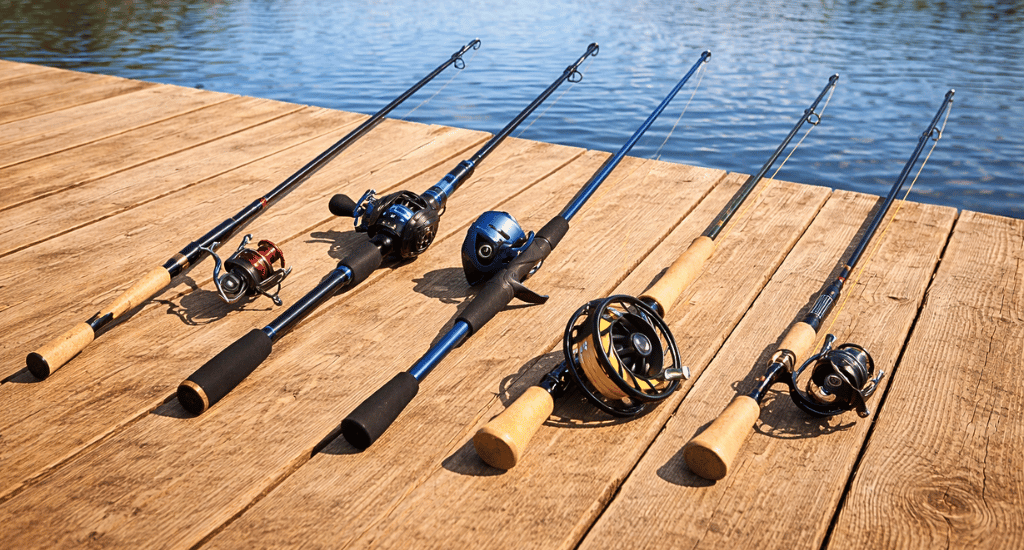
Fishing rods and reels form the base of every fishing setup and control how you cast and catch fish. The main types of fishing rods and reels include spinning, baitcasting, spincast, fly, and specialty setups for different conditions.
Many anglers feel confused after seeing so many gear options without clear guidance. The wrong setup reduces casting distance, weakens bite signals, and fails to handle strong fish movements, which result in missed catches and poor control.
This guide will discuss on what are the different types of fishing rods and reels, how each one works, and which setup suits freshwater, saltwater, fly fishing, and skill levels from beginner to advanced.
Types of Fishing Rods
Fishing rods come in many styles, each built for a clear purpose and fishing condition. When you explore different types of fishing rods and reels, you will notice how design affects control, strength, and fish response.
Spinning Rods
Spinning rods suit beginners because they feel easy and comfortable during regular fishing sessions. These rods work with spinning reels and handle light to medium lures with steady control. A common choice includes a 7ft medium spinning rod for daily use.
Baitcasting Rods
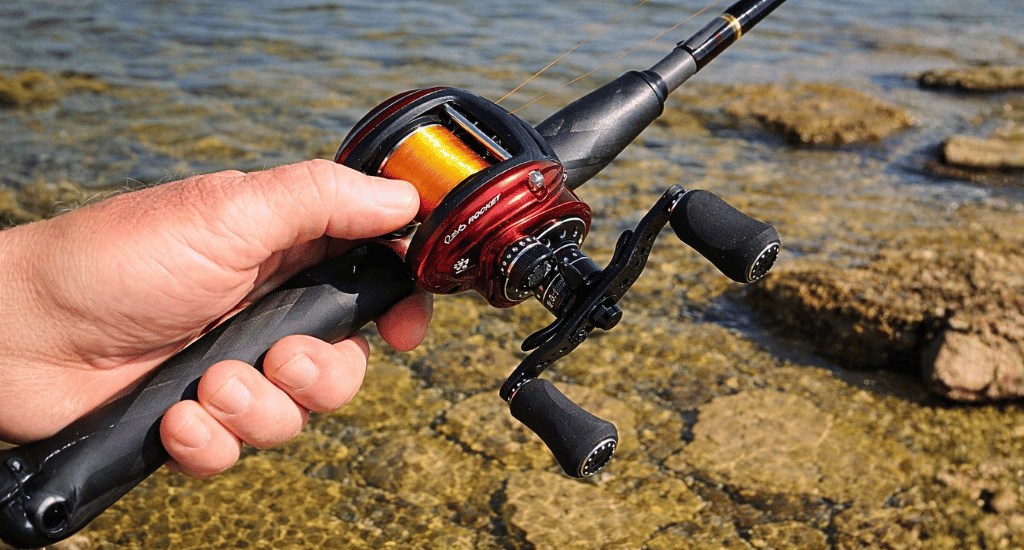
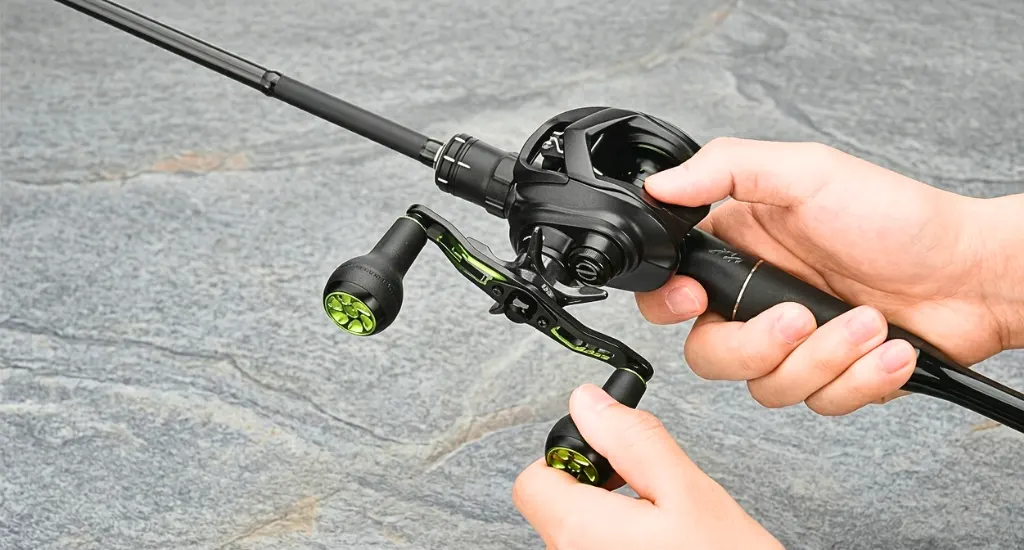
Baitcasting rods offer strong control and accurate casting for anglers with some experience. These rods pair with baitcaster reels and handle heavier lures with better precision. Popular sizes include 7ft medium-heavy rods and longer heavy rods for large fish.
Spin Casting Rods
Spin casting rods offer a simple setup that new anglers can use without much effort. The reel sits on top, and the design helps avoid line trouble during casting. This type suits children and beginners who need an easy start.
Fly Rods
Fly rods support fly fishing, where light artificial flies attract fish instead of heavy bait. These rods feel flexible and help with gentle casting across water surfaces. Anglers use them in rivers and streams for species like trout.
Tenkara Rods
Tenkara rods come from Japan and use a fixed line instead of a reel system. The rod extends long and stays very light during use. This method suits small streams where simple gear works best.
Carbon Fiber Rods
Carbon fiber rods feel light in the hand and provide strong performance during long fishing hours. The material offers better sensitivity, so small bites become easier to notice. Many modern rods use this material for strength and durability.
Ultra-Light Rods
Ultra-light rods target small fish and offer high sensitivity for light bites. These rods work best with thin lines and small lures in calm waters. Anglers use them for panfish and similar species.
Ice Fishing Rods
Ice fishing rods stay short and compact to fit small holes in frozen water. The design allows better control in tight spaces with limited movement. These rods help anglers catch fish in cold environments.
Types of Fishing Reels
Fishing reels control the fishing line and support smooth casting and retrieval during each session. When you study what are the different types of fishing rods and reels, reel choice plays a key role in ease, control, and overall fishing success.
Spinning Reels
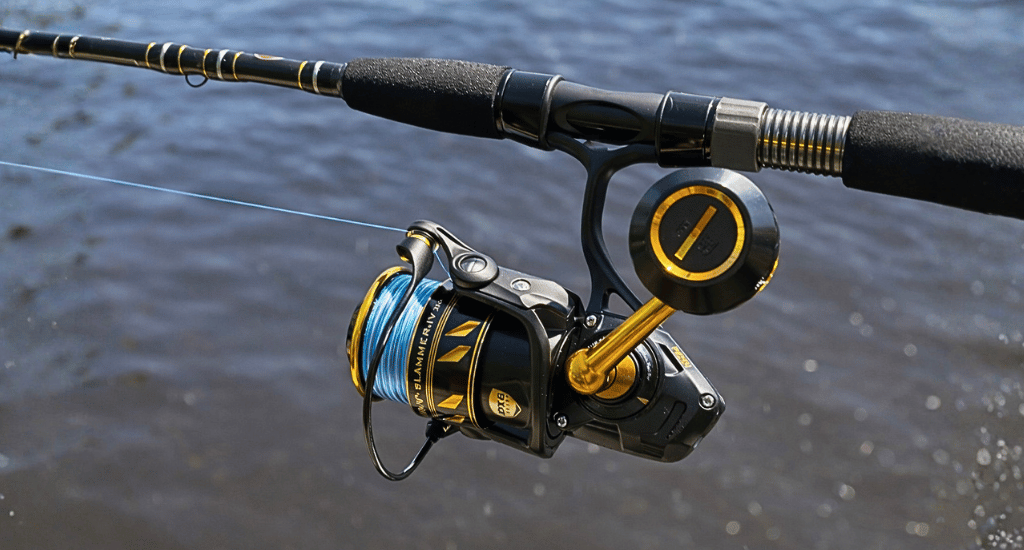
Spinning reels remain the most popular choice for beginners due to their simple and reliable design. These reels handle light to medium lures with steady control and reduce line trouble during normal casting situations.
Baitcaster Reels
Baitcaster reels offer high control and better accuracy for anglers with some fishing experience. These reels stay smaller in size and allow precise lure placement. They work well with heavier lures and strong fishing lines.
Spincast Reels
Spincast reels feature a closed-face design that protects the line and keeps the setup simple. This type suits beginners who want an easy start. The push-button system helps smooth casting without much effort.
Also, read our blog on fly fishing in a float tube, if you want to have that experience in the near future.
Key Rod Specifications (Must-Know Factors)
Rod specifications decide how a rod feels and performs during real fishing situations. When you review types of fishing rods and reels, these factors help you match the right rod with your fishing style and target fish size.
Rod Length
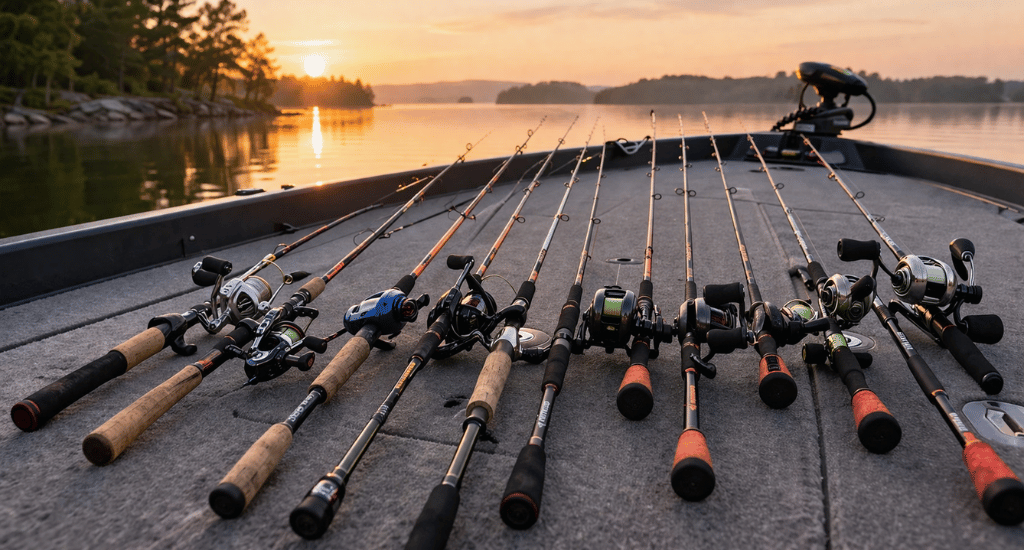
Rod length affects how far you cast and how much control you have during each cast. A 6 ft 10 in medium-light spinning rod suits light fishing, while 7ft rods stay the most versatile. Longer 7ft4 to 7ft6 heavy rods support strong fish and heavy cover.
Test Curve / Power
A test curve, also called power, shows how much force a rod can handle during fishing. Light rods suit small fish, while medium and heavy rods handle larger fish with better strength and control.
Casting Weight
Casting weight tells you how heavy your lure should be for safe and smooth performance. A proper match protects the rod and improves casting results. The wrong lure weight can reduce accuracy and damage the rod over time.
Rod Action
Rod action explains how fast the rod bends when pressure is applied during fishing use. Fast action rods react quickly and improve bite signals, while slow action rods bend more and help during strong fish movements.
Matching Rods with Reels (Important Combos)
The right rod and reel combo improves control, casting accuracy, and overall fishing results. When you explore different types of fishing rods and reels, proper pairing helps avoid balance issues and gives better performance in real situations.
7ft Medium Spinning Rod + Spinning Reel
This combo suits beginners because it feels balanced and easy during regular fishing sessions. A 7ft medium spinning rod handles many conditions and works well with light to medium lures. It offers smooth casting with fewer line problems.
7ft Medium-Heavy Baitcasting Rod + Baitcaster Reel
This setup fits anglers who want more control and better casting accuracy in different conditions. The medium-heavy rod supports stronger lines and heavier lures. It helps target larger fish with improved precision and power.
Light Rod + Spinning Reel
A light rod paired with a spinning reel suits finesse fishing in calm water areas. This setup helps detect small bites and works well with thin lines. It fits situations where fish react to subtle and natural lure movement.
Heavy Rod + Baitcaster Reel
A heavy rod with a baitcaster reel suits strong fish and dense fishing areas with heavy cover. This combo offers high strength and better control during fights. It helps pull fish out of thick weeds and tight spaces.
How to Choose the Right Rod and Reel
The right choice depends on where you fish, your skill level, and the fish you target. When you compare types of fishing rods and reels, these simple factors help you pick a setup that feels balanced and works well.
Based on Fishing Type
Fishing location and method decide which rod and reel setup suits your needs. Freshwater setups stay lighter, while saltwater fishing gear needs strong materials to resist corrosion. Fly fishing uses special rods, while lure fishing works better with spinning or baitcasting setups.
Based on Skill Level
Skill level plays a big role in how easy your fishing experience feels each day. Beginners should use a spinning combo because it offers simple control and fewer line issues. Advanced anglers often prefer baitcaster setups for better accuracy and stronger control.
Based on Fish Size
Fish size affects the strength and power needed from your rod and reel setup. Light rods work well for small fish and provide better bite signals. Heavy rods suit large fish and handle strong pulls with more control and safety.
Conclusion
The right setup plays a big role in fishing success and overall comfort during each trip. A well-matched rod and reel improve casting control, detect bites faster, and handle fish movement with better balance and strength.
Beginners should use a spinning setup for easy control and smooth casting in most situations. Advanced anglers often prefer baitcasting setups for better accuracy and stronger performance. Proper knowledge of rod length, power, and reel type helps you fish with confidence.
FAQs
What is the best rod and reel combo for beginners?
A 7ft medium spinning rod paired with a spinning reel works best for beginners because of its simple control and balance. This setup offers easy casting, fewer line issues, and enough versatility for different fishing situations and fish sizes.
What is the difference between spinning and baitcasting reels?
Spinning reels feel easy and suit beginners who want simple and smooth casting control. Baitcaster reels offer higher accuracy and better control, but they need practice and skill. Many anglers prefer them for heavy lures and precise casting situations.
What rod length should I choose?
Around 7ft rod length works best for most anglers because it offers a good mix of casting distance and control. This length suits many fishing styles and conditions, which makes it a safe and practical choice for beginners and experienced anglers.