Fishing rod guides are sized by ring inner diameter in millimeters. Standard sizes range from 4 to 30 mm. Micro guides range from 1 to 4 mm. The chart applies to spinning, casting, and fly rods.
The right guide size affects casting distance, line flow, and rod sensitivity. The wrong size kills your cast or wears out your line. After 24 years of guiding anglers across Gulf Coast waters, I have rebuilt dozens of damaged rods. This guide gives you every chart you need to size, space, and replace guides with confidence.
Fishing Rod Guide Size Chart: All Sizes in mm and Inches
Fishing rod guides run from size 4 to size 30 in standard ranges. Each size matches a ring inner diameter measured in millimeters. The chart below covers every standard guide size, including mm, inches, frame height, and common positions on the rod.
| Size (No.) | Ring ID (mm) | Ring ID (in) | Frame Height (mm) | Common Position |
|---|---|---|---|---|
| 4 | 4 | 0.157 | 10-14 | Running, tip area |
| 5 | 5 | 0.197 | 12-16 | Running |
| 5.5 | 5.5 | 0.217 | 13-18 | Running (casting micro) |
| 6 | 6 | 0.236 | 14-20 | Running, a light stripper for casting |
| 7 | 7 | 0.276 | 16-22 | Running |
| 8 | 8 | 0.315 | 18-26 | Running |
| 10 | 10 | 0.394 | 22-32 | Running, transition |
| 12 | 12 | 0.472 | 26-38 | Small stripper (casting) |
| 14 | 14 | 0.551 | 30-42 | Transition stripper |
| 16 | 16 | 0.63 | 34-48 | Stripper (spinning reduction) |
| 20 | 20 | 0.787 | 42-60 | Stripper (spinning) |
| 25 | 25 | 0.984 | 50-72 | Stripper (spinning, larger reel) |
| 30 | 30 | 1.181 | 58-80 | Heavy surf or saltwater stripper |
Use this as your main reference. Brands vary slightly, so always measure your existing guide if replacing one. The frame height column helps when matching the guide profile during repairs.
Micro Guide Size Chart (Sizes 1 to 4)
Micro guides are small, lightweight guides used on modern casting rods and some light spinning builds. They run from size 1 to size 4. The smaller ring trims weight on the rod tip, sharpens sensitivity, and improves casting feel.
| Size (No.) | Ring ID (mm) | Ring ID (in) | Frame Height (mm) | Common Position |
|---|---|---|---|---|
| 1 | 1 | 0.039 | 6-8 | Running (casting) |
| 2 | 2 | 0.079 | 7-9 | Running (casting) |
| 3 | 3 | 0.118 | 8-10 | Running (casting, light spinning) |
| 4 | 4 | 0.157 | 10-12 | Running, transition |
Micro guides work best on bass casting rods running braid with small leader knots. They can struggle if you tie thick leader knots, since the small ring traps the knot during casting. For most anglers, a mix of micro running guides with one or two larger transition guides near the reel solves this problem.
Tip-Top Size Chart: Matching Ring to Tube
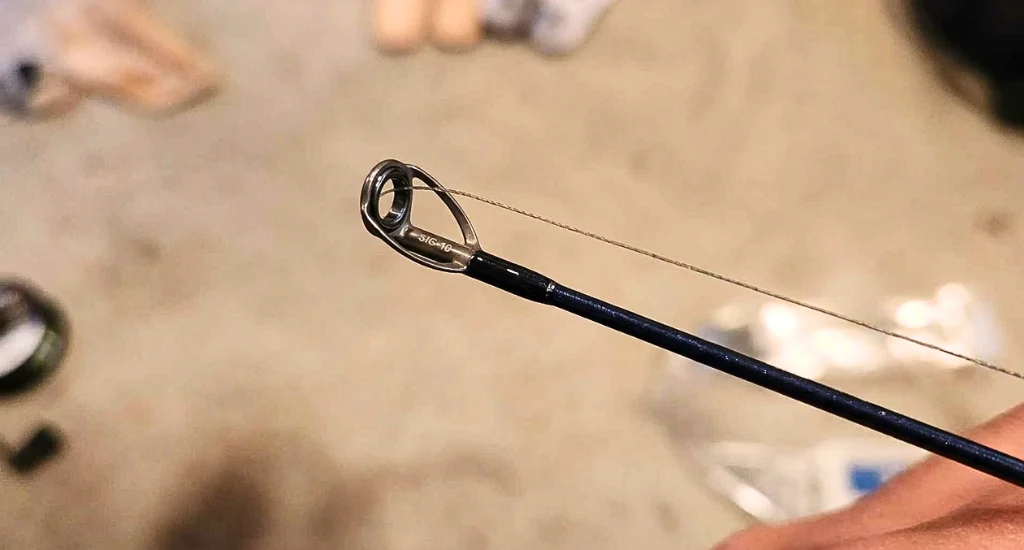
The tip-top is the small guide at the very end of your rod. It has two measurements that matter for proper fitment: the ring size and the tube size. The ring size matches your smallest running guide. The tube size matches the outer diameter of your blank tip.
| Tip-Top Ring Size | Tube Size (mm) | Tube Size (in) | Best For |
|---|---|---|---|
| 4-5 | 1.4-1.8 | 0.055-0.071 | Ultralight, ice rods |
| 6 | 1.8-2.2 | 0.071-0.087 | Light freshwater spinning |
| 6-8 | 2.0-2.6 | 0.079-0.102 | Medium spinning and casting |
| 8-10 | 2.6-3.2 | 0.102-0.126 | Heavy casting, inshore saltwater |
| 10-12 | 3.2-4.0 | 0.126-0.157 | Surf, offshore, big saltwater |
| 12-16 | 4.0-5.5 | 0.157-0.217 | Heavy surf, light trolling |
To pick the right tip-top, do two things. First, measure your blank tip OD with calipers and match it to the tube size column. Second, check your last running guide size and match the ring column. If your blank tip OD falls between two tube sizes, go one size smaller and use light heat on the adhesive during fit.
Guide Spacing Chart for Spinning Rods
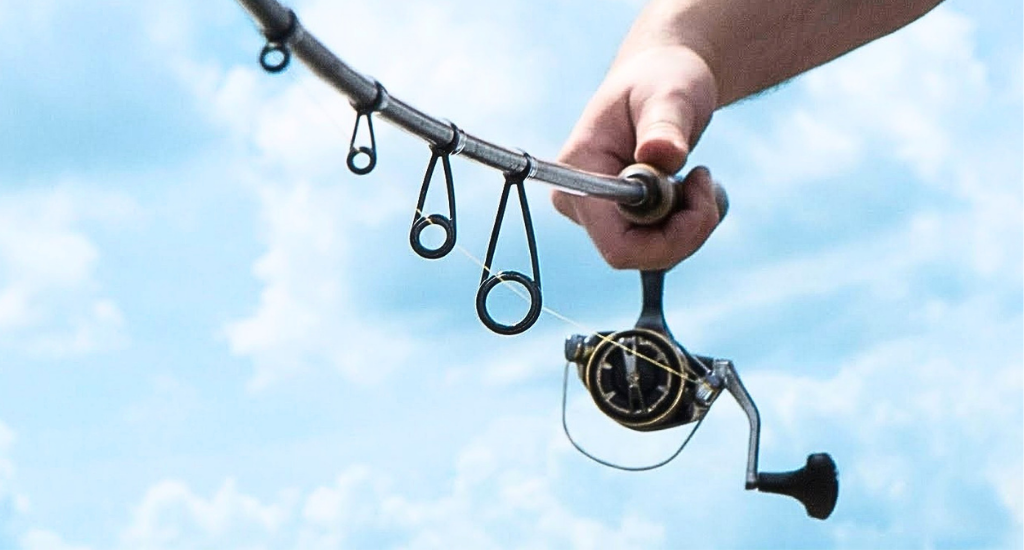
The spacing of the spinning rod guides follows a reduction train pattern. The stripper guide sits closest to the reel and tames the loops coming off the spool. Reduction guides step the line size down quickly. Running guides carry the line in a straight path to the tip.
The most common reduction train for a 7-foot spinning rod is 25-12-8 with size 6 running guides. The exact spacing depends on rod length, blank action, and reel size. Below is a sample spacing chart for a 7-foot medium-power spinning rod paired with a 2500- or 3000-size reel.
| Position | Distance from Tip (mm) | Suggested Size |
|---|---|---|
| Tip-Top | 0 | 6-ring, tube matched to blank |
| Guide 1 | 100 | 6 |
| Guide 2 | 210 | 6 |
| Guide 3 | 330 | 6 |
| Guide 4 | 470 | 7 |
| Guide 5 | 630 | 8 |
| Guide 6 | 820 | 10 |
| Guide 7 | 1030 | 12 |
| Stripper | 1260 to 1350 | 20 or 25 |
Use this layout as a starting point. Match the stripper to your reel size. A 2500 reel pairs with a size 20 stripper. A 3000 or 4000 reel pairs with a size 25 stripper. For longer rods like 7’6″ or 8′, add 50 to 80 mm to each guide position and add one extra running guide near the tip.
Always run a static load test before final wrapping. Tape the guides in place, run the line through them, attach a weight, and flex the rod. Watch the line path. Adjust any guide that creates a sharp angle or shows a flat spot in the bend.
Guide Spacing Chart for Casting Rods
Casting rod guide spacing runs smaller and tighter than that of spinning rods. The line travels along the underside of the blank, so guides sit lower with shorter frame heights. The reduction train uses smaller strippers (10 to 16) compared to the 20-25 used on spinning rods.
The most common reduction train for a 7-foot casting rod is 12-10-8 with size 6 running guides. Bass casting rods often use a micro train like 10-8-6-5-5-5 for sharper sensitivity. Below is a sample spacing chart for a 7’2″ medium-heavy casting rod.
| Position | Distance from Tip (mm) | Suggested Size |
|---|---|---|
| Tip-Top | 0 | 6-ring, tube matched to blank |
| Guide 1 | 90 | 6 |
| Guide 2 | 200 | 6 |
| Guide 3 | 320 | 6 |
| Guide 4 | 450 | 6 |
| Guide 5 | 600 | 8 |
| Guide 6 | 780 | 10 |
| Guide 7 | 1000 | 12 |
| Stripper | 1200 to 1280 | 12 |
Casting rods do not need the big stripper that spinning rods use. The reel sits above the blank rather than below it, so the line enters the guide train at a much smaller angle. A size 12 stripper handles most bass and inshore casting setups. Step up to size 16 only for heavy swimbait or big jig rods running thick leaders.
Micro guide trains save weight and improve feel but require a careful leader-knot fit. If you tie FG knots or thick-leader knots, avoid running size-5 guides. Use size 6 or 7 running guides instead, so knots glide through without catching.
Guide Spacing Chart for Fly Rods
Fly rod guides differ entirely from those used in spinning and casting setups. Fly rods use one or two large stripping guides near the butt section. The rest of the rod uses light wire snake guides or single-foot ceramic guides. Snake guides shoot fly line cleanly and weigh almost nothing.
The most common layout for a 9-foot 5-weight fly rod is one size 16 stripper followed by snake guides sized 4 down to 1 toward the tip. Saltwater fly rods step up to two strippers (16 and 12) to handle thicker fly line and shock leaders.
Below is a sample spacing chart for a 9-foot, 5-weight trout fly rod.
| Position | Distance from Tip (mm) | Suggested Size |
|---|---|---|
| Tip-Top | 0 | 4 to 5 ring fly tip |
| Snake 1 | 100 | Size 1 |
| Snake 2 | 220 | Size 1 |
| Snake 3 | 350 | Size 2 |
| Snake 4 | 490 | Size 2 |
| Snake 5 | 640 | Size 3 |
| Snake 6 | 800 | Size 3 |
| Snake 7 | 980 | Size 4 |
| Stripping Guide | 1180 to 1280 | Size 16 |
For a 9-foot 8-weight saltwater fly rod, the layout shifts. Use two stripping guides (size 16 followed by size 12) and run snake guides sized 5 down to 2 toward the tip. The bigger strippers handle thicker fly line, salt spray, and the shock leaders used for tarpon, redfish, and bonefish.
Wire snake guide sizes run from 1/0 and 2/0 at the smallest (tip area) up to 6 at the largest (butt area). The numbering is reversed from standard guides, so size 1 is small, and size 6 is large. Single-foot ceramic fly guides use the same numbering as standard guides (5.5, 6, 8, etc.) and work as direct replacements for snakes in the upper third of the rod.
How to Match Guide Size to Line Weight and Reel Size
Match the running guide size to your line weight. Match the stripper guide size to your reel size. These two rules cover 95% of guide-selection decisions for spinning and casting rods.
Running Guide Size by Line Weight
The running guides carry your line from the stripper to the tip. The right size lets the line flow smoothly without trapping leader knots. Use the chart below to pick the right running guide size for your line.
| Line Type & Weight | Running Guide Size |
|---|---|
| Mono under 10 lb | Size 6 |
| Mono 10 to 14 lb | Size 6 to 8 |
| Mono 15 to 20 lb | Size 8 to 10 |
| Mono 20 to 40 lb (surf) | Size 10 to 12 |
| Mono 40+ lb with shock leader | Size 12 to 16 |
| Braid under 20 lb | Size 6 |
| Braid 20 to 40 lb | Size 6 to 8 |
| Braid 40+ lb | Size 3/8 to 10 |
If you tie thick leader knots like FG or PR knots, bump up one size to let the knot pass cleanly. Cold-weather icing also matters. For winter fishing, run size 6 or 7 minimum to stop ice buildup in the guides.
Stripper Guide Size by Reel Size
The stripper guide tames the loops coming off your reel spool. The size needs to match the spool diameter so the line enters the guide cleanly. Use the chart below to pick the right stripper guide for your reel.
| Reel Size | Stripper Guide Size | Best For |
|---|---|---|
| 1000 to 2500 spinning | 16 to 20 | Ultralight, trout, panfish |
| 2500 to 3000 spinning | 20 to 25 | Bass, walleye, light inshore |
| 3000 to 4000 spinning | 25 | Inshore saltwater, light surf |
| 5000 to 6000 spinning | 25 to 30 | Surf, heavy inshore, light offshore |
| 6000+ spinning | 30 to 40 | Heavy surf, offshore casting |
| Baitcaster (all sizes) | 10 to 16 | Bass casting, inshore casting |
Spinning reels need bigger strippers because the line comes off the spool in wide coils. Baitcasters spool line straight off the top, so the line enters the guide train at a much smaller angle. That is why a baitcaster stripper can be 10 while a spinning stripper for the same line weight needs to be 25.
How to Measure a Fishing Rod Guide (Step-by-Step)
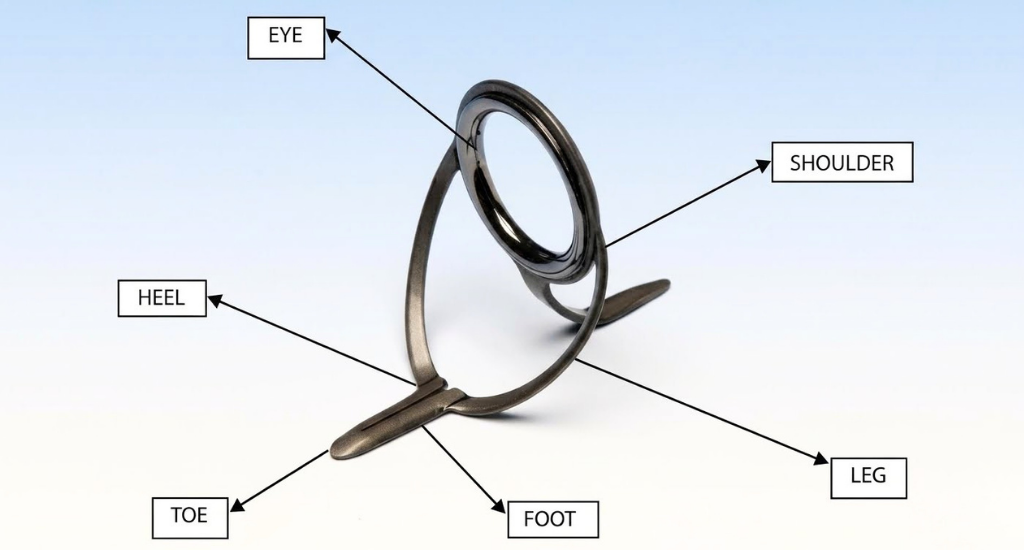
Measure a fishing rod guide by checking the inner diameter of the ring in millimeters. Use calipers and take two readings at 90 degrees apart. The smaller reading gives you the true size number. This method works for replacing a broken guide or matching a new build.
I have rebuilt dozens of damaged rods over 24 years of guiding. Most repair jobs go wrong because the angler ships a broken rod without first measuring the old guide. A 3-week back-and-forth turns into a 3-day fix when you measure before you order.
Here is the step-by-step process.
1. Clean the guide ring with a damp cloth. Dirt and salt residue throw off caliper readings. Wipe both the ring and the frame before measuring.
Guide Insert Materials Comparison
Guide insert materials, shape line flow, durability, and braid compatibility. Modern rods use four main insert materials: aluminum oxide, Alconite, SiC, and Torzite. Pick the right material based on your line type, target water, and budget.
| Material | Cost Tier | Braid Compatibility | Saltwater Use | Best For |
|---|---|---|---|---|
| Aluminum Oxide | Budget ($) | Fair, grooves over time | Decent with rinse care | Monoline, freshwater bass rods |
| Alconite | Mid ($$) | Good, harder than aluminum oxide | Good | All-purpose freshwater and light saltwater |
| SiC (Silicon Carbide) | Premium ($$$) | Excellent, slick, and groove-resistant | Excellent | Braid-heavy setups, saltwater rods |
| Torzite | Premium+ ($$$$) | Best, lightest premium material | Excellent | Tournament rods, finesse builds |
Aluminum oxide is the most common budget insert. It handles mono line well but develops grooves from braided line within 1 to 2 seasons. Cheap rods under $50 almost always use aluminum oxide.
SiC stands for silicon carbide and is the gold standard for braid. It runs cool under heavy load, resists groove wear, and lasts the life of the rod. Most quality rods between $150 and $400 use SiC inserts.
Torzite is Fuji’s premium material. It runs 30% lighter than SiC and 20% slicker. The trade-off is cost. Torzite rods start around $300 and climb to $700+. The weight savings matter most on long fishing days and finesse setups.
For most anglers, the choice comes down to budget. Spend on SiC inserts if you regularly run braid. Stick with aluminum oxide if you fish mono and want to save money for other gear.
How Many Guides Should a Fishing Rod Have?
A fishing rod should have one guide per foot of rod length, plus the tip-top. A 6-foot rod has 7 guides total. A 7-foot rod has 8 guides total. Premium rods often add one or two extra guides near the tip to improve load distribution and line flow.
The table below shows the standard guide count by rod length.
| Rod Length | Standard Guide Count | Premium Guide Count |
|---|---|---|
| 5′ | 6 (5 + tip-top) | 7 |
| 6′ | 7 (6 + tip-top) | 8 |
| 6’6″ | 7 to 8 | 8 to 9 |
| 7′ | 8 (7 + tip-top) | 9 to 10 |
| 7’6″ | 8 to 9 | 9 to 10 |
| 8′ | 9 (8 + tip-top) | 10 to 11 |
| 9′ | 10 (9 + tip-top) | 11 to 12 |
| 9′ fly rod | 10 (9 snakes + tip-top, with stripper as one) | 10 to 11 |
| 12′ surf rod | 13 (12 + tip-top) | 13 to 14 |
Extra guides near the tip help spread the bend during a fight. The blank loads more evenly, the line stays in a straight path, and casting feels smoother. Cheap rods skip these extra guides to save money. Quality rods include them by default.
Adding too many guides hurts performance. Each guide adds weight and friction. Too many guides mute sensitivity, slow line flow during casts, and stiffen the rod tip. The sweet spot for most builds is one per foot plus one or two extras near the tip.
The Bottom Line
Fishing rod guides run from size 4 to size 30 in standard ranges, with micro guides from 1 to 4. Match the running guide size to your line weight. Match the stripper guide size to your reel size. Follow the spacing charts above for your rod type and run a static load test before final wrapping.
Before replacing any guide, measure the old one with calipers first. The size number is the ring ID in millimeters. For more rod selection guides and gear breakdowns, visit All for Fishing.
FAQs
How do you determine fishing rod guide size?
Determine the fishing rod guide size by measuring the ring's inner diameter (ID) in millimeters with calipers. A size 6 guide has a 6 mm ring ID. Take two readings at 90 degrees and use the smaller one. Match the result to a standard rod guide size chart for confirmation.
How many guides are on a 7'6" rod?
A 7'6" fishing rod typically has 8 to 9 guides total, including the tip-top. The general rule is one guide per foot of rod length, plus the tip. High-end builds often add one or two extra guides near the tip for smoother load distribution and better line flow.
How do I know what size fishing rod to get?
Pick rod size based on target species, fishing location, and casting needs. A 6'6" to 7' rod works for most freshwater and inshore fishing. Surf rods run 9' to 12'. Offshore rods drop to 5'6" to 7' for leverage. Check the size of the fishing rod for a beginner for full sizing.
Are more guides on a fishing rod better?
More guides are better up to a point. Extra guides distribute load evenly along the blank, reduce line slap, and improve casting accuracy. Too many guides add weight, mute sensitivity, and slow line flow. The sweet spot is one guide per foot of length, plus one or two extras near the tip.
How do you measure for a size guide?
Measure the ring's inner diameter (ID) in millimeters using calipers. The ID gives you the size number (a 6 mm ID = size 6). For tip-tops, also measure the tube size by checking the blank tip outer diameter and matching it to the tube ID.