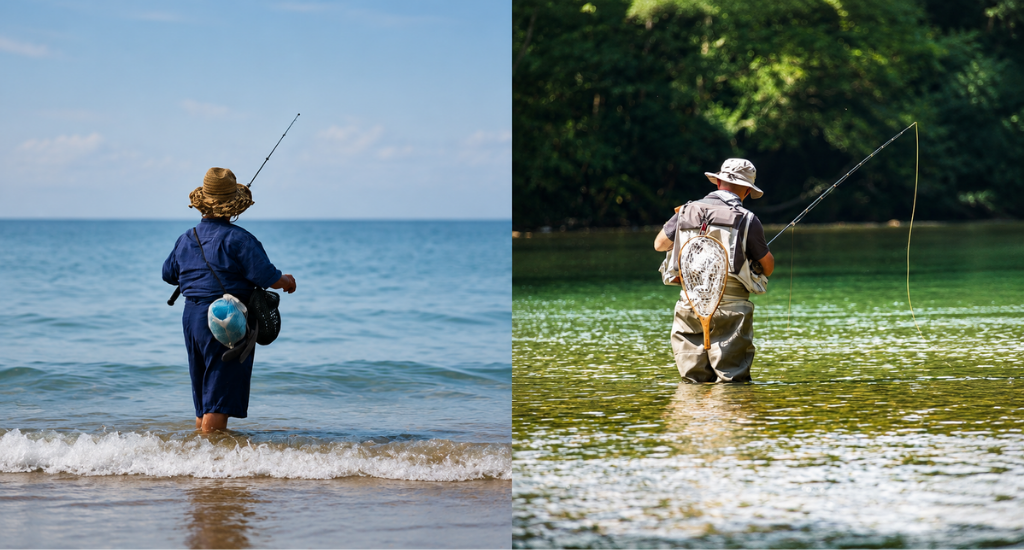
Saltwater fishing rods use corrosion-resistant materials such as fiberglass, stainless-steel guides, and sealed reel seats. Freshwater fishing rods use lighter graphite blanks with aluminum oxide guides built for sensitivity. The right choice comes down to where you fish, what species you target, and how harsh the water is on your gear.
The wrong rod costs you time and money. A freshwater rod fails in saltwater within months. A saltwater rod works in freshwater but feels heavy for finesse fishing. After 24 years guiding anglers across Gulf Coast bays and freshwater lakes, I have watched anglers waste hundreds of dollars on the wrong gear. This guide breaks down materials, length, power, components, and crossover picks. You will know exactly which rod to buy by the end.
Here is the fast decision table. Pick your column.
| Buy a Saltwater Rod If: | Buy a Freshwater Rod If: |
|---|---|
| You fish bays, beaches, or the open ocean | You fish lakes, rivers, ponds, or streams |
| You target redfish, snook, trout, tuna, or marlin | You target bass, walleye, trout, or panfish |
| You want one rod that works in both environments | You only fish in freshwater and want max sensitivity |
| Your budget allows for $80 or more | Your budget is under $80 |
| You can rinse the rod after every trip | You want low-maintenance gear |
How Do Saltwater and Freshwater Fishing Rods Compare Side by Side?
Saltwater and freshwater fishing rods differ across 15 specs that shape materials, length, power, and lifespan. The table below covers every spec dimension side by side. Match the rod to your environment and target species without guessing.
| Spec | Saltwater Rod | Freshwater Rod |
|---|---|---|
| Typical Length | 6 ft to 14 ft | 5 ft to 8 ft |
| Blank Material | Fiberglass or graphite-fiberglass composite | Graphite or composite (graphite-heavy) |
| Common Power | Medium-heavy to extra-heavy | Ultralight to medium-heavy |
| Common Action | Moderate to slow offshore, fast inshore | Fast or extra-fast |
| Guide Frames | Stainless steel, titanium, and anodized aluminum | Standard stainless steel or aluminum |
| Guide Inserts | Silicon carbide (SiC) or aluminum oxide | Aluminum oxide or ceramic |
| Reel Seat | Sealed graphite or aluminum, marine-grade hardware | Standard graphite or aluminum |
| Line Rating | 8 lb to 200 lb | 4 lb to 25 lb |
| Sensitivity | Lower, built for durability | Higher, built for feel |
| Weight | Heavier, built for power | Lighter, built for finesse |
| Target Species | Tuna, marlin, redfish, snook, tarpon, snapper | Bass, trout, walleye, pike, panfish |
| Best Techniques | Trolling, jigging, surf casting, and inshore casting | Drop-shot, jig fishing, crankbait, finesse |
| Maintenance | Rinse and dry after every trip | Light rinse occasionally |
| Typical Price | $80 to $700+ | $30 to $400+ |
| Lifespan in the Wrong Environment | 5+ years in freshwater is fine | 3 to 6 months in saltwater before corrosion |
The split is clear from the table. Saltwater rods win on corrosion resistance and lifting power. Freshwater rods win on sensitivity, weight, and price. The lifespan row matters most. A freshwater rod taken into saltwater starts dying the moment salt touches the guides.
What Makes a Saltwater Fishing Rod Different? Materials, Length, and Components
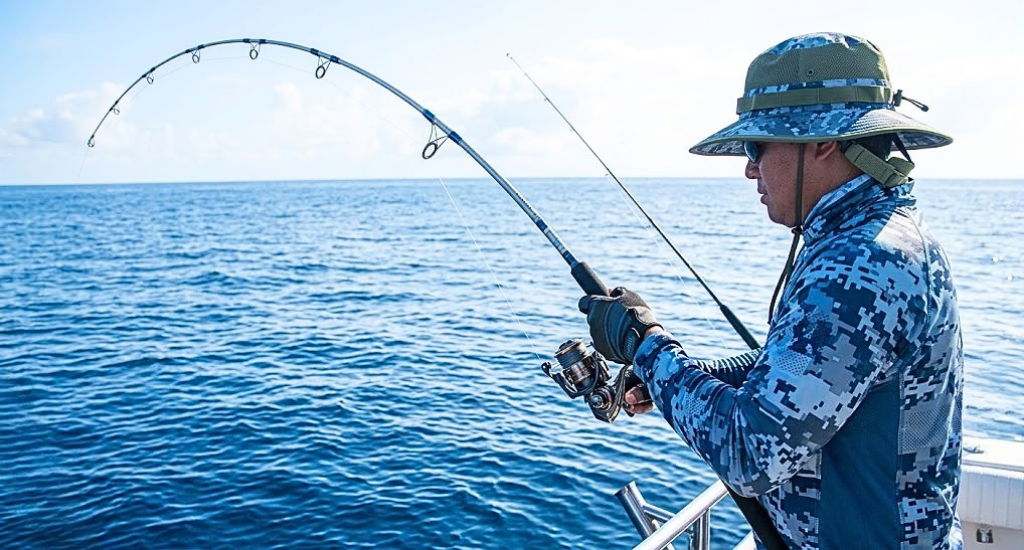
Saltwater fishing rods exist for one reason: corrosion resistance. Salt destroys aluminum oxide guides, standard stainless steel, and unsealed reel seats within weeks. Sodium chloride attacks metal at a chemical level. Every component on a saltwater rod is built to fight that damage.
Blanks on saltwater rods use fiberglass or graphite-fiberglass composite construction. Fiberglass absorbs shock without breaking under heavy load. The added flex protects the rod when a 60 lb tuna makes a hard run. Composite blanks blend fiberglass strength with graphite sensitivity for the best of both worlds.
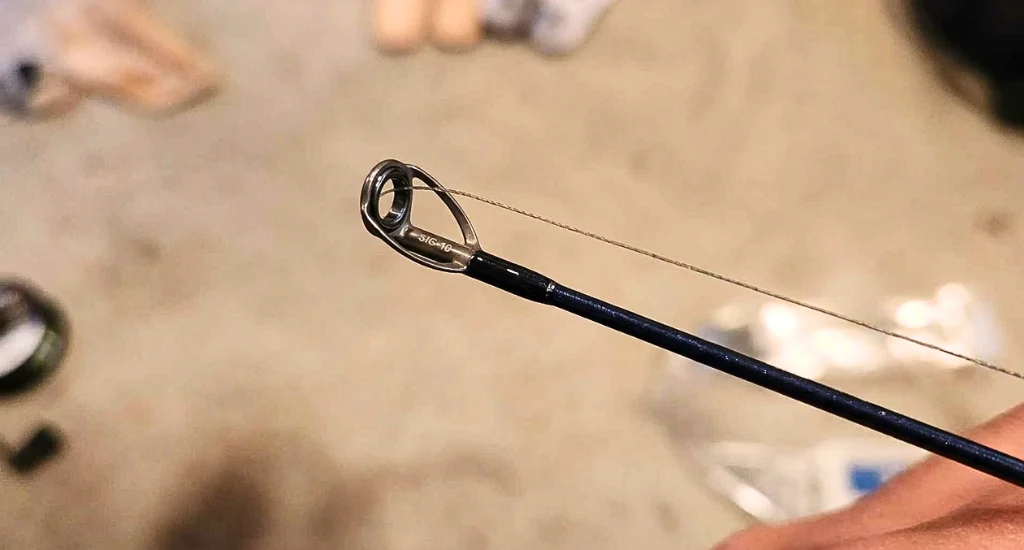
Guides use silicon carbide (SiC) inserts inside titanium or anodized aluminum frames. SiC reduces friction on braided line during long fights. Titanium and anodized aluminum will not rust in salt air or salt spray. Fuji and RECOIL make the most trusted guides in the saltwater market. Cheap saltwater rods skip these materials and corrode fast.
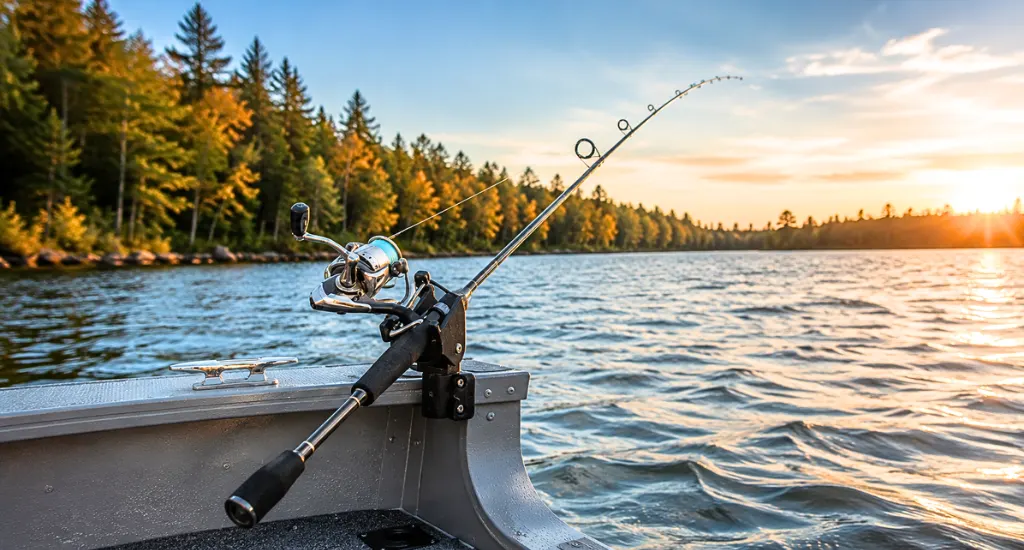
Reel seats are sealed with graphite or anodized aluminum and feature marine-grade threads. The seal stops salt from creeping into the screw threads. Without the seal, the reel seat seizes up within months. Offshore rods add a gimbal butt at the base. The gimbal locks into a fighting belt or fighting chair during big-fish battles.
Length depends on the saltwater style. Inshore rods run 7-8 ft for casting accuracy in bays and flats. Offshore rods drop to 5 ft 6 in to 7 ft for leverage during heavy fights. Surf rods stretch from 9 ft to 14 ft for long-distance casting from the beach.
Power ranges from medium for light inshore work to extra-heavy for offshore big-game fishing. Inshore medium-heavy handles slot redfish, snook, and trout. Offshore heavy or extra-heavy handles tuna, marlin, and mahi mahi. The right power matches the line rating printed on the rod blank.
For a deeper breakdown of inshore versus offshore rod construction, see the inshore vs offshore fishing rods guide.
What Makes a Freshwater Fishing Rod Different? Sensitivity, Weight, and Build
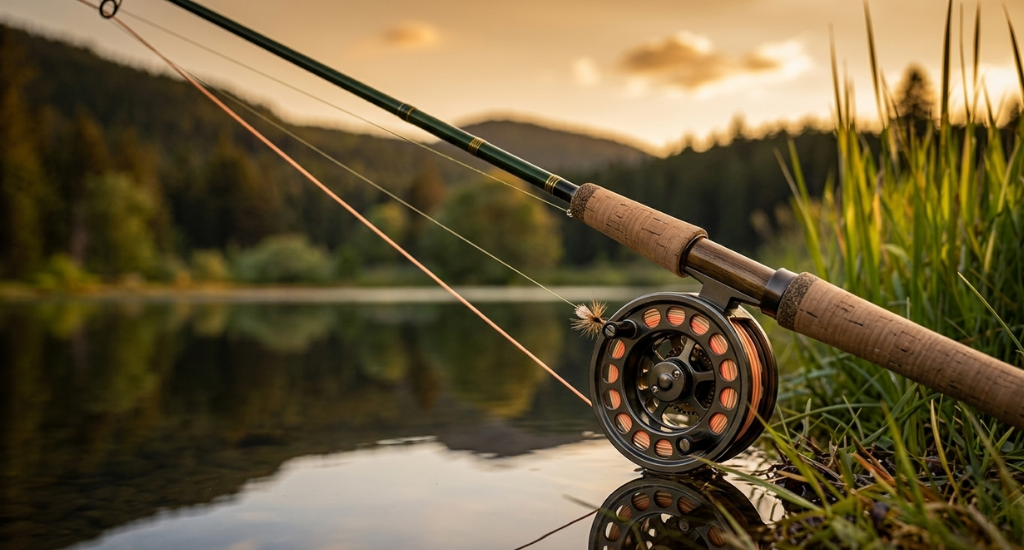
Freshwater fishing rods exist for one reason: sensitivity. Smaller fish, lighter lures, and subtle bites all reward feel over raw power. Every design choice on a freshwater rod favors detecting vibration over surviving harsh conditions.
Blanks on freshwater rods use high-modulus graphite or graphite composite construction. Graphite transmits vibration cleanly from tip to handle. You feel a bass exhale on a soft plastic at the bottom of a fall. Cheaper freshwater rods use composite blanks that blend graphite with fiberglass for durability at a lower price. The trade-off between these two materials shapes everything, as the carbon fiber vs fiberglass fishing rod comparison breaks down in detail.
Guides use aluminum oxide or ceramic inserts in light stainless steel frames. Aluminum oxide handles freshwater line without wearing down. The lighter frames keep total rod weight low for long casting sessions. Freshwater rods do not need titanium or anodized aluminum since corrosion is rare in lakes and rivers.
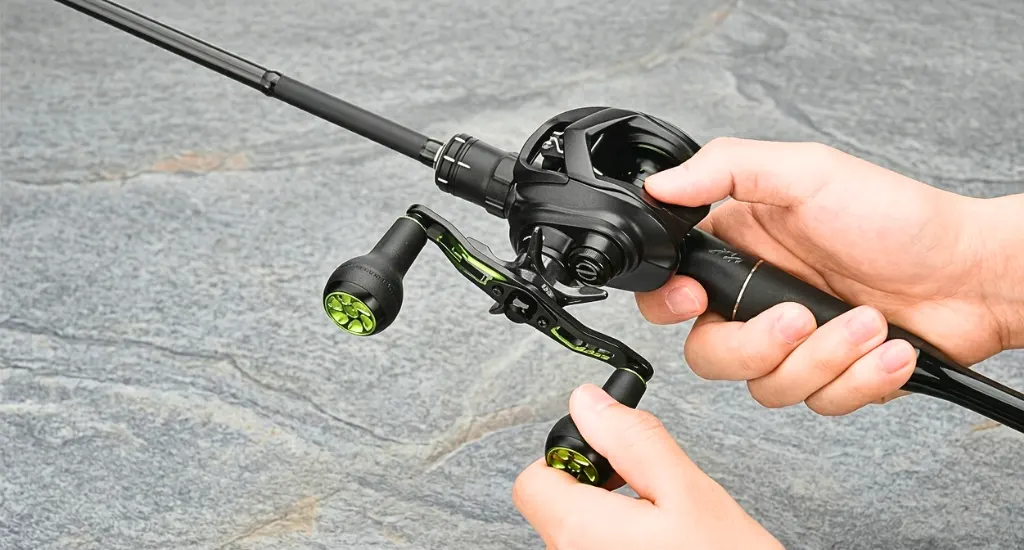
Reel seats are standard graphite or aluminum without sealing. The exposed-blank reel seat design lets vibration pass straight to your trigger finger. This boosts sensitivity for finesse work such as drop-shotting, Ned rigs, and shaky head fishing. Cork or EVA foam grips finish the build for comfort during long days.
Length runs short. Most freshwater rods sit at 6 ft 6 in to 7 ft 6 in for bass. Ultralight rods drop to 4 ft 6 in to 5 ft 6 in for trout in small streams. Walleye and salmon rods stretch from 8 ft to 9 ft for long casts on open water.
Power ranges from ultralight for panfish up to heavy for flipping bass in heavy cover. Ultralight handles 4 to 8 lb line for crappie and trout. Medium handles 8- to 14-lb line for bass and walleye. Heavy handles 20 to 30 lb line for pike, musky, and large catfish.
Can You Use a Freshwater Rod in Saltwater (or Vice Versa)?
Yes, you can use a freshwater rod in saltwater, but it will degrade quickly. You can use a saltwater rod in freshwater without any problem. The corrosion always runs in one direction. Salt destroys freshwater gear. Freshwater leaves saltwater gear untouched.
A freshwater rod taken into saltwater fails in 3 to 6 months of regular use. The guides pit and rust first. Aluminum oxide chips off under salt exposure within weeks. The reel seat threads seize up next. The blank itself usually survives, but the components fail around it. Daily freshwater rinses extend the rod’s life to about a year. After that, you replace what a $150 saltwater rod would have prevented.
A saltwater rod used in freshwater shows zero damage. The corrosion-resistant materials handle freshwater fines. The only downside is the feel. Saltwater rods are heavier and stiffer than freshwater rods. Some anglers find this overpowered for finesse bass or trout fishing. The rod still catches fish without issue.
I watched a buddy on a Gulf Coast trip try his old freshwater bass rod for inshore redfish. The Penn Battle reel survived the season. The rod’s guides rusted out in 4 months. He spent $80 fixing what a $150 dedicated saltwater rod would have prevented. The lesson is simple. If you fish saltwater more than a few times a year, buy a saltwater rod from the start.
What Is the Best Fishing Rod for Both Saltwater and Freshwater?
The best fishing rod for both saltwater and freshwater is a 7-ft medium-power saltwater rod with fast action. A saltwater rod handles freshwater fine, but a freshwater rod fails in saltwater. The corrosion resistance only works one way. Buy the rod that survives both environments.
A 7-ft medium-fast-action setup covers most fishing scenarios. Inshore, it handles redfish, snook, speckled trout, and flounder on 10 to 20 lb braid. Freshwater, the same rod throws bass crankbaits, spinnerbaits, and Texas-rigged worms without issue. The corrosion-resistant guides and sealed reel seat survive years of rinse-after-use care.
Here are the best crossover rods by price tier.
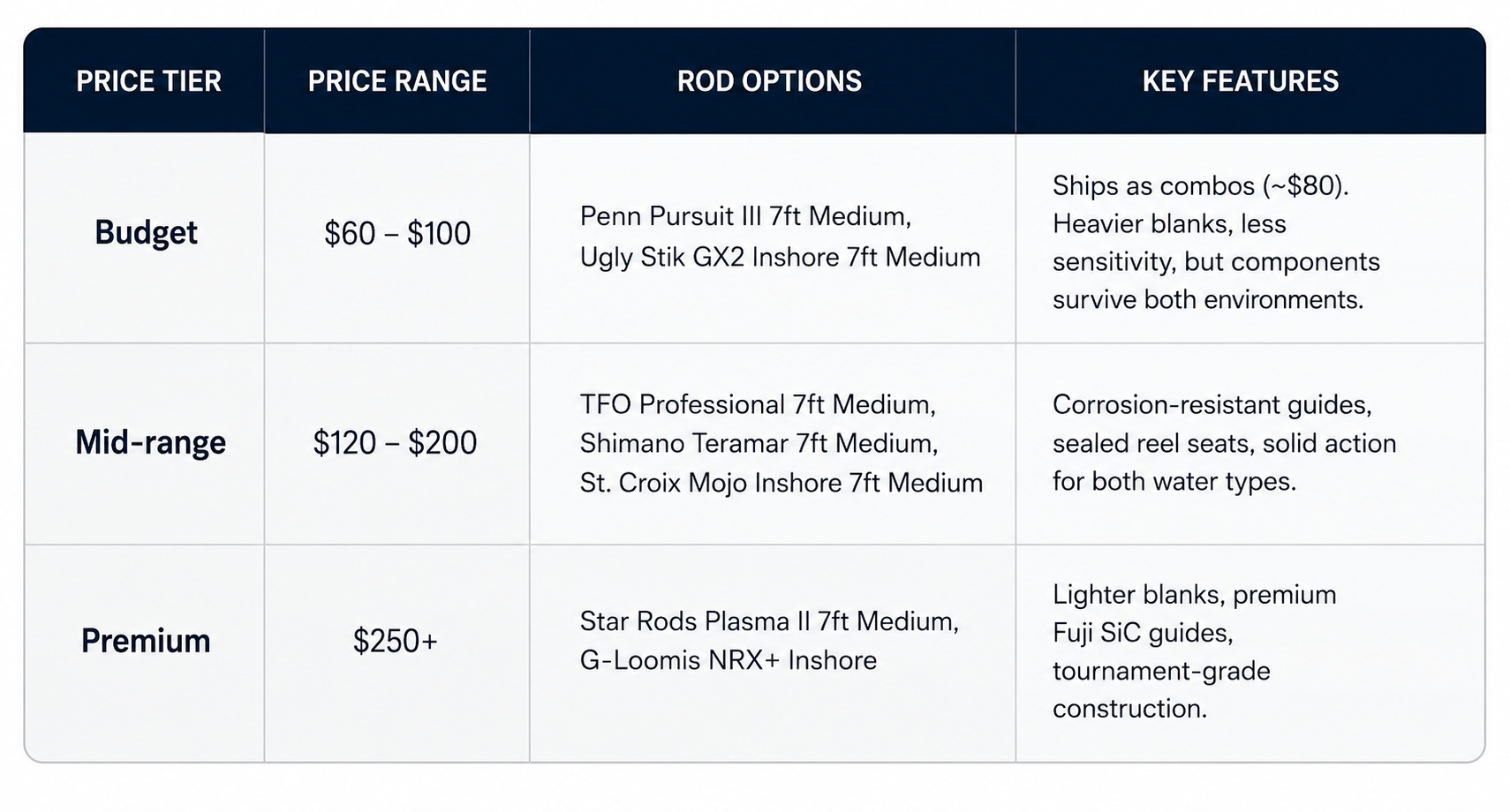
Budget ($60 to $100): The Penn Pursuit III 7 ft Medium and Ugly Stik GX2 Inshore 7 ft Medium cover the under-$100 range. Both ship as combos for around $80. Expect heavier blanks and less sensitivity than higher tiers, but the components survive both environments.
Mid ($120 to $200): The TFO Professional 7 ft Medium, Shimano Teramar 7 ft Medium, and St. Croix Mojo Inshore 7 ft Medium are the workhorses of the crossover world. All three deliver corrosion-resistant guides, sealed reel seats, and the kind of action that catches fish in any water.
Premium ($250+): The Star Rods Plasma II 7 ft Medium and G-Loomis NRX+ Inshore represent the top of the crossover market. Lighter blanks, premium Fuji SiC guides, and tournament-grade construction make these the rods that serious dual-environment anglers choose.
Why do these rods work for both? Sealed reel seats stop salt corrosion. SiC or aluminum oxide guides handle braided line in either water. Medium power covers bass, redfish, snook, and trout without overpowering or under-gunning any of them.
How Do You Choose Between a Saltwater and Freshwater Rod? A 5-Question Decision Test
The choice between a saltwater and freshwater rod comes down to five questions about where you fish, what you target, and your budget. Answer each one honestly. The right rod becomes obvious.
- Do you fish saltwater more than 5 times per year?
If yes, buy a saltwater rod. Saltwater exposure damages freshwater gear fast. The math only applies to dedicated saltwater rods if you fish saltwater regularly. For fewer than 5 trips per year, a freshwater rod with diligent rinsing can hold up.
- Do you target fish over 15 lb regularly?
If yes, buy a saltwater rod. Saltwater rods have thicker blanks, stronger guides, and reinforced reel seats built for big fish. Freshwater rods snap under sustained drag pressure from anything over 15 lb. The backbone matters during long fights.
- Is your total rod budget under $100?
If yes, lean freshwater. Sub-$100 freshwater rods deliver more sensitivity and better components than sub-$100 saltwater rods. Saltwater rods need expensive materials, so budget options cut corners that fail fast. A quality freshwater rod beats a cheap saltwater rod every time.
- Do you fish finesse techniques like drop-shot, Ned rig, or ultralight jigs?
If yes, buy a freshwater rod. Finesse work needs the sensitivity that only graphite freshwater blanks deliver. Saltwater rods are too stiff and heavy to detect the subtle bites these techniques produce. Light line and tiny lures demand finesse-grade gear.
- Do you want one rod that covers both environments?
If yes, buy a medium-power saltwater rod. Corrosion resistance only works in one direction. A saltwater rod handles freshwater fine. A freshwater rod fails in saltwater within months. The crossover always favors the saltwater build.
If you answered yes to Q1, Q2, or Q5, buy a saltwater rod. If you answered yes to Q3 and Q4 and scored low elsewhere, buy a freshwater rod. The rod that matches your most common fishing situation wins, regardless of how versatile the other option seems on paper.
How Do You Maintain a Fishing Rod for Saltwater and Freshwater?
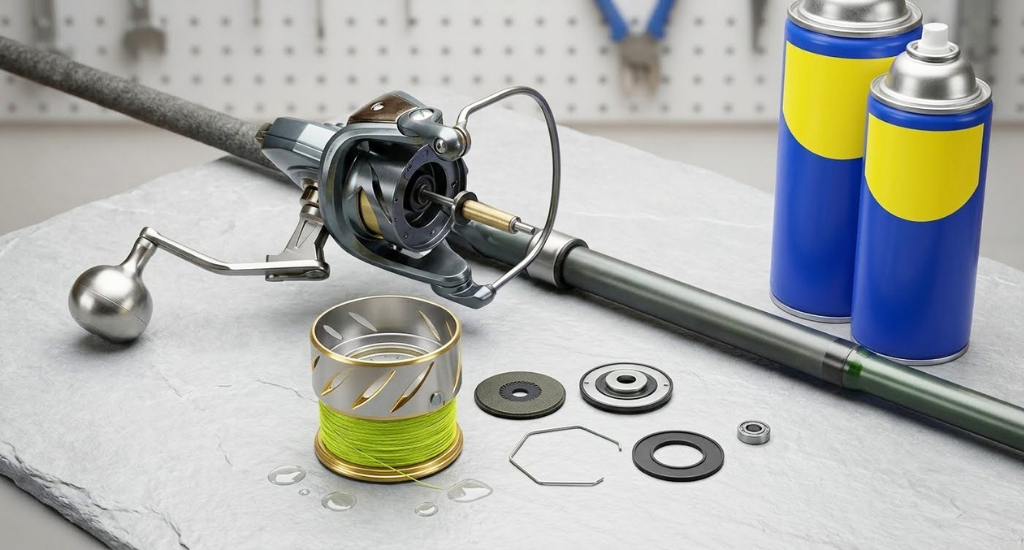
Saltwater rods need a 5-step routine after every trip. Freshwater rods need only 3 steps. Salt damage happens fast and often hides inside the rod where you cannot see it. A proper rinse routine doubles or triples your rod’s lifespan.
5-Step Saltwater Rod Maintenance Routine
- Rinse with fresh water within one hour of your trip. Use a low-pressure hose or a clean bucket of tap water. Run water across the guides, reel seat, and grip. High-pressure hoses force salt deeper into components, so keep the pressure light.
- Dry the rod with a clean microfiber cloth. Wipe down every guide insert and frame. Dry the reel seat threads carefully. Trapped moisture under the reel seat causes hidden corrosion that ruins the rod from the inside.
- Loosen the reel seat hood to release trapped salt. Spin the hood a few turns counter-clockwise. Tap the rod gently to dislodge any salt crystals stuck in the threads. Salt crystals act like sandpaper inside the reel seat over time.
- Lubricate moving parts with marine-grade silicone spray. Apply a light coat to roller guides on offshore rods, reel seat threads, and any metal-on-metal contact points. Skip standard WD-40 since it strips lubrication after a few uses. Real Magic and Corrosion-X work better for saltwater gear.
- Store the rod horizontally in a rod sleeve. Vertical storage on a rack allows gravity to draw moisture into the reel seat. Horizontal storage in a breathable sleeve keeps the rod dry and protected.
3-Step Freshwater Rod Maintenance Routine
- Wipe the rod with a damp cloth after each trip. Remove dirt, lake muck, and lure scent from the blank and grip. A quick wipe takes 30 seconds and prevents staining on cork handles.
- Air dry the rod for 30 minutes before storing. Lean the rod against a wall in a ventilated area. Avoid direct sunlight, since UV exposure weakens graphite blanks over time.
- Store the rod vertically in a rack or horizontally in a rod bag. Freshwater rods do not need horizontal-only storage as saltwater rods do. Either position works fine for long-term storage.
The critical warning applies to both rod types. Saltwater damage happens internally, where you cannot see it. The guides look fine until they crack under load. The reel seat feels tight until it seizes mid-trip. Always rinse, even after short trips on the bay.
The Bottom Line
Saltwater fishing rods use corrosion-resistant materials, longer blanks, and heavier power for big fish in harsh water. Freshwater fishing rods use lighter graphite, shorter blanks, and finesse-friendly action for smaller species. The right choice depends on where you fish and what you target.
Before buying any rod, check the components. A sealed reel seat plus corrosion-resistant guides means saltwater-capable. Aluminum oxide guides on a graphite blank mean freshwater only. For more rod selection guides across saltwater and freshwater, visit All for Fishing.
FAQs
Are saltwater rods stronger than freshwater rods?
How long will a freshwater rod last in saltwater?
What is the difference between an inshore and offshore saltwater rod?
Can a fly rod be used for both saltwater and freshwater?
Does a saltwater rod cost more than a freshwater rod?