
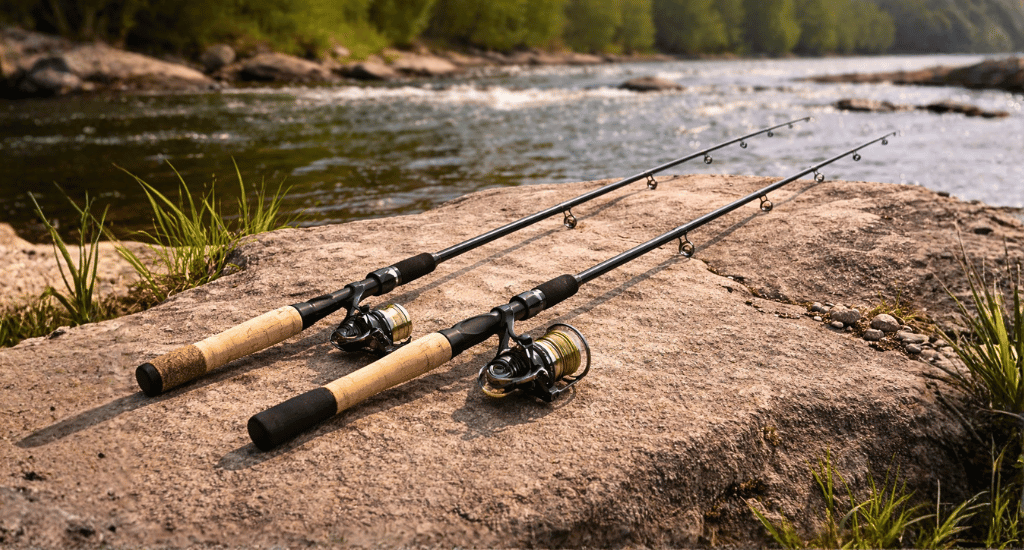
Rod length plays a big role in how well you fish in any water. Many anglers struggle with poor casting and weak control after choosing the wrong size. This 6ft vs 7ft fishing rod debate often confuses beginners who want better results.
A shorter rod works well in tight spots and offers better control over small movements. A longer rod helps cast farther and gives stronger hook power. Your choice depends on fishing location, skill level, and the type of fish you target.
This guide explains the key differences, best uses, and simple tips to help you choose the right rod with confidence.
6ft vs 7ft Fishing Rod: Key Differences Explained
Rod length changes how your fishing feels and performs in real situations. Many beginners do not notice these small details at first. This 6 vs 7 foot rod comparison shows how size affects distance, control, and overall fishing success.
Casting Distance
A longer rod gives more reach during a cast, which helps send the line farther. A 7ft rod creates extra force through leverage, so the lure travels a longer distance with ease. This extra push often helps in open water, where fish stay far from the shore.

A 6ft rod sends the lure a shorter distance, but the cast feels more controlled. You can place the bait in a small spot without much effort. This works well when fish stay close or hide near cover.
Rod length directly affects casting distance, so your choice depends on where you fish. Open areas favor longer rods, while small spaces suit shorter ones much better.
Accuracy and Control
A 6ft rod gives better accuracy, especially when you fish in tight or crowded areas. You can guide the lure into small gaps between rocks, plants, or wooden structures. This level of control helps catch fish that hide in tricky spots.
A 7ft rod feels less precise in these situations because of its extra length. It needs more space to move, which can reduce accuracy in narrow areas. You may miss your target if the space feels too tight.
Shorter rods help in tight structure fishing because they respond faster to hand movement. This makes them a good choice for rivers, small lakes, and areas with heavy cover.
Lure Control and Action
A 6ft rod gives better control over lure movement during fishing. You can move the tip quickly to create action that attracts fish. This helps when you use moving baits that need sharp and active motion.
A 7ft rod provides smoother movement when you pull the lure through water. The longer length allows a steady motion that looks natural to fish. This works well for slow and steady presentations.
Rod length affects lure manipulation, so each size suits a different fishing style. Short rods suit active motion, while long rods suit smooth and steady movement.
Hook Setting Power
A 7ft rod creates stronger hook sets because of its longer length and added leverage. When a fish bites, the extra power helps push the hook deeper and secure the catch. This matters when you target larger or stronger fish.
A 6ft rod offers less power during hook sets, but it feels more controlled in the hand. This works well for light fishing where a strong force is not needed. It also helps avoid pulling the hook too hard.
A 7-foot rod gives more power for hook setting, which makes it useful in deeper water or heavy cover areas.
Fish Fighting Ability
A 7ft rod gives better control when you fight a strong or large fish. The extra length helps you manage the fish’s movement and keep steady pressure. This reduces the chance of losing the catch during the fight.
A 6ft rod has less leverage, but it feels easier to handle during short fights. You can react quickly and adjust your position without much effort. This suits smaller fish and close-range fishing.
Rod length affects fish fighting ability, so the right choice depends on fish size and location. Longer rods suit power fights, while shorter rods suit quick and controlled handling.
When to Use a 6ft Fishing Rod

A 6ft rod works best when you need control and quick response in close areas. It suits beginners and light setups very well. This size often answers the question, what is a 6-foot fishing rod good for in daily fishing.
Fishing in Tight Spaces
A 6ft rod fits well in rivers, small lakes, and areas with heavy cover or docks. You can move it easily without hitting obstacles around you. Shorter rods benefit tight structure fishing, where space feels limited and tricky.
Finesse Fishing Techniques
A 6ft medium rod works well for finesse setups that need soft and careful movement. It handles light lines and small lures with better control. This helps present bait in a natural and gentle way.
Better Control in Windy Conditions
Many anglers switch to rods between 5.5ft and 6ft during fishing in windy weather. A shorter rod gives better control and keeps the line steady. This helps place the lure without strong wind pushing it away.
Moving Baits and Active Techniques
Short rods respond quickly when you move your hand during fishing. You can create sharp jerks and small twitches with ease. This helps attract fish that react to fast and active lure motion.
When to Use a 7ft Fishing Rod

A 7ft rod works well when you need more reach, strength, and control in open water. It suits anglers who target bigger fish or fish at a distance. Many setups in 6 ft fishing rods and reel guides shift to longer rods for added power.
Long-Distance Casting
A 7ft rod helps send your lure much farther across the water with less effort. The added length creates more force during each cast. Longer rods cast farther in general, which makes them perfect for lakes and open areas.
Heavy Cover Fishing
A 7ft to 7’6” heavy rod works well in thick cover where fish hide deep. Anglers often use strong lines like 65 lb braid for these situations. This setup helps pull fish out of weeds, wood, and dense structure.
Strong Hook Sets
A longer rod creates more leverage when a fish bites your lure. This added force drives the hook deeper into the fish. Better hook penetration helps keep the fish secure during the fight.
Handling Bigger Fish
A 7ft rod gives better control when a large fish pulls hard in the water. You can apply steady pressure and guide the fish with more confidence. This reduces the chance of losing strong and active fish.
Also learn: How to Use a Fishing Reel With No Anti-Reverse Trigger.
Is a 6.5ft rod better than a 6ft or a 7ft? (Middle Ground Option)
A 6.5ft rod sits between short and long options, which makes it a balanced choice. It offers decent control and fair casting distance in most situations. Many anglers see this length as a safe and flexible option.

Why 6 to 6.5ft is Considered All-Around
Rods between 6ft and 6.5ft work well in many fishing conditions without major limits. They suit light setups and simple techniques used in everyday fishing. Many anglers believe 6 to 6.5 ft rods are best all-around for ultralight fishing setups.
Balance Between Distance and Control
A 6.5ft rod gives a mix of control and casting range that feels comfortable. It does not feel too long in tight areas or too short in open water. This balance helps anglers handle different situations without switching rods often.
Real Angler Preference Example
Many anglers prefer a 6’6” medium-heavy spinning rod for certain setups and techniques. This length works well for soft plastic lures like senkos in calm water. It gives enough strength and control for smooth and steady fishing.
End Note
A 6ft rod gives better control in small areas and helps with precise lure placement. A 7ft rod offers more casting distance and stronger power during fights with bigger fish.
Think about your fishing spot and target fish before you choose a rod length. The right choice depends on how and where you fish, not just size.


