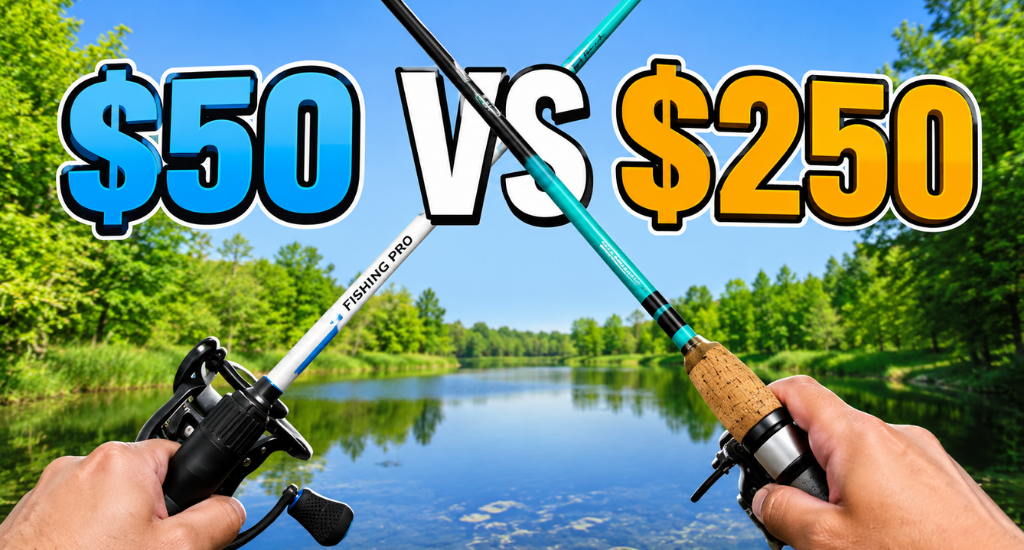
There are real, measurable differences between cheap and expensive fishing rods, but those differences shrink fast once you pass the $150 mark. The gap comes down to four things: sensitivity, weight, build quality, and long-term value. A $30 fiberglass rod and a $300 graphite rod feel like completely different tools in your hand. Whether that difference is worth the money depends on how often you fish, what techniques you use, and how much feedback you actually need from your rod.
After testing and fishing rods across every price tier, from $25 rod-and-reel combos to $600+ tournament-grade setups, I can tell you exactly where your money makes a difference and where it stops mattering. This guide breaks down what separates a budget-friendly fishing rod from an expensive one so you can spend smart.
Cheap vs Expensive Fishing Rods: Quick Comparison
| Feature | Cheap Rods ($20 to $50) | Expensive Rods ($150 to $900+) |
|---|---|---|
| Material | Usually fiberglass | Graphite, carbon fiber, or composite |
| Sensitivity | Lower; harder to feel subtle bites | High: detects slight bites and lure action |
| Weight | Heavier leads to faster fatigue | Lighter; reduces arm fatigue |
| Components | Basic plastic or metal guides | High-quality ceramic or stainless steel guides |
| Durability | Often higher; less prone to snapping | Often lower, delicate; high-modulus graphite breaks more easily |
| Price Range | $20 to $50 | $150 to $900+ |
What Are the Key Differences Between Cheap and Expensive Fishing Rods?
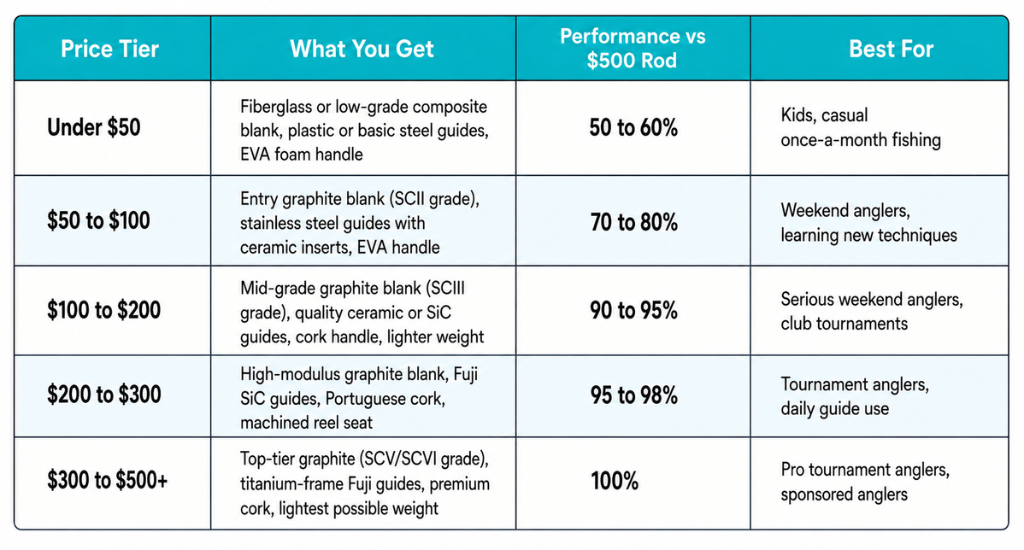
The difference between cheap and expensive fishing rods comes down to four areas: how much you can feel through the rod, how much it weighs, what components it uses, and how quickly value drops off as price climbs. Each of these affects your time on the water in a practical way.
How Does Sensitivity Change With Price?
Sensitivity is the single biggest difference between cheap and expensive fishing rods. It refers to how well the rod transmits vibrations from the line to your hand, letting you feel bites, bottom structure, and lure movement.
Expensive rods made of graphite or carbon fiber transmit these signals quickly and clearly. You can feel a bass barely mouthing a drop shot bait 20 feet down, or tell the difference between gravel and mud on the bottom. Cheap fiberglass rods muffle that feedback. The vibrations still travel through the blank, but they arrive softer and slower.
This matters most with finesse techniques like drop shot, ned rig, and shaky head, where bites are subtle and easy to miss. For reaction baits like spinnerbaits or crankbaits, sensitivity is less critical because strikes are obvious. If you mostly fish finesse, an expensive fishing rod gives you a clear edge in bite detection. If you throw moving baits, a budget rod does the job.
Does Rod Weight Actually Cause Fatigue?
Yes. Rod weight directly affects how tired your arm, wrist, and shoulder get during a day of casting. Expensive fishing poles are lighter because they use higher-modulus graphite blanks and lighter components, such as titanium-frame guides and machined aluminum reel seats.
A typical fiberglass rod weighs 6 to 8 ounces. A comparable graphite rod might weigh 3.5 to 5 ounces. That difference may seem small, but it compounds over hundreds of casts. After 6 to 8 hours on the water, especially during tournament fishing, a lighter rod helps you cast accurately when fatigue would otherwise cause sloppy presentations.
Balance matters too. Premium rods are designed so that the center of gravity sits closer to your hand, making the rod feel even lighter than its actual weight. Cheap rods tend to feel top-heavy because of bulkier guides and heavier tips.
What Build Quality Differences Can You See and Feel?
Build quality is where you can physically see and touch the gap between cheap and expensive rods. Three components stand out: guides, handles, and reel seats.
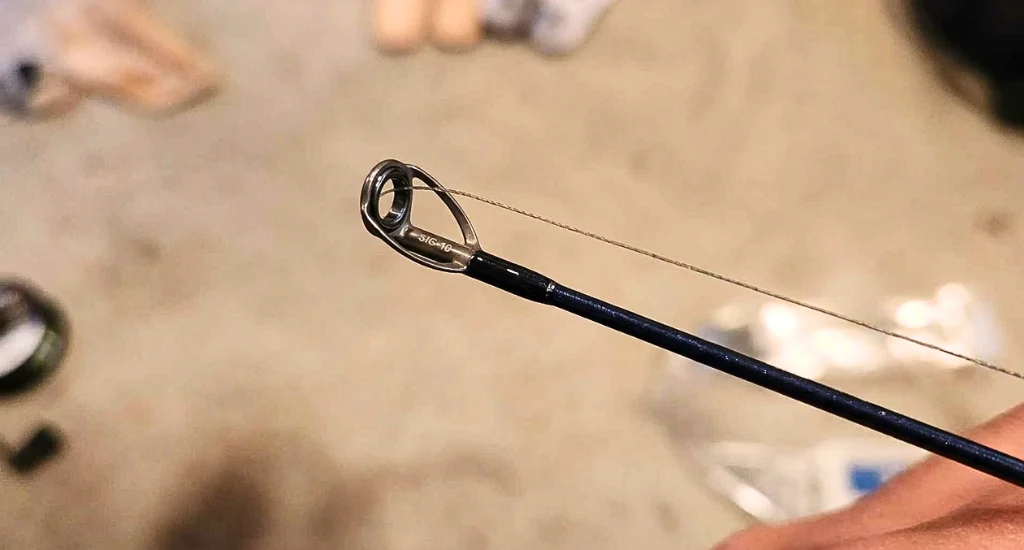
Guides on cheap rods are typically stainless steel with basic inserts, or even plastic inserts on the lowest-end models. Expensive rods use ceramic (aluminum oxide), SiC (silicon carbide), or titanium-frame Fuji guides. Better guides reduce friction on the line during the cast, which improves casting distance, and they resist grooving from braided line over time.
Handles on budget rods are usually EVA foam. It is durable and easy to clean, but heavier and less sensitive. Premium rods use Portuguese cork, which is lighter, transmits vibrations better, and feels more comfortable in your hand. Cork wears down over years of heavy use, while EVA holds up longer.
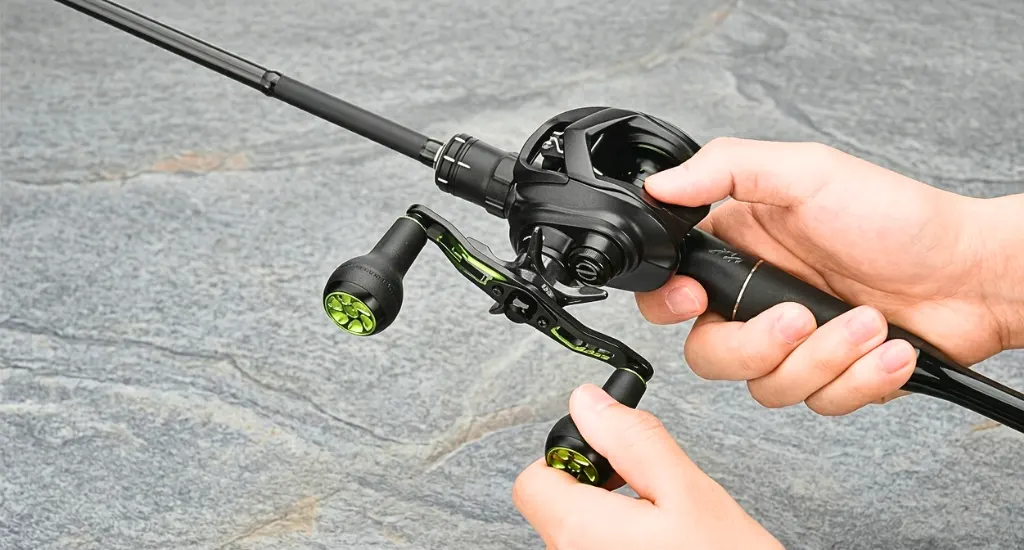
Reel seats on inexpensive rods are made from molded graphite. Premium rods use machined aluminum reel seats that hold the reel more securely and transfer vibrations from the blank to your hand more efficiently. This is a small detail, but it adds to the overall sensitivity and feel of an expensive rod.
Where Does Value Start to Drop Off?
The law of diminishing returns hits fishing rods hard. The biggest jump in performance happens between $50 and $150. After $200 to $300, most anglers cannot feel a meaningful difference, no matter how experienced they are.
St. Croix’s rod lineup illustrates this clearly. The Triumph ($60 to $100) uses SCII graphite and is a solid entry-level rod. The Avid ($150 to $200) upgrades to SCIII graphite with noticeably better sensitivity, lighter weight, and a 15-year transferable warranty. The jump from Triumph to Avid is dramatic.
Move up to the Legend Elite ($300+), and you get SCV/SCVI graphite with marginally better feel. The Legend Xtreme ($400+) pushes even further. But the difference between the Avid and the Legend Xtreme is far smaller than the difference between the Triumph and the Avid.
A $150 rod gives you roughly 90 to 95 percent of the performance of a $500 rod. That last 5 percent costs disproportionately more and only benefits anglers with enough skill and water time to perceive it.
What Are Cheap and Expensive Rods Actually Made Of?
The blank material is the primary driver of a fishing rod’s price, weight, and sensitivity. Three materials dominate the market.
Fiberglass is the most affordable option. It is flexible, extremely durable, and nearly impossible to snap under normal use. Fiberglass blanks are heavier and less sensitive than graphite, which is why most inexpensive fishing poles under $50 use this material. It works well for crankbaits, trolling, kids’ rods, and any situation where durability matters more than feel.
Graphite, also called carbon fiber (same material, different regional name), is what most mid-range and expensive rods are built from. It is lightweight, highly sensitive, and offers faster rod action. Rods are rated by modulus, which measures stiffness. A higher modulus number means a lighter, stiffer blank that is also more brittle and prone to snapping under sudden impact. This is why some expensive rods are actually less durable than cheap ones.
Composite rods blend fiberglass and graphite within a single blank. They offer a middle ground in sensitivity, weight, and price. Composite rods are more versatile than either pure material, making them a strong option for anglers who want one rod that handles multiple techniques.
Do Expensive Fishing Rods Actually Help You Catch More Fish?
No. The fish does not know or care what rod you are holding. An experienced angler with a $40 Ugly Stik will outfish a beginner with a $600 G. Loomis NRX+ every time. Skill, water knowledge, and presentation always outrank gear.
That said, an expensive rod gives you better tools to work with. Higher sensitivity means you detect more bites, especially on finesse setups where strikes are subtle. Lighter weight means less fatigue, which means fewer sloppy casts and missed hooksets late in the day. These advantages are real but indirect. The rod does not catch the fish. It helps you not miss the opportunity.
The biggest mistake beginners make is buying an expensive rod before knowing what techniques they actually use. A $300 rod built for drop shot fishing will not help you if you mostly throw spinnerbaits and crankbaits. Start with a versatile mid-range rod, fish it for a full season, and then upgrade based on what your fishing actually demands.
Which Fishing Rod Should You Buy for Your Level?
The right rod depends more on how often you fish and what you fish for than on your budget alone.
Complete beginners should spend $30 to $70 on a rod-and-reel combo. The goal at this stage is water time, not premium gear. The Ugly Stik GX2 and Daiwa Aird X are reliable, forgiving, and built to survive the learning curve. Upgrade only after you understand your preferences.
Weekend and casual anglers get the most value from a budget-friendly fishing rod in the $70 to $150 range. This is the sweet spot where sensitivity, weight, and build quality improve dramatically over cheap rods. The Shimano SLX, Dobyns Fury, St. Croix Triumph, and Fenwick Eagle are all strong picks here.
Serious recreational anglers who fish multiple times a month benefit from investing $150 to $300 in technique-specific rods. At this level, you are buying rods matched to specific presentations, like a dedicated drop shot rod or a jig rod. The St. Croix Avid and Shimano Expride perform at this level.
Tournament and professional anglers can justify $300 and above when marginal gains in sensitivity translate directly to competitive results. The G. Loomis NRX+ and St. Croix Legend Xtreme are built for anglers who fish 50 or more days per year and need every edge available.
Key Takeaways
- The biggest performance gap between cheap and expensive fishing rods is in sensitivity, weight, and guide quality, not in how many fish you catch.
- The $70 to $150 mid-range is the sweet spot where each dollar buys the largest improvement in feel and performance.
- After $200 to $300, diminishing returns hit hard. Most anglers cannot tell the difference between a $400 rod and a $1,000 rod.
- Cheap fiberglass rods are actually more durable than expensive high-modulus graphite rods. A higher price does not always mean tougher.
- Buy for your skill level and fishing frequency first. Upgrade only when you know exactly which technique demands it.
Conclusion
Both cheap and expensive fishing rods catch fish. The real difference is how much feedback, comfort, and precision you get while doing it. For most anglers, a mid-range rod between $100 and $150 delivers strong performance without overspending. Save the premium gear for when your skills and fishing style genuinely demand it. Check All for Fishing’s other article to get more knowledge on fishing rods and strategies.
FAQs
What is the most expensive fishing rod?
The most expensive fishing rods are handcrafted custom builds. Oyster Bamboo Fly Rods, based in Blue Ridge, Georgia, start at $2,500 and can reach $13,000 for fully customized heirloom pieces. Mass-produced premium rods from brands like G. Loomis, Sage, and Orvis top out between $800 and $1,500. At those prices, you are paying for hand-wrapped guides, ultra-high-modulus graphite, and brand heritage.
Are expensive fly fishing rods worth it?
Expensive fly fishing rods are worth it for experienced casters who fish 50 or more days per year and need precise loop control and casting accuracy. For recreational fly anglers, a rod in the $150 to $300 range performs at a level most people will never outfish. The Orvis Clearwater and Redington Path are both excellent in this range.
Should a beginner buy an expensive fishing rod?
A beginner should not buy an expensive fishing rod. Start with a $40 to $70 rod-and-reel combo to learn casting, knot-tying, and fish-fighting fundamentals without stressing over gear damage. Upgrade after a full season of fishing once you know which techniques and target species you actually prefer.