A worn or cracked handle on your fishing rod makes the rod hard to hold properly. The grip slips in your hand, and you lose full control over every cast you make. So, can you do a fishing rod handle repair at home without spending too much money?
Yes, you can fix most handle problems at home with simple tools like epoxy, sandpaper, and cork filler. These materials are easy to find at any hardware or fishing supply store near you. The whole process does not need any special skill or experience.
However, it’s time to learn the facts well. Let’s learn about cleaning, crack repair, grip replacement, and full handle rebuilds with clear steps.
Step-by-Step Fishing Rod Handle Repair Methods
Even if you are not a pro, you can easily take care of the damaged handle of different types of fishing rods from start to finish at home. Follow each step in order, because every stage builds on the previous one for a strong, lasting result.
Step 1: Cleaning the Handle Before Repair
Cleaning is the most important first step. Dirt, oil, and grime prevent filler and epoxy from bonding, which leads to weak repairs that fail quickly.
- Use a Magic Eraser to scrub the cork gently
- Focus on dark spots and oily areas
- Avoid excessive pressure to protect the cork surface
Make sure the handle is fully clean and dry before moving forward. A dry surface helps repair materials stick properly and last longer.
Step 2: Fixing Cracks and Holes in Cork Handles
Start by filling every crack and pit using cork filler or wood filler. Press the filler deep into each gap so no air pockets remain.
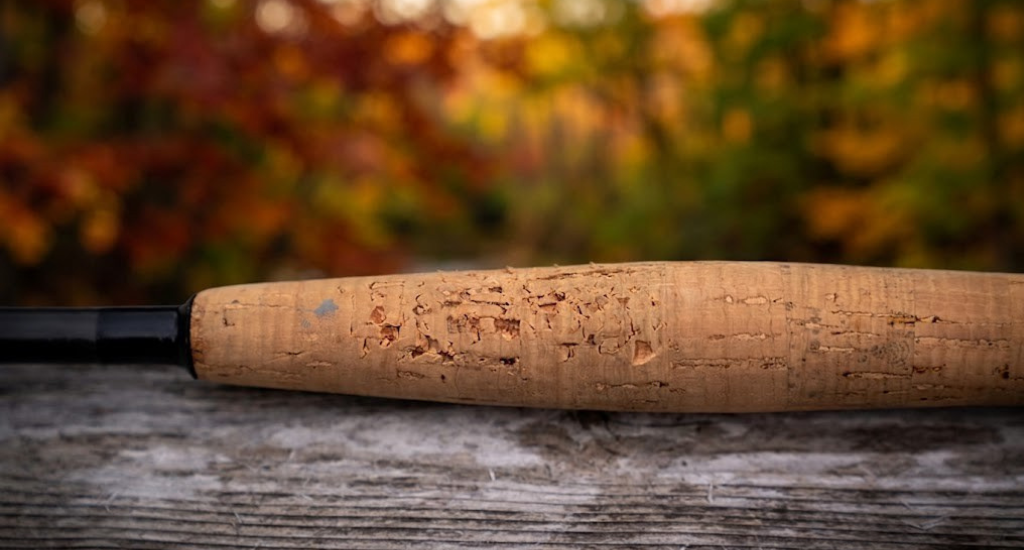
- Shallow repairs dry in about 15 minutes
- Deep cracks take 2 to 8 hours to dry
After drying, sand in stages:
- Begin with 80-grit sandpaper to remove excess filler
- Follow with 120-grit sandpaper for a smoother finish
Apply a thin coat of U40 cork seal to protect the surface from future damage.
Step 3: Repairing a Broken Fishing Rod Handle (Dowel Method)
This method works best for clean breaks. You will need a 3/8-inch by 12-inch dowel rod and 5-minute epoxy for a strong internal bond.
- Apply epoxy inside both broken ends
- Insert the dowel to connect both sections
- Press the handle pieces together firmly
Wrap the joint tightly with duct tape while curing. Leave it undisturbed for several hours before applying any pressure or load.
Step 4: Removing Old Cork or EVA Grips
Removing worn grips requires care to avoid damaging the rod blank. Work slowly and use proper tools for a clean removal.
- EVA grips: cut lengthwise with a razor blade, then peel away
- Cork grips: Use channel locks to twist and pull from the outer section
Always wear gloves for safety. Start from the outer third of the handle, where removal is easier, and control is better.
Step 5: Replacing or Rebuilding the Handle Grip
For a full rebuild or fishing rod cork handle repair, position the new grip carefully to ensure proper alignment and balance.
- Wrap the cork grip at a slight angle along the blank
- Keep backing attached during initial placement
- Tape the end and trim excess material
For a quick fix, cut off the damaged end. Secure the remaining grip with a drop of super glue and a zip tie.
Step 6: Sanding and Finishing for Smooth Grip
Once all repairs are fully dry, smooth the handle for a clean, comfortable grip. This step improves both feel and durability.
- Use medium-grit sandpaper for final smoothing
- Sand along the length, not in circles
- Check the surface often by touch
Finish by applying a thin sealant layer. This protects the handle from moisture, dirt, and regular wear, extending its lifespan.
Types of Fishing Rod Handle Damage You Can Repair
Damage to your fishing rod handles can come in several different forms, and each type needs a slightly different fix. Let’s learn about the most common problems, so you know exactly what you are dealing with before you start.
Cracked or Pitted Cork Handles
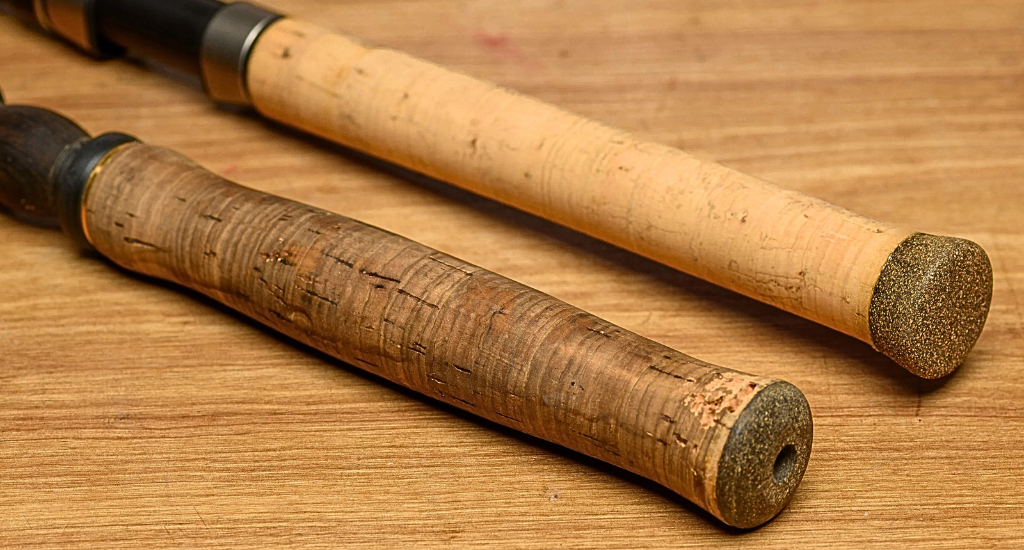
Cork handles develop small cracks and tiny holes over time, especially on older rods used frequently. These holes are called “pits,” and they make the handle surface rough and uncomfortable to hold. The repair process starts with a good cleaning, followed by a fishing rod cork filler applied into each crack.
Worn or Torn EVA Foam Grips
EVA foam is a soft, spongy material used on many modern fishing rod handles because it is lightweight and comfortable. Over time, the foam surface wears down, tears, or develops rough patches that feel unpleasant in the hand.
Replacement EVA grips are widely available and affordable, making this one of the simpler handle repair jobs.
Loose or Spinning Handles
A handle that spins or wobbles on the rod blank means the adhesive underneath has failed completely. The blank is the long, thin part of the rod that runs through the center of the handle. This type of problem needs fresh epoxy applied between the blank and the handle to lock everything back in place.
Broken Handle Sections
A handle that has snapped into two separate pieces needs more than just filler or glue on the outside. This type of damage requires internal support, which means placing a wooden dowel rod inside both broken pieces to reconnect them.
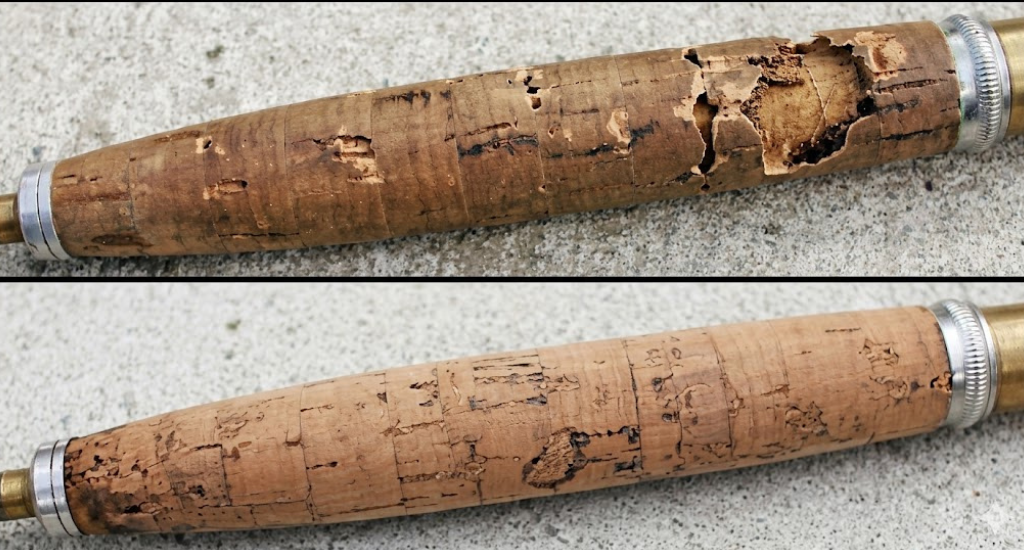
The dowel acts like a spine inside the handle, giving the repair enough strength to hold up under real fishing pressure.
Fishing Rod Handle Replacement vs Repair
Sometimes a repair is the right call, and sometimes a full replacement saves more time and effort in the end. All you need is to figure out which option makes more sense for your specific situation.
When Replacement Is Better Than Repair
Severe structural damage, like a handle that is crushed, split along its full length, or missing large chunks of material, is too far gone for a basic repair. When multiple cracks cover most of the handle surface, filler alone cannot restore enough strength or comfort for real use.
A partial or full fishing rod handle replacement makes more sense in these situations because the base material is no longer stable enough to hold repairs well.
Can You Replace Fishing Rod Grips?
Yes, both cork and EVA grips are fully replaceable with the right tools and a bit of patience. The process involves removing the old grip completely, cleaning the blank underneath, and installing a new grip with fresh adhesive.
Replacement grips are sold in many sizes and styles to match most standard rod blanks available today.
Is It Worth Repairing a Fishing Rod?
A mid-range or high-quality fishing rod is almost always worth repairing because the blank itself still has a lot of value. Spending a few dollars on materials to restore the handle makes much more sense than buying a completely new rod.
For very cheap rods that cost under twenty dollars, a replacement is often more practical than spending time on a repair job.
Why Fishing Rod Handle Repair Matters
A damaged handle affects more than just how the rod feels in your hand. Even if you have the right size of fishing rod, you may not feel comfortable with it for a bad handle. It hurts your casting control, shortens the rod’s life, and costs you money if you ignore it too long.
Impact on Grip, Control, and Casting Accuracy
A cracked or rough handle does not sit well in your hand during a cast. Your fingers cannot hold a steady position, and the rod moves slightly off-target with each throw. Even a small loss of grip can send your lure in the wrong direction completely.
Preventing Further Rod Damage
A small crack in the handle looks harmless at first, but it grows fast with regular use. Water gets inside the crack, softens the material, and the damage spreads deeper into the handle. A loose handle also puts pressure on the reel seat, which holds your fishing reel in place.
Cost Savings vs Replacement
Generally, a full rod replacement costs much more than a basic repair done at home. Most common handle fixes only need epoxy, sandpaper, and a tube of filler, all very cheap materials. A mid-range fishing rod is worth saving with a five-dollar repair rather than throwing it away.
End Note
Most fishing rod handle problems are very fixable at home without expensive tools or professional help. A proper fishing rod handle repair saves money, extends the life of your rod, and brings your casting accuracy back to a normal level.
The key steps are always the same: clean the surface first, apply the right filler, sand carefully after drying, and seal the finish for protection. A well-repaired rod performs just as well as a new one, and the satisfaction of fixing it yourself makes every catch feel a little better.
What is the best method for repairing a fishing rod cork handle?
What is the best cork sealer for fishing rod handles?
Can you repair EVA foam rod grips?