Many anglers place fishing rods in corners or lean them against a wall after a trip. That habit often bends the rod, tangles the reels, and damages the smooth rod finish over time. Soon, they search for how to hang a fishing pole on the wall in a safe way.
A simple wall setup solves this problem and keeps rods safe for a long time. You can place racks, clips, or padded hooks on a wall, and the pole stays straight and protected.
Plan to learn this method the right way? Stay with this guide. We explain simple fishing-rod storage ideas on the wall and unique hacks to make things much easier.
How to Hang a Fishing Pole on the Wall
Many anglers search for how to hang a fishing pole on the wall after rods crowd the floor. A safe wall setup needs basic tools, a strong wall spot, and correct spacing. Follow these simple steps and your rods stay straight, safe, and organized.
Tools and Materials You May Need
A simple wall setup needs basic tools and holders that support the rod safely. Common items include wall racks, plastic clips, screws, wall anchors, a drill, a level, measuring tape, a stud finder, a foam pool noodle, and rubber-coated hooks.
Choose the Right Wall Location
Pick a wall area that protects your fishing rods from damage during long storage. A cool and dry space works best, while strong sunlight and humid air often harm rods. Garage walls, fishing rooms, or storage rooms usually provide safe locations.
Find Wall Studs for Secure Mounting
Wall studs provide strong support that holds racks firmly when several rods rest on them. Use a stud finder to locate wooden studs behind the wall surface. When studs are absent, strong drywall anchors help secure racks safely.
Measure and Plan the Rod Spacing
Proper spacing keeps rods straight and prevents pressure that may bend the blank. Place supports about 3 to 4 feet apart during horizontal wall storage. Each rod needs two support points, and the rod tip requires enough free space.
Step-by-Step Installation Process
A careful setup keeps the rod straight and protects the reel from damage during long storage. This process also shows beginners how to hang a fishing pole on the wall with a secure rack or clip system.
Step 1: Mark the rack position
Use a pencil and measuring tape to mark the rack position on the wall. Keep enough height so the rod tip stays clear of the floor and ceiling.
Step 2: Locate wall studs
Use a stud finder and mark the stud spots on the wall. Studs provide strong support when several rods rest on the rack.
Step 3: Drill pilot holes
Place the rack against the wall and drill small pilot holes through the marked points. Pilot holes guide the screws and prevent cracks in the wall surface.
Step 4: Attach the rack or clips
Place screws through the rack holes and tighten them into the studs or anchors. Check the rack with a level tool so the holder sits straight.
Step 5: Place the rods carefully
Rest the rod handles inside the rack holders and support the rod tips properly. Check the spacing so the reels do not touch each other.
Best Ways to Hang Fishing Poles on the Wall
Many anglers look for smart fishing rod storage ideas after rods crowd the floor or corner spaces. Several simple methods keep rods safe on a wall. Each option offers easy access and proper support for long rods.
Wall-Mounted Fishing Rod Racks
Wall racks remain one of the easiest answers for how to hang a fishing pole on the wall. These racks attach directly to the wall and support several rods at the same time. Many anglers use racks similar to Plusinno or Berkley designs.
Key features
- Vertical or horizontal wall placement
- Silicone grips or snap holders that hold rods firmly
- Storage space for several rods in one rack
- Organized reel placement that prevents tangles
Benefits
- Clean and professional wall appearance
- Large storage capacity for many rods
- Quick access during fishing trips
Plastic Rod Clips or Clamps
Plastic clips offer a simple and low-cost wall storage method for fishing rods. Each clip attaches to a wall or wooden board with screws. This setup allows anglers to place clips exactly where rods need support.
How it works
- Individual clips attach to a wall or wooden strip
- Each rod rests inside a clip for safe support
- The user controls spacing for different rod sizes
Important spacing detail
- Some baitcasting rod setups use about 2.5 inches between clips
Benefits
- Budget-friendly storage method.
- Flexible layout for different rod lengths.
- Easy system expansion with additional clips.
DIY Pool Noodle Fishing Rod Rack
A foam pool noodle offers one of the easiest wall-mount fishing rod holders diy ideas. The soft foam protects rods from scratches and works well in garages or storage rooms.
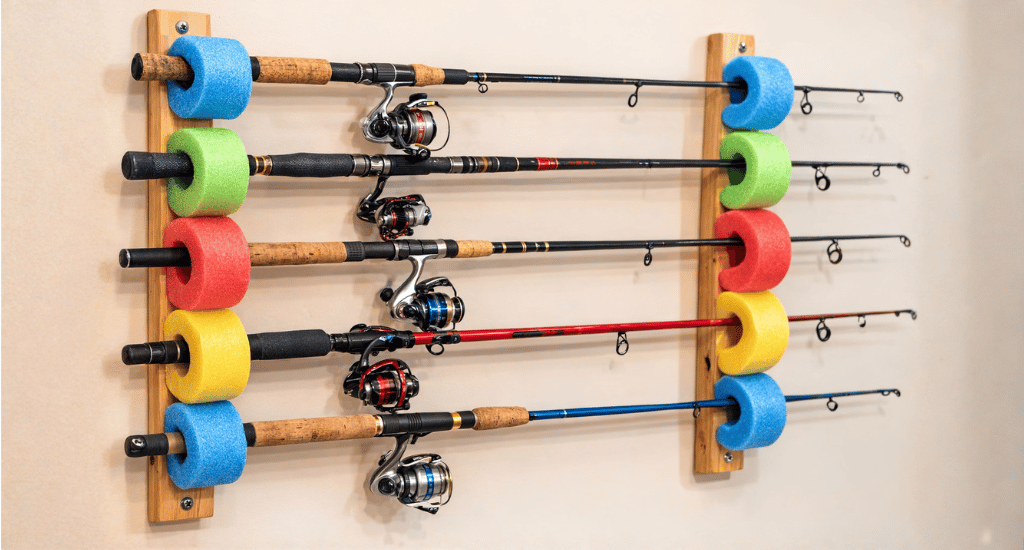
How to make it
- Cut several narrow slits across a foam pool noodle
- Attach the noodle to a wall board with screws
- Slide rod tips inside the foam slits
- Place a wooden board or holder below for rod handles
Advantages
- Soft foam protects the rod surface
- Very cheap storage solution
- Works well for garage storage
Garage Hooks or Bike Hooks
Garage hooks provide another simple answer for how to hang a fishing pole on the wall. Rubber-coated hooks hold rods vertically and protect the rod finish from metal contact.
How it works
- Install rubber-coated hooks on a garage wall
- Hang rods vertically on the hooks
- Place a plastic bin on the floor for rod handles
Benefits
- Fast installation process
- Strong vertical rod storage
- Very useful inside garages and storage areas
Vertical vs Horizontal Wall Storage for Fishing Rods
Anglers often choose vertical or horizontal wall storage after they learn how to hang a fishing pole on the wall. Each method protects rods in a different way. The right choice depends on wall space, rod length, and room height.
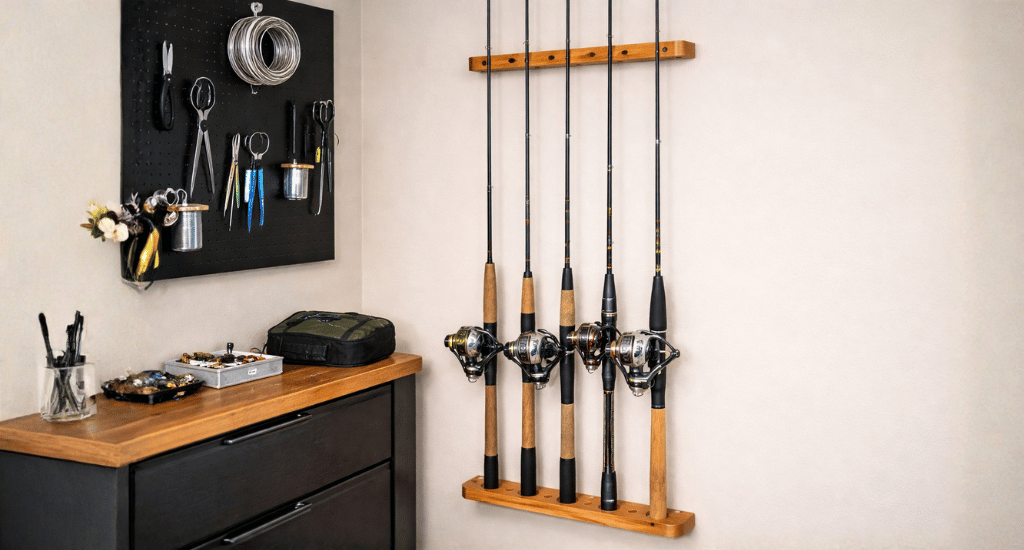
Vertical Rod Storage
Vertical storage places the rod in an upright position against a wall holder or rack. This method keeps rods off the floor and saves wall space inside small rooms.
Pros
- Saves valuable wall space in small rooms
- Quick and easy access before fishing trips
- Works well inside garages and storage areas
Cons
- Needs enough ceiling height for long fishing rods
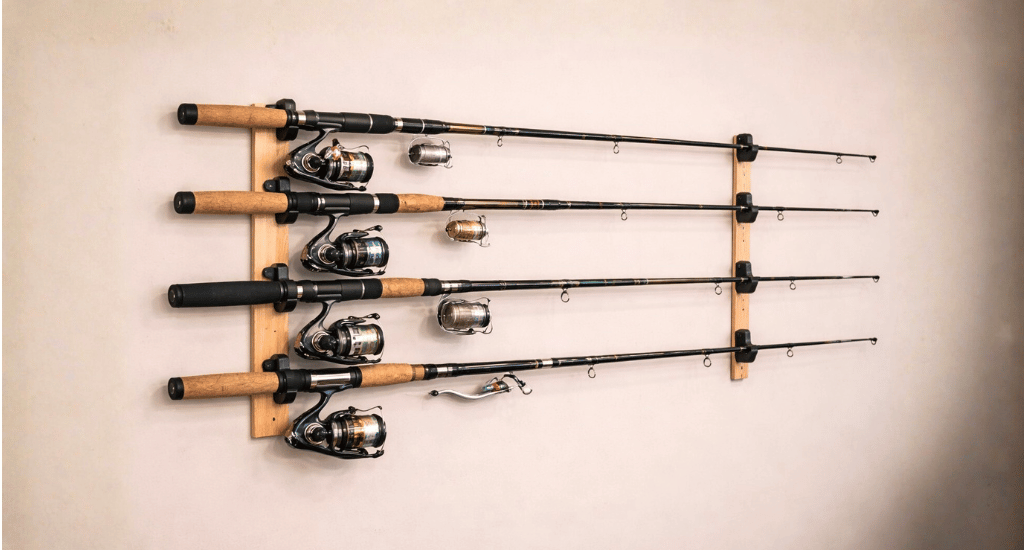
Horizontal Rod Storage
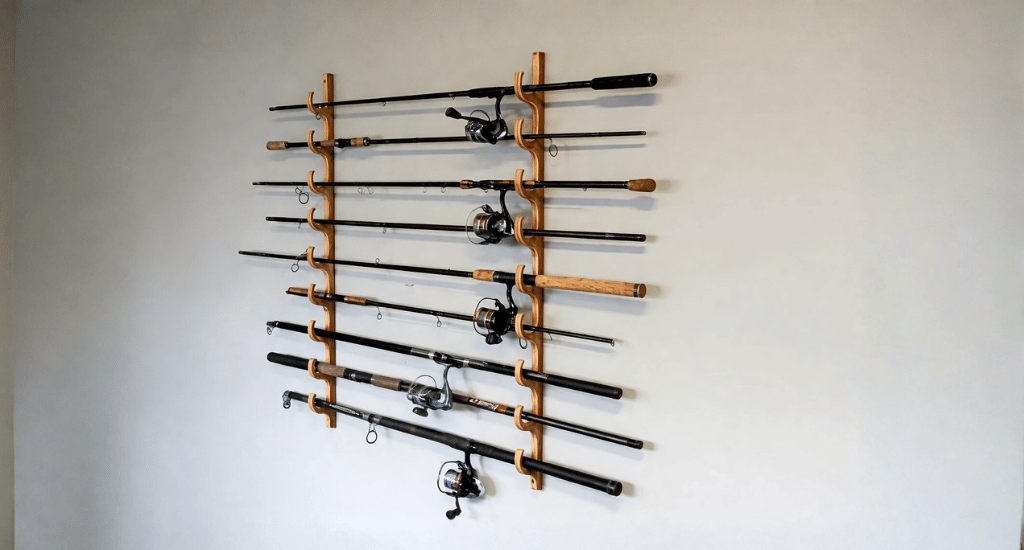
Horizontal storage holds rods across the wall with supports under the rod blank. Many anglers use this setup when they want safe storage and a clean rod display.
Pros
- Reduces pressure on rod tips during storage
- Works well as a neat rod display on a wall
- Good choice for storing several rods together
Important guideline
- Use two support points placed about 3-4 feet apart for proper rod support
Which Storage Method Is Better?
The best storage method depends on the room and the rod collection. Horizontal storage often protects long rods better because the rod rests on two supports.
Vertical storage works well in tight spaces with limited wall width. Anglers often choose based on rod length, room size, and total number of rods.
Cheap DIY Fishing Pole Wall-Storage Ideas
Many anglers want simple storage after they learn how to hang a fishing pole on the wall. Homemade racks cost very little and still protect rods well. These fishing rod storage ideas work great inside garages, sheds, or small fishing rooms.
Wooden Wall Rod Rack
A wooden rack provides a strong and simple wall-mount fishing rod holders diy solution. A basic board holds several rods while the wall stays neat and organized.
How does this rack work
- Use a 1×4 wooden board with enough length for several rods
- Drill round holes with a hole saw across the board
- Cut narrow slots from the hole edge to the board front
- Slide rods through the slots so the handles rest inside the holes
Storage capacity
A long board often holds 10 to 13 rods, depending on board length and spacing
PVC Pipe Rod Holder
PVC pipe also works well for a simple diy fishing rod holder project. The pipe supports rod handles and keeps rods upright against a wall.
How this holder works
- Cut several pieces of 2-inch PVC pipe
- Attach the pipes to a wooden board or directly onto a wall
- Insert the rod handles inside the pipe openings
- This design keeps rods steady and protects the rod blank from scratches.
Ceiling Storage Option
Ceiling racks provide another useful solution when wall space is limited. Many garages use this layout because rods stay above head height and remain safe.
This setup also works well as a diy fishing rod holder ceiling project. A rack attaches to ceiling rafters, and rods rest across the holders. The rods stay straight, and the wall remains free for other gear.
End Note
Wall storage protects rods, saves space, and keeps fishing gear neat inside garages or fishing rooms. Anglers often use racks, clips, pool noodle holders, or hooks after learning how to hang a fishing pole on the wall safely.
Good storage also needs smart placement and spacing. Use two support points about 3 to 4 feet apart, keep rods in a cool, dry place, and add padding to prevent scratches. Choose fishing rod storage ideas that match your space, rod count, and budget.