Fly fishing for bonefish involves stalking “ghosts of the flats” in shallow, clear water, requiring 8-9 weight rods, fast-sinking shrimp/crab flies, and 12lb fluorocarbon leaders. Key techniques include spotting tails or wakes, accurate casting within 60 feet, using a strip set, and using stealthy, light-landing flies in shallow, sunny conditions.
This guide breaks bonefishing into a clear system: read seagrass flats and channels, spot wakes, tails, and mud plumes, stalk into range, and deliver accurate 30–60-foot casts, with most shots inside 40 feet. Learn quick short strips, strip-strike hooksets, drag control for long runs, plus gear, flies, destinations, and common mistakes.
What Are Bonefish and Why Are They Called the “Ghost of the Flats”?
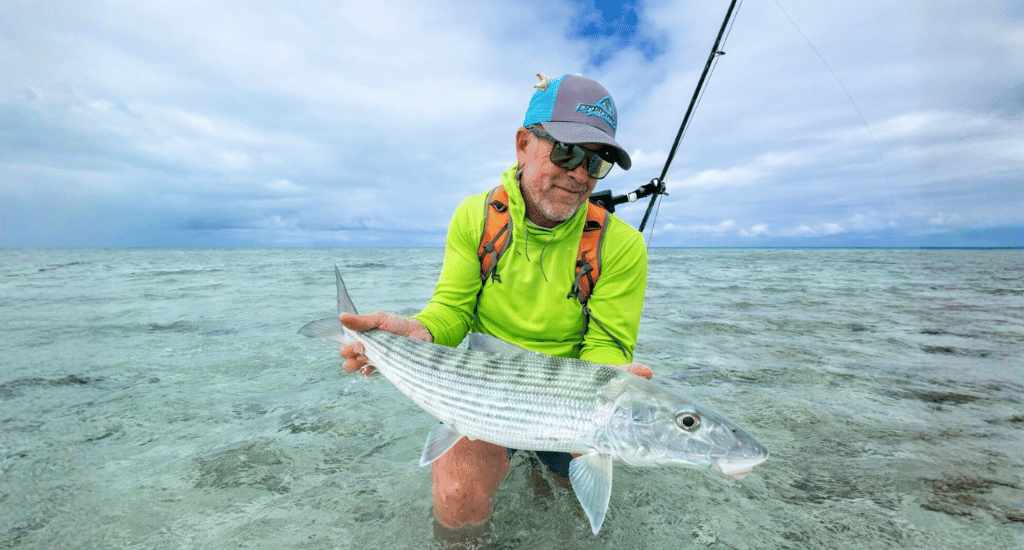
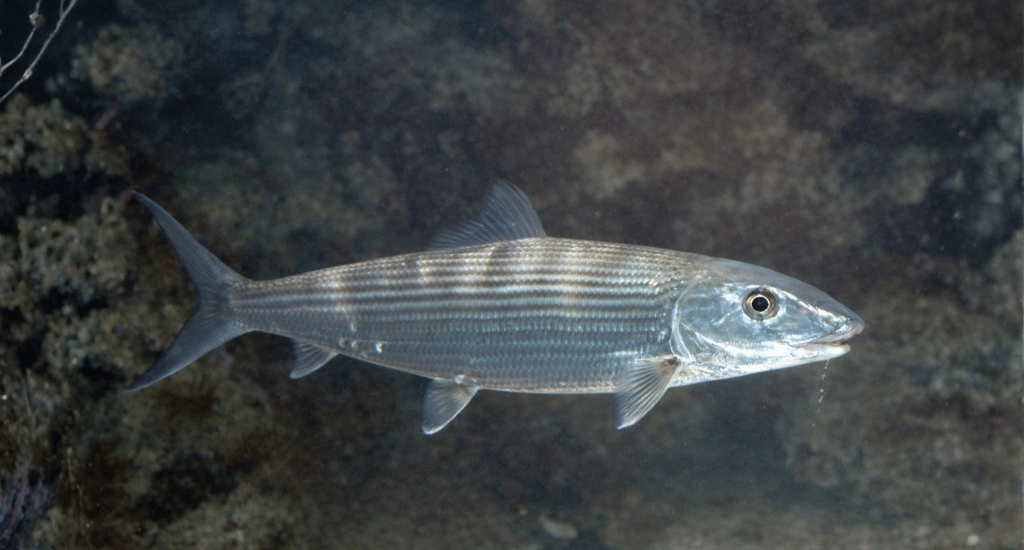
Bonefish (Albula vulpes) are silvery, fast-swimming, shallow-water fish that live on tropical and subtropical tidal flats. They are called the “ghost of the flats” because their silver coloration matches sand and turtle grass, making them appear invisible and disappear quickly when spooked.
Understanding bonefish habitat begins on seagrass flats, with sand flats, turtle grass, and nearby channels. Bonefish show flat cruising and cruising behavior along edges, sand-to-grass transitions, white-sand pockets, and points that funnel food. They feed by tipping down and rooting for shrimp and crabs, often in 1 to 4 feet of water, and they push onto tidal flats more on an incoming tide.
And yes, bonefishing is challenging. It requires spotting nearly invisible fish, stalking wary targets that spook easily, and delivering ultra-precise casts under pressure while mastering strip-strike timing. Similar challenges exist in other saltwater fly-fishing for trophy seekers. Fly fishing for Tarpon offers another demanding sight-fishing experience on tropical flats, with powerful runs.
How Do You Successfully Fly Fish for Bonefish? (Key Strategies and Techniques)
Fly‑fishing for bonefish requires keen eyes, stealth, and specialized tactics. Successful anglers spot bonefish by subtle cues, cast accurately well ahead of moving fish, present the fly with quick, short strip retrieves, use a firm strip‑set hookset, and handle the fish’s explosive long runs with a properly set drag. These techniques, combining sight‑fishing skills with precise casting and retrieval, are the foundation of bonefishing success.
How to Spot Bonefish: Identifying Fish, Wakes, and Mud Plumes
Bonefish are nearly translucent, so look for indirect signs. Wear polarized sunglasses to cut glare and see below the surface. Scan the flat for:
- Wakes or “nervous water”: Moving bonefish often create V‑shaped wakes or patches of disturbed surface. Cast 3–6 ft ahead of the wake (their tail causes the wake) to avoid spooking them.
- Shadows or dark shapes: Over light sand bottoms, bonefish backs cast dark silhouettes or glints. If a brief dark flash or “ghost” appears, then disappears, it’s likely a turning bonefish.
- Tails: In very shallow water, feeding bonefish will frequently tip downward, exposing a silvery tail fin above the surface. Flashing tails are among the surest bonefish cues.
- Mud plumes (“puffs”): On muddy or grassy flats, bonefish rooting for prey kick up little clouds of sand/silt. Small muddy puffs or streaks in series often mark feeding bonefish.
Each of these cues – wakes, shadows, flashes, tails, or mud puffs – can betray a bonefish’s presence. Keep scanning 360° (especially with the sun at your back) and cast where the cues indicate fish are headed.
Casting for Bonefish: Delivering Accurate 30–60-Foot Casts
Bonefish flats demand long, accurate casts with the right lead. Most bonefish shots are within 30–50 ft, but you should be able to cast up to 60 ft or more when needed. In practice, 40 ft casts are common – “deadly accurate” under pressure – so practice punching 40–60 ft in wind. It’s literally challenging and equally critical when targeting large fish like Bonefish or Pike.
Always cast ahead of moving fish, not on top of them: lead bonefish by roughly 3–6 ft so the fly lands in front of them. Use smooth, quiet casts (with minimal false casts) so the fly lands gently. Good form is crucial: keep slack out, double-haul in the wind, and practice in a stiff breeze. Remember that fish will refuse flies thrown behind them, so aim to drop the fly just out front of their path to mimic prey moving away.
Fly Presentation and Retrieval: Using Quick, Short Strips
Once the fly is near a bonefish, animate it with quick, short strips. Bonefish eat small crustaceans, so small jerks and pauses make the fly look like fleeing shrimp. After letting the fly sink to the bottom (especially over sand), use repeated short strips (about 3–6 inches each) in a “pop‑pop‑pop” rhythm. Vary the speed: generally use fast, twitchy strips (like a darting shrimp), but slow it slightly if the fish only follows.
Keep the line tight between strips – never let slack build up – so that even the slightest pickup is felt. These short, snappy strips mimic natural prey movement and often trigger a take. If the fish just follows without biting, try pausing for a moment or speeding up slightly to provoke a strike.
Setting the Hook: Strip Strike, Don’t Trout Strike
When a bonefish takes the fly, do not lift the rod tip as you would for trout. Instead, use a strip set. Hold the rod low (often underwater) and make a long, firm pull on the line with your stripping hand. This pulls the fly back toward the fish and drives the hook into the soft bonefish’s mouth.
Guides often even say “strip” instead of “strike” to avoid the instinct to raise the rod. This technique is also essential for other powerful species, such as muskie. The bulk of the hookset power comes from the hand strip, not from lifting the rod tip. A well‑timed strip‑set avoids flinging the fly out of the fish’s mouth (as a rod lift would) and keeps the fly in water, giving the bonefish a natural prey motion.
Fighting and Landing a Bonefish: Handling Long, Rapid Runs
Bonefish are incredibly fast and will make long, powerful runs. A hooked bonefish can rip off 50–150+ yards of line in seconds. To land one, set your drag early before the fight – for example, around 10–15 lb on an 8‑weight reel – so the fish can run but not snap off your tippet.
As it blasts away, keep firm but steady pressure on the line. Clear any loose line quickly (e.g., pull the rod tip down or walk to follow the line) to prevent wraps. Maintain your rod tip high to avoid the line diving into coral or rocks, then lower it gently to angle the fish toward you as it tires. In short, let the bonefish run on its terms, pumping the reel and balancing tension.
With backing behind you, this steady approach – not panicking – prevents break-offs. After the run, carefully guide the fish into the shallows or into the boat, keeping it in the water (wet hands only) until you remove the barbless hook and release it.
Step-by-Step: Your First Bonefishing Outing (Beginner Workflow)
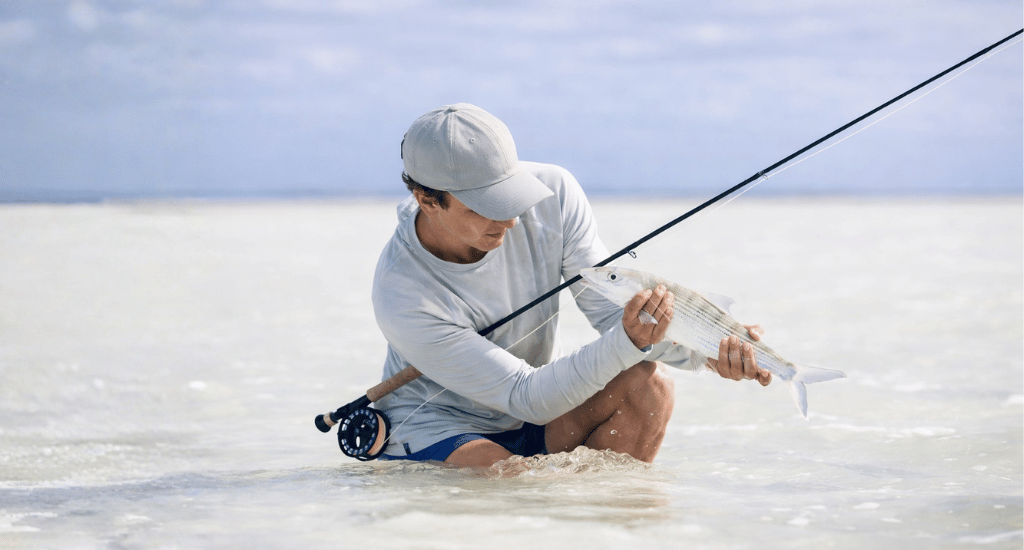
Plan your first bonefish trip with a simple checklist. Arrive early on the flats (dawn or just before) when bonefish are most active. Follow a systematic approach: set up your gear, move carefully in the water, spot tailing fish, and execute each cast patiently. These clear steps will help a beginner understand the full workflow from arrival to hookup.
- Arrive at the flats just before sunrise. Bonefish often feed at dawn (and dusk), so getting on the water early means calmer flats and better fish activity. Morning light also makes spotting fish easier. Aim to start when the light first allows you to see into the shallow water.
- Rig an 8-weight rod with saltwater fly line. Use a sturdy saltwater 8-weight fly rod and a matching reel loaded with a weight-matched floating line. Tie on a tapered mono leader about 9 feet long, with roughly 12-pound test tippet. This setup handles bonefish well in flats conditions.
- Tie on a proven bonefish fly. Use a popular flatfish fly, such as the Gotcha or Crazy Charlie, in size ~6. These shrimp/crab-pattern flies (often tied with bead eyes) reliably imitate bonefish prey. They land quietly and draw attention when stripped.
- Wade onto the flat slowly and quietly. If you’re fishing on foot, shuffle through the shallow water carefully. Keep your feet in the water and step softly to minimize noise and vibration. A slow, low-profile approach helps you sneak within casting range of spooky bonefish without spooking them.
- If on a skiff, pole quietly downwind. When fishing from a flatboat, coordinate with your guide. He should pole the boat gently on the downwind side of you. This keeps the skiff from drifting into the fish and reduces noise, positioning you for a shot while minimizing disturbances.
- Scan for fish. Continuously watch the water ahead of you and around you. Look for any dark shadows, tail flashes, or patches of rippled “nervous” water. These signs often mean bonefish are tailing (feeding) or cruising. Keep the sun at your back and sweep your gaze widely across the flat to catch any movement.
- Approach from downwind at approximately 40–60 feet. Once you spot a tailing bone, slowly move into position. Staying downwind of the fish means your body (and shadow) won’t alert them. Hold your distance – about 12–18 meters, so you’re not too close. A quiet approach from downwind gives the fish confidence to stay feeding.
- Cast just ahead of the fish. When ready, cast your fly about 4–6 feet in front of where the bonefish is moving. Keep the cast soft and controlled. The goal is to land the fly gently on the water ahead of the fish’s path, not right on its head. Reel or pull in any slack line immediately so the fish can see and reach the fly naturally.
- Let the fly sink briefly (~2 seconds). Once the fly lands, pause a moment to let it drop toward the bottom. Bonefish often feed on shrimp and crabs on the seafloor, so a slight sink (about 2 seconds) makes the fly look natural. This also lets you see if the fish reacts as the fly settles.
- Use quick, short strips on the retrieve. Animate the fly with a series of short, sharp strips. Bonefish key in on lifelike, fleeing movements, so imitate a panicked shrimp with a lively retrieve. Varying the speed or strip length can help trigger a bite. Keep tension on the line and watch the fish’s body language as you strip.
- Strip-set the hook on take. When a bonefish takes the fly, set the hook by pulling in the line with your stripping hand – not by jerking the rod. A firm strip-set provides a direct connection and reliably hooks these fast fish. Avoid a high-sticking “trout set,” which often fails on bonefish.
- Be patient and persistent. Bonefish are wary; you may need multiple tries. If the fish ignores the first presentation, keep trying – they often cruise back by. Stay observant, keep scanning for new shots, and don’t get discouraged. Patience and steady effort (and perhaps the next fly pattern) usually yield success.
Following these steps in order will help a beginner confidently wade or pole for bonefish. Each step builds on the previous one, from early arrival and gear setup to careful stalking, casting, and hooking. Remember, flat fishing is as much about careful technique and persistence as it is about speed. Keep at it and enjoy the learning process – that’s key to your first bonefish outing.
What Gear Do You Need for Fly Fishing for Bonefish?
Targeting bonefish requires robust saltwater gear. A stout 8-weight fly rod is the standard choice (with 6–9 weights useful in different conditions), paired with a floating weight-forward fly line, strong-drag saltwater reel, and light-colored sinking flies (shrimp/crab patterns in sizes #2–#8).
- Fly rod (6–9 wt, 9 ft): A saltwater-rated 8-weight (9 ft) is standard for bonefish (3–10 lb). Lighter 6–7 wt rods suit calm flats or smaller fish. A 9 wt is better for wind and the largest bonefish. Fast-action rods cast farther.
- Fly line (floating, weight-forward): A floating, weight-forward (WF) line matched to the rod weight is best. Tropical saltwater lines (heat-resistant) perform better in warm, flat-water conditions. Neutral or light colors (sand, tan, light blue) avoid spooking bonefish. The WF taper casts far and cuts wind.
- Fly reel (saltwater, strong drag): Choose a saltwater reel with a smooth, powerful drag and a sealed, corrosion-resistant design. A large-arbor reel speeds up line retrieval. Spool 150–200 yards of 20 lb backing. Aim for 8–12+ lbs of drag to handle bonefish’s long runs.
- Flies (shrimp/crab patterns): Bonefish feed on small crustaceans. Use light-colored, sinking, or intermediate flies in sizes #2–#8. Effective patterns mimic shrimp, crabs, or baitfish in natural tan, white, gray, or olive. These low-profile flies match bonefish prey in shallow flats.
- Leader/tippet (fluorocarbon, 10–12 lb): A 9–10 ft tapered saltwater leader with 10–12 lb fluorocarbon tippet is standard. Fluorocarbon resists abrasion and sinks slightly. Long leaders present tiny flies delicately to wary bonefish. A strong tippet prevents break-offs during hard runs.
- Polarized sunglasses: Essential for sight-fishing on flats. Polarized lenses cut glare and reveal bonefish silhouettes in shallow water. Choose copper, gray or brown lenses for bright sun. Wraparound or snug-fit frames protect from wind, making it easier to spot fish.
- Sun protection: Long hours on tropical flats mean intense sun. Wear a wide-brimmed hat, a lightweight long-sleeve sun shirt, and SPF 50+ sunscreen on exposed skin. Proper sun gear prevents painful sunburn and fatigue during full days of bonefishing under the bright sun.
- Flats boots (hard-soled wading boots): Sturdy boots protect your feet from sharp coral, oysters, and rocks. Look for good traction (non-marking rubber or felt soles). Light-colored, breathable boots help keep feet cooler in hot, shallow water while stalking bonefish.
- Stripping basket & pliers: A stripping basket keeps excess fly line off the water, preventing tangles during rapid bonefish runs. Saltwater pliers or forceps with a built-in cutter are vital for removing hooks from hard-fighting fish or snagged flies.
What Are the Best Flies for Bonefish?
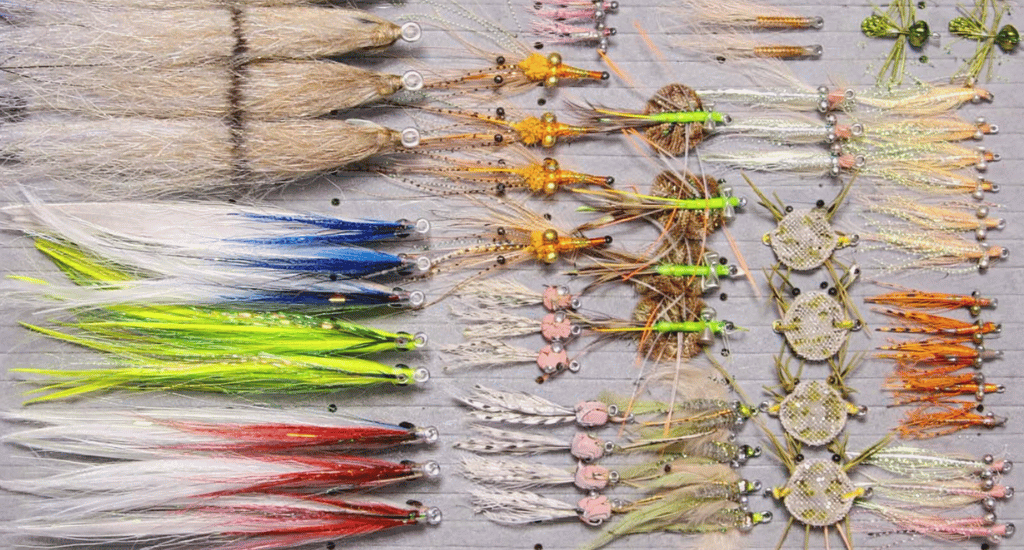
Bonefish prefer small, sand-colored sinking flies (size #2–#8) that mimic shrimp or crabs. Use tan or white flies on clean sand; pink or orange accents in stained water or low light. Carry ~12–20 flies, including key patterns like Gotcha, Crazy Charlie, Clouser Minnow, Mantis Shrimp, and Bonefish Bitters.
| Fly Pattern (Color, Size) | Description |
|---|---|
| Gotcha (tan/pink, #6) | Classic rabbit-fur shrimp pattern with bead-chain eyes for moderate sink. Named for a guide’s “Gotcha!” shout each time a bonefish ate it. |
| Crazy Charlie (tan/white/pink, #6) | The original modern bonefish pattern. A small chenille-bodied shrimp imitation with bead-chain eyes. Tied by Charlie Smith in the 1970s, it remains a must-have in any flats box. |
| Clouser Minnow (tan/white, #4–#6) | A baitfish-style minnow with weighted (dumbbell) eyes. It imitates small shrimp or sand minnows and sinks slowly. Bonefish also eat small baitfish, making this pattern effective on clear flats. |
| Mantis Shrimp (tan/olive, #6–#8) | A segmented shrimp imitation with curly rubber legs. Designed by Bob Veverka to mimic a mantis shrimp (a key bonefish prey). Tan works best on sandy bottoms, olive on grass flats. |
| Bonefish Bitters (tan, #6–#8) | A buggy crustacean pattern with an epoxy head, rubber legs, and deer-hair body. Its heavy epoxy “head” lets the fly tumble slowly on the bottom, imitating a struggling shrimp or crab. |
Where Are the Best Places to Fly Fish for Bonefish?
For bonefish enthusiasts, world-class fishing spans the Bahamas (Andros, Abaco) and Florida Keys (Islamorada) to remote flats like Christmas Island and the Seychelles. These waters offer tailing schools and trophy fish, each with unique seasons, fish sizes, and access/cost profiles.
- Bahamas: Andros, Abaco, and other islands host trophy bonefish – Bimini even holds the 16‑lb IGFA record. Glassy white‑sand flats and direct flights from Florida make Bahamas bonefishing popular year-round.
- Florida & Keys: Florida’s Keys (especially Islamorada) are the U.S. bonefish hub, with abundant 4–6 lb bonefish. Fishing is year-round, peaking in late spring through early fall when waters warm.
- Christmas Island (Kiribati): A legendary Pacific atoll flats fishery with virtually year-round warm weather. Its expansive flats hold enormous numbers of bonefish (avg. 2–3 lbs, with occasional 5–7 lb giants) plus trophy-sized trevally. Reaching this wild atoll requires multiple flights (via Honolulu or Fiji) and boat transfers. Guided lodge packages are pricey (~$3,650 for 7 nights) but reward anglers with pristine, uncrowded flats and truly giant bonefish—a bucket-list bonefishing adventure.
- Belize (Central America): Renowned for warm shallow flats (Ambergris Caye, Turneffe, etc.) protected by the world’s second-largest reef. Bonefish are abundant (often tailing in hundreds), though smaller (many ~3–5 lbs) than Bahamian trophies. Virtually year-round fishing—April–Nov yields huge numbers, with Dec–Mar as the high season. Lodges and guided camps are affordable, and access is straightforward via Belize City, plus short boat or plane transfers.
- Seychelles (Indian Ocean): A remote island group with world-class flats. Its pristine shallows teem with bonefish—averaging 4–8 lbs, many of trophy size. Fishing is best Apr–Dec (avoiding the SE monsoon), though warm waters persist year-round. Getting there requires long flights and high-end lodge packages. Anglers prize Seychelles for its stunning scenery, low fishing pressure, and teeming flats (bonefish, permit, milkfish, trevally), which offer extraordinary flats-fishing experiences.
- Hawaii (USA): The Hawaiian Islands (Oahu, Kauai, etc.) offer tropical flats and year-round bonefishing. Bonefish here average 4–6 lb. Summer (May–Oct) brings warm water and steady trade winds; winter (Nov–Apr) may feature occasional cool fronts that slightly slow the bite. U.S. flights and no visa make travel easy, with costs ranging from Florida to remote islands. Anglers can also target peacock bass and jacks in these unique Pacific flats.
Best Bonefishing Season to Go Fishing
Florida’s Keys and south Florida flats fish year-round (bonefish ~4–6 lbs).
- Spring (Mar–May) warms waters and brings schooling bonefish onto the flats, peaking in late spring/early summer.
- Summer (Jun–Aug) means hot, calm days—Florida and Texas flats buzz with action (Hawaii sees steady trade winds).
- Fall (Sep–Nov) stays warm, extending the prime season.
- Winter (Dec–Feb) cools northern flats: Florida’s Keys remain mild and fishable on warm days, and Hawaii’s waters stay warm, but Texas’s Laguna Madre largely shuts down with cold fronts.
In summary, spring–summer is prime for Florida and Texas, fall remains productive, and only Florida/Hawaii fish reliably in winter.
What Are Common Beginner Mistakes to Avoid When Bonefishing?
Common beginner mistakes in bonefishing happen because bonefish are wary “ghost of the flats” that spook fast and punish sloppy casting, noisy movement, and poor line control. Avoid these errors, and you will see more fish, get more eats, and land more bonefish.
- False casting over the fish: False casts over bonefish throw line shadows and flash that spook them. False cast to the side, then deliver one clean presentation. Pre-strip line so you can shoot quickly with one or two false casts.
- Casting too close or too far: Dropping the fly within 3 feet often spooks fish, but landing it 8+ feet away can go unseen. Lead bonefish 3–6 feet in front of its path, then adjust farther for faster cruising fish.
- Trout-setting instead of strip-striking: Lifting the rod pops the fly out because bonefish eat and move fast. Keep the rod low and use a firm strip-strike with your line hand. Practice the motion on land until it replaces the trout-set habit.
- Moving too fast and making noise: splashing, rapid steps, and sudden moves send pressure waves across the floor. Shuffle your feet, move slowly, and stop when fish are within about 60 feet. In a skiff, keep the deck quiet and avoid banging gear.
- Poor line management and tangles: A loose line at your feet tangles with the cast or during the first run, causing break-offs. Use a stripping basket when wading, keep coils neat, and clear the line to the reel as soon as the fish runs.
- Fishing without polarized sunglasses: Without polarized sunglasses, you cannot reliably spot bonefish because glare hides shadows, wakes, and tailing fish. Wear quality polarized lenses. Use copper or amber in low light and gray in bright sun for better contrast.
- Ignoring wind and sun position: Approaching from the wrong angle casts your shadow over fish and makes casting more difficult. Keep the sun behind or off your shoulder for visibility, and approach from downwind when possible so your cast lands softly and your profile is smaller.
- Using the wrong fly size or weight: A fly that is too big or sinks too fast looks unnatural and spooks fish on shallow flats. Start with sizes #6–#8 and bead-chain eyes for moderate sink. Downsize or lighten the fly when fish follow but refuse.
Conclusion
Bonefishing is the ultimate sight-fishing test: stalking the “ghost of the flats” as it cruises seagrass flats, then making everything work under pressure. Success comes from knowing wary fish call for ultra-precise casts and great presentation, making accurate 30-60 foot casts (most bonefish caught within 40 feet), fishing 8-weight rods with a floating weight-forward taper matched to rod weight, and using a reel with strong, smooth drag for long, rapid runs. Add quick short strips, a clean strip-strike, and light-colored sinking flies (#2-#8) that mimic shrimp/crab imitation.
Start in the Bahamas (Andros, Abaco, Captain Shawn Leen), Florida Keys, Belize, Hawaii, Seychelles/St. Brandon’s, or Christmas Island. Handle fish fast, release clean, and support Bonefish & Tarpon Trust. Ready to chase the ghost? Practice your 40-foot cast, book a guide, and explore All for Fishing’s other blogs for more techniques.
FAQs
Is Fly Fishing for Bonefish Hard?
Yes. Bonefishing is challenging because wary fish demand ultra-precise casts and great presentation, plus accurate 30-60-foot casts under pressure. Most bonefish are caught within 40 feet, so practice and a guide make it achievable.
What Size Fly Should You Use for Bonefish?
Use light-colored, sinking flies in sizes #2-#8, with #6 as the most versatile. Choose #4 in stained water or aggressive fish, and #8 for clear water and spooky fish. Prioritize shrimp- and crab-imitation flies such as Gotcha and Crazy Charlie.
What Fly Line Should You Use for Bonefish?
Fly lines for bonefish should be floating, with a weight-forward taper, matched to the weight of the rod. Use a tropical line for heat resistance on warm flats. Choose subtle colors such as sand or light blue to reduce spooking.
What Kind of Reel Do You Need for Bonefish?
Use a reel with a strong, smooth drag to handle long, rapid runs. A sealed drag and a large arbor help in salt and sand. Carry 150-200 yards of 20 lb backing so the fish can run without break-offs.
How Do You Set the Hook on a Bonefish?
Set the hook with a strip strike. Keep the rod low, point it at the fish, and pull 1-2 feet of line with your stripping hand. Don’t trout strike, because lifting the rod often pulls the fly out immediately.
How Far Do Bonefish Run When Hooked?
Bonefish make long, rapid runs of about 75-150 yards on the first burst, sometimes more for bigger fish. They often make 2-4 more runs of 30-75 yards. This is why strong, smooth drag and backing matter.
Can You Catch Bonefish Without a Guide?
Yes, you can catch bonefish without a guide, especially in the Florida Keys, the Bahamas, and Hawaii. Your odds are lower at first because guides spot fish more effectively and know the tides and flats. Hire a guide for 1-2 days, then go DIY.