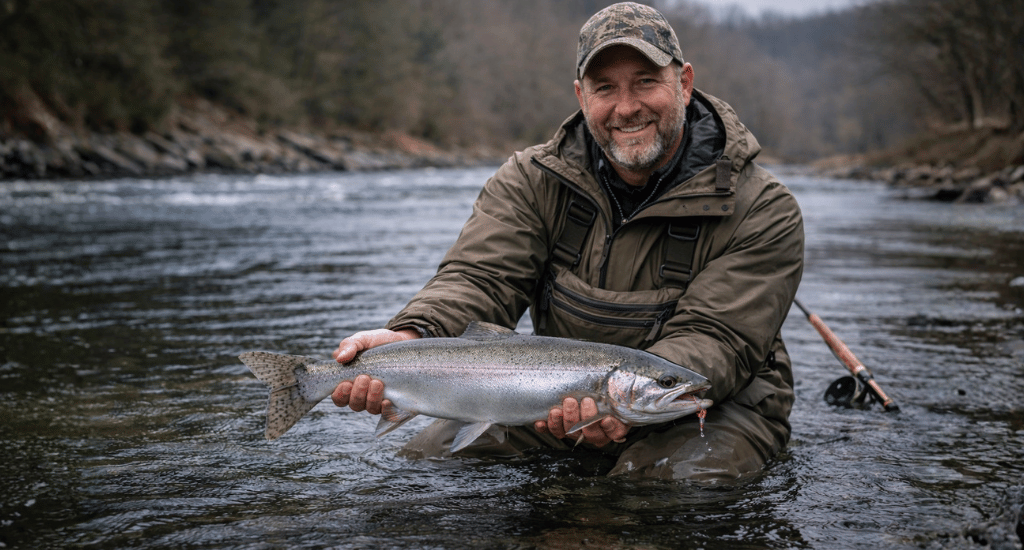
Cold rivers hide a traveler that lives two lives, fresh and salt, and fly fishing for steelhead begins with respect for this anadromous rainbow trout and its long journey upstream.
Steelhead tests every angler because success asks for patience, clean technique, and sharp eyes on water flow, depth, and seams, yet the reward feels earned and honest after many quiet hours.
Follow this guide to learn how steelhead behave, why water matters most, and how simple fly methods build confidence so your next trip holds purpose, focus, and real hope on the river.
Is Fly Fishing Good for Steelhead
Fly fishing works very well for steelhead because it matches how this fish moves through rivers. Steelhead travel long distances and rest in soft water. A fly can drift or swing in front of them without noise. This quiet style suits clear rivers and cautious fish. Many anglers trust fly fishing for steelhead for this reason.
Steelhead do not feed like normal river trout. They react to shape, color, and movement. A fly offers all three in a gentle way. This makes fly fishing effective even when fish ignore insects. In many rivers, the trout in that steelhead do not watch hatches like resident trout do.
The method also gives control. You can adjust depth, speed, and angle with simple changes. Swinging wet flies, nymph use, and streamer strips all serve a purpose. Very few swung flies reach deeper than four feet, so position matters.
This guide explains why fly fishing fits steelhead habits. You should read on to learn when it works best and how to use it with confidence.
Core Fly Fishing Techniques for Steelhead
Steelhead demand clear methods that fit river flow and fish travel paths. These core fly fishing techniques help anglers place a fly at the right depth and speed, even in cold water where steelhead move slowly and deliberately.
Swinging Wet Flies
This method lets the fly move across the river with the current. Cast across and allow the line to tighten. The fly arcs naturally. Many anglers use this for active fish. Very few swung flies reach deeper than four feet.
Dead Drifting With Nymphs
Dead drift places the fly to float at the same speed as the water. The goal is a natural path near the river bottom. Steelhead react to shape and color, not hatches, so this slow pass can trigger strikes.
Indicator Nymphing
An indicator acts as a small float on the line. It shows depth and alerts you to strikes. Set the indicator based on water depth. This style works well in deep runs where steelhead rest before moving upstream.
Chuck ’n Duck Method
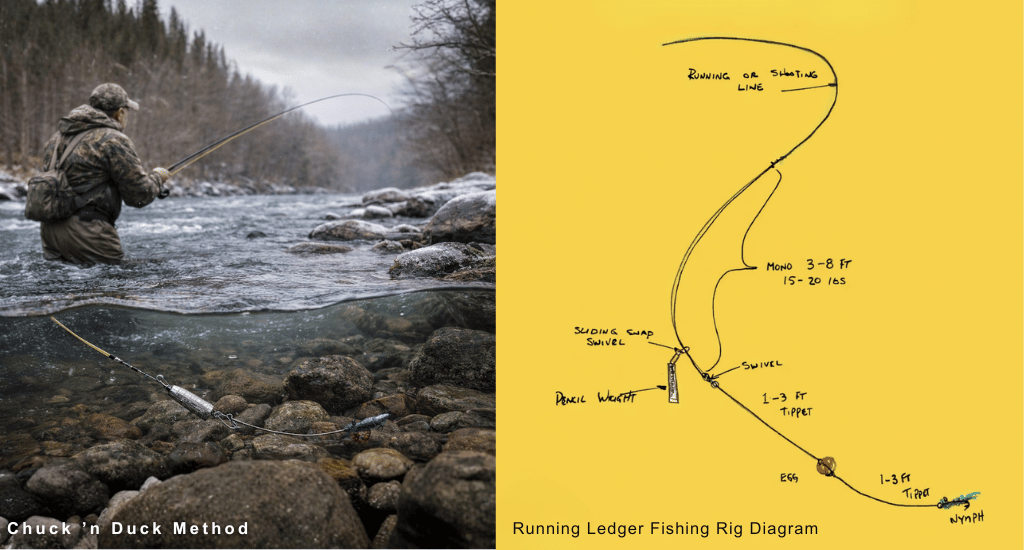
This method uses added weight to place the fly near the bottom fast. Cast upstream and let the fly bounce along rocks. It works best in fast winter water. Control matters more than grace with this approach.
Stripping Streamers
Streamers use copies of small fish or leeches. Cast across or downstream, then pull the line in short strips. Sudden movement can wake steelhead from rest. This method shines in stained water or low-light periods.
Spey Fly Presentation
Spey casting helps cover wide rivers with less effort. Long rods and smooth casts keep flies swinging low and steady. This presentation suits big water and traveling steelhead, where control and distance improve each drift.
Best Flies for Steelhead Fishing
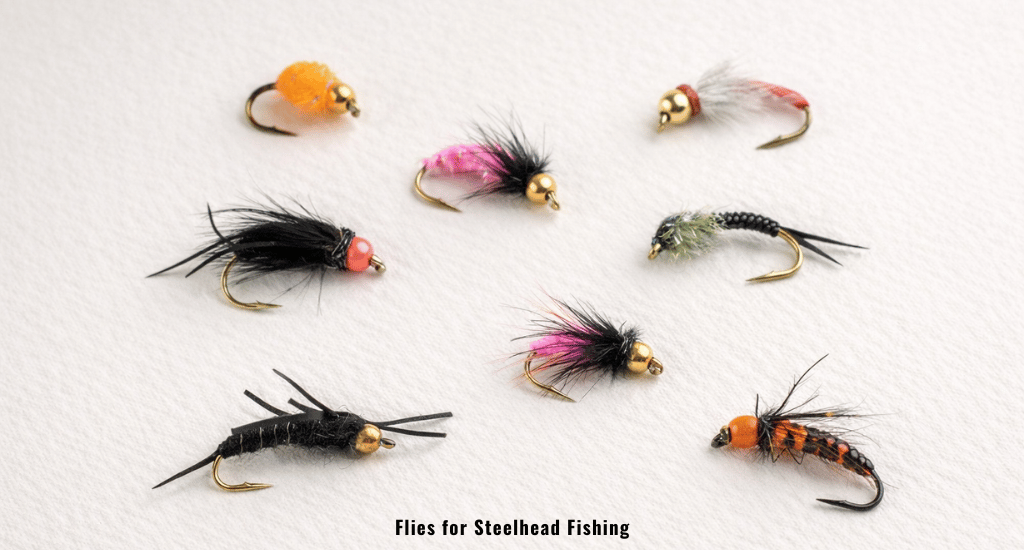
Steelhead respond to flies that suggest food, movement, or intrusion rather than insect matches. Fly choice depends on water color, depth, and season. Simple patterns often outfish complex designs in real river conditions.
Streamer Flies for Steelhead
Streamer flies copy small fish and large river prey. These flies work best in low light or cloudy water. Strip them slowly across current seams. Sudden motion can trigger reaction strikes from steelhead holding near structure.
Egg Patterns for Steelhead
Egg flies work because steelhead often follow spawning salmon. Loose eggs drift along the river bottom. The McFly Foam egg is a favorite steelhead fly due to its bright color and soft texture. Drift eggs close to the river bed.
Nymph Flies for Steelhead
Nymph flies copy insects that live underwater. Steelhead do not chase hatches like resident trout. Use nymphs in deep runs with steady flow. Natural colors work best when the water stays clear and calm.
Leech and Wet Fly Patterns
Leech and wet flies offer strong movement in cold water. Their pulsing action draws attention without speed. Swing these flies across slower water. Dark colors show well and help steelhead notice the fly from a distance.
Reading Water and Finding Steelhead
Steelhead rest in places where water offers safety and easy travel. River shape, current speed, and depth guide where these fish pause. Good water sense leads to steadier fly passes.
Understanding Holding Water
Seams between fast and slow current form natural travel lanes for steelhead. Behind rocks and boulders, water slows and gives rest. Current breaks and soft edges let fish hold energy while food and flies drift past.
Covering Runs Systematically
Start at the top of the run to reach fresh fish first. After each cast, take a few steps down. Aim to cover every inch of fishable water so no resting steelhead stays unseen or untouched.
Water Temperature and Fish Behavior
Cold water pushes steelhead deep and slow, so flies must reach lower zones. Warmer water allows more chase. Adjust sink rate and retrieve speed to keep the fly near fish during every river condition.
Where to Fly Fish for Steelhead
Steelhead travel between large bodies of water and rivers, so the place matters a lot. Some fish come from lakes and others from the ocean. Each region offers a different style and pace.
Great Lakes Steelhead Rivers
Michigan, Ohio, Pennsylvania, and Ontario hold many lake-run steelhead. These fish enter rivers from the Great Lakes. Chuck ’n Duck and nymphing stay common because water runs deep, fast, and cold through much of the season.
Pacific Northwest Rivers
Oregon, Washington, and Northern California support ocean-run steelhead. These fish grow larger and fight hard. Swinging flies stands as a dominant method. The Deschutes River serves as a famous place where wide runs allow long, smooth fly swings.
Practical Steelhead Fly Fishing Tips
Steelhead test both skill and mindset, so small habits shape results. These tips keep anglers steady on the river and help each cast stay useful even when fish stay quiet.
Patience is Essential; Strikes Can Be Rare
Steelhead do not hit flies often. Long, quiet stretches feel normal on many days. Stay focused and keep each drift clean. A single take can reward hours of steady effort and careful line control.
Keep Hooks Sharp at All Times
A dull hook fails even after a good strike. Check the point after each fish or rock touch. A sharp hook enters the jaw fast. This raises landing success during short, hard steelhead runs.
Focus on Presentation Over Fly Choice
Steelhead react more to how a fly moves than to its color. A perfect drift or swing puts the fly in front of the fish. This matters more than a large box of patterns.
Adjust Depth Before Changing Flies
Depth decides success on most days. Add weight or change leader length before a fly swap. Steelhead often rest near the bottom. A small depth shift can place the fly right in their path.
Expect Fewer Bites But Powerful Fights
Steelhead offer fewer takes than trout. Each strike brings sudden power. Hold the rod firm and let the fish run. These long fights bring the real reward of steelhead fly fishing.
Conclusion
Fly fishing for steelhead works best when anglers trust three core methods. Swinging covers travel lanes. Dead drift keeps flies near resting fish. Chuck ’n Duck places flies deep. Water depth, current speed, and timing guide each cast on every run.
Fly fishing for steelhead rewards patience and steady coverage. Move step by step through each run. Let river conditions lead fly and weight choice. Adapt when water or light changes. This calm and thoughtful style turns quiet hours into sudden, powerful takes.