Fly fishing for kokanee means matching tiny food and strict depth zones with small flies and controlled presentations. This approach works because kokanee feed on chironomids, scuds, and eggs, and they often hold deep near the thermocline. Use a 5-weight rod for most lakes, then scale up toward 6 to 9-weights when wind, heavy sink systems, or deeper water demand it.
Fish with a strike indicator in lakes to lock depth on suspended fish. Drift patterns in rivers during runs to cover staging lanes. Get down with weighted flies or sinking lines because depth is the deciding factor.
This guide shows how to find kokanee, pick the right gear, and choose flies that match their diet. You will learn depth-control methods, lake indicator setups, river run tactics, seasonal timing for fall success, and fast fixes for common problems.
Understanding Kokanee Salmon Behavior and Biology
Kokanee are landlocked sockeye that behave like deep-water grazers most of the year and aggressive spawners in fall. Fly fishing for Kokanee improves when you match your depth to their feeding zones and your timing to their spawning run.
Kokanee Life Cycle and Spawning Behavior
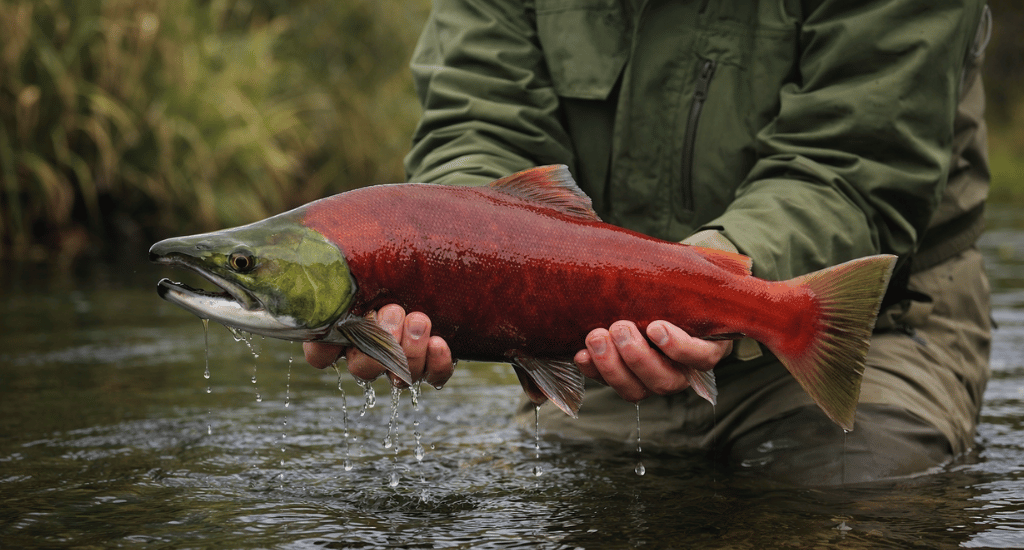
Kokanee spawn in late summer through fall. This phase triggers a clear shift in behavior and appearance. Fish move from open lake water into shallows and river spawning areas, and their bodies change color as the fall spawn run builds. River spawning runs matter because kokanee stage near stream mouths, then push into tributaries as flows rise.
Spawning fish strike for territory, not hunger. Expect aggressive strikes during the spawn phase because kokanee react to intruders and movement. Pre-spawn fish still roam and feed more normally, so they respond better to depth-driven presentations.
Kokanee Feeding Habits and Depth Preferences
Kokanee feed mainly on zooplankton. This diet keeps them tied to the thermocline, where plankton concentrates. Kokanee are often deep-dwelling fish, so controlling depth is the main challenge.
Summer kokanee hold deep. A common summer zone is 20 to 60 feet around the thermocline, especially on bright days. Fall kokanee move shallower. Pre-spawn staging often occurs at depths of 5 to 20 feet as fish gather near creek mouths and along drop-offs.
Food sources shift with conditions. Eggs, chironomids, and scuds show up as key forage, especially near spawning areas and lake edges. These micro-food items explain why kokanee can ignore big flies yet still respond to small, sparse patterns.
- Typical size: 10 to 16 inches in many waters.
- Key takeaway: Depth control wins more kokanee than fly changes.
Essential Fly Fishing Gear for Kokanee
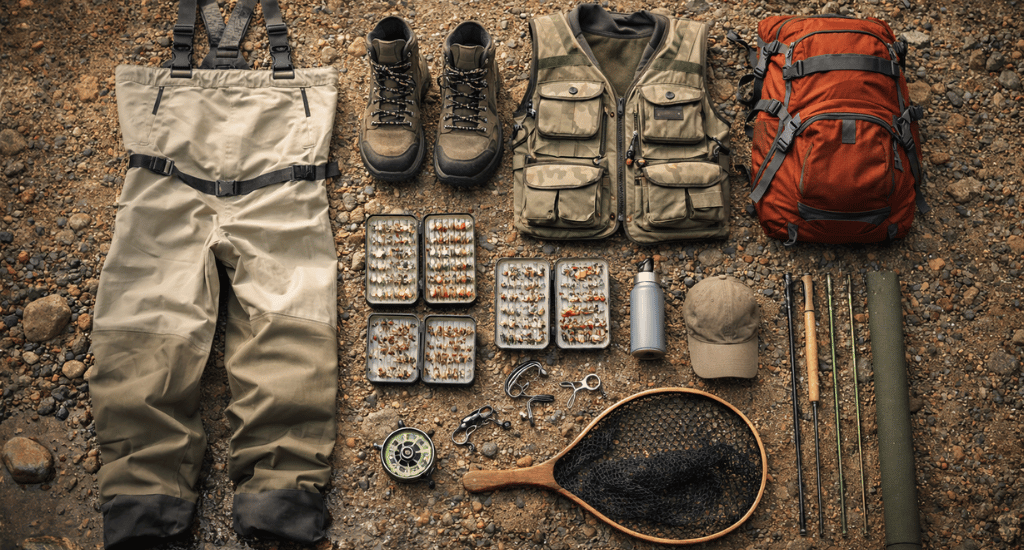
Kokanee gear must solve depth first. Kokanee spend much of the year deep, so your setup needs reliable depth control, light-tippet protection, and enough backbone to land fish that like to roll and surge.
Fly Rods and Reels for Kokanee
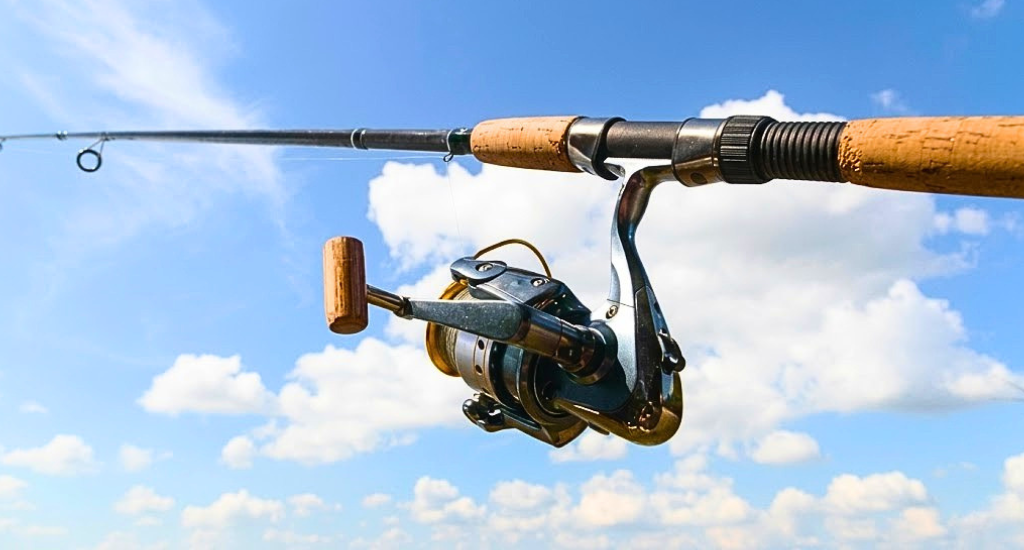
A 5-weight rod is the best starting point. An 8-foot 5-weight is a strong “sweet spot” because it balances power and finesse for lake fishing, short boat casts, and light leaders. A 5-weight also gives a limber action that protects light tippet when kokanee shake and change direction.
Match rod weight to conditions. Use a 4 to 5-weight for smaller fish and calm weather. Use a 6-weight when the wind picks up, or you need heavier lines. A 7 to 9 weight only makes sense when you are throwing heavier sink systems, fishing very deep, or dealing with mixed species and bigger water.
Choose a simple reel with smooth drag. Kokanee do not need a heavy drag system, but you do want consistent tension. Backing is basic insurance. Add enough backing to cover long runs, especially in open water, where fish can keep moving.
Fly Lines for Kokanee Fishing
A sinking line is the main tool. Full sink and sink-tip lines keep flies in the thermocline zone where kokanee feed. Depth is the key factor, so pick a line sink rate based on how deep the fish are marking.
Use floating lines for shallow and spawning phases. Floating lines work in river spawning runs and in fall staging zones when fish slide up into 5 to 20 feet.
Use weighted flies as a shortcut for depth. Weighted flies can replace sinking lines in shallower water or when you want a slower drop. Combine a sink-tip with a weighted fly when fish are deep, and you need fast, repeatable depth control.
Leaders, Tippet, and Other Essentials
A long leader improves natural drift. Start with 9 to 12 feet for most setups, then extend to 12 to 15 feet when fishing in deep, clear water. Use fluorocarbon tippet for lakes because it sinks better and resists abrasion. A 4X to 5X range is a strong baseline, with 6X when fish are picky.
Think in pounds, not just X sizes. A common target is 4 to 6 lb test for kokanee because their takes can be light and their mouths are not thick.
Choose mono over braid when connecting light systems. Mono absorbs shock better and protects the tippet during sudden surges. Add strike indicators for lakes and rivers when takes are soft or when your fly is far below the surface.
Best Flies and Fly Patterns for Kokanee
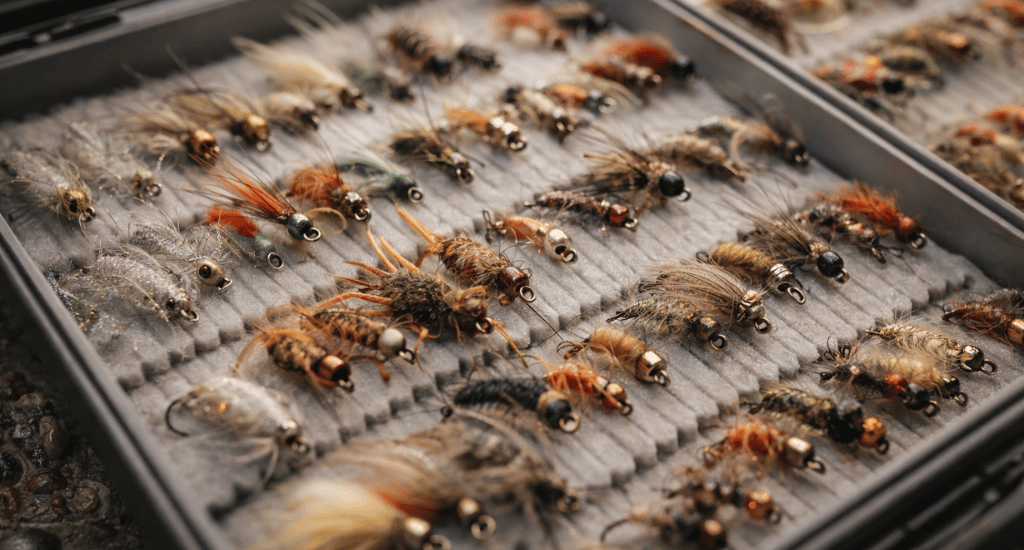
Kokanee flies must match small food and deep water. Kokanee feed on tiny prey like zooplankton, so small patterns and clean sink rates catch more fish than big streamers. Use micro patterns for feeding fish, then switch to bright attractors when the kokanee stage and turn aggressive.
Plankton Imitation and Micro Patterns
Chironomids are the top kokanee fly. Midges match a year-round food source and stay effective when kokanee hold deep and feed light. Fish chironomid patterns in sizes #14 to #18, including crystal chironomids and bloodworm styles. Keep profiles slim so the fly drops fast and stays in the feeding lane.
Scuds are a strong second option. Scud patterns imitate freshwater shrimp and work well in sizes #14 to #16. Fish them slow and steady because kokanee often sip rather than crush.
Egg patterns are also produced, especially near staging areas. Use tiny egg flies, single eggs, or small egg clusters when kokanee are near creek mouths or river entries. Micro streamers can work when fish chase, but keep them small and sparse so they do not ride too high.
Nymphs fill the gaps. Simple nymph patterns catch fish when you are not sure what is hatching, especially when fished deep with a slow, consistent retrieve.
Attractor Patterns and Flashy Flies
Bright attractors trigger non-feeding strikes. Use attractor patterns when kokanee stop feeding and start reacting. Flash helps in deep water because visibility drops fast with depth.
Woolly Buggers and leeches are reliable attractors. Fish them small and flashy, not bulky. Add crystal flash or UV materials when water is stained or when you need extra visibility.
Color matters more during this phase. Pinks, oranges, and chartreuse are the high-confidence colors because they stand out and trigger aggression. Use these colors when you see fish rolling, staging, or showing pre-spawn behavior.
Spawn-Specific Fly Selection
Spawn flies target aggression, not hunger. Spawning kokanee strike because of territory and irritation, so bold colors and egg shapes get attention.
Red and orange are prime spawn colors. Fish red or orange egg patterns when fish are in rivers or staging at stream mouths. Use glo-bugs, yarn eggs, and small egg clusters to cover different looks.
Pink and cerise work well pre-spawn. These colors stay effective in lakes when fish are staging in 5 to 20 feet and reacting to movement.
Flesh patterns can work after peak spawn. Use small flesh flies when dead eggs and carcass scraps drift through holding water.
Fly Fishing Techniques and Tactics for Kokanee
Kokanee tactics start with depth control. Depth is the key because kokanee are often suspended in a narrow band near the thermocline. Build every plan around finding that band, then choose the presentation that keeps your fly in it.
Indicator Fishing in Lakes
Lake indicator fishing targets suspended kokanee with precision. Use a strike indicator when fish are holding at a fixed depth and feeding softly.
Rig it simple. Tie a long leader, add a strike indicator, then attach one weighted fly or a two-fly dropper rig. Weighted flies help you reach depth faster and stay stable under wind chop. Adjust depth by sliding the indicator up or down until you start getting consistent taps.
Watch for subtle takes. Kokanee often eat gently, so the indicator may twitch, lean, or sink slowly. Set with a smooth lift, not a hard snap. Keep slack low so you do not miss light bites.
Use indicator and dropper rigs for coverage. Run a chironomid or bloodworm as the top fly, then a small scud or egg pattern below. This setup shows two sizes of fish and two movements in the same lane.
Deep Water Lake Fishing Techniques
Deep lake fishing works when you control sink time. Use the countdown method with sinking lines or weighted flies to reach the thermocline zone.
Start by marking depth. Watch sonar if you have it, or run timed sink tests to learn how fast your line drops. Count the fly down, then repeat the same sink count on every cast until the fish move.
Use sinking lines when fish hold deep. Full sink lines and sink tips keep the fly in the zone longer than a floating line. Add weighted flies when you need extra depth or a faster drop. Bead-head patterns and weighted nymphs are reliable options for kokanee because they stay compact and sink clean.
Use slow trolling only when needed. Slow trolling with a sinking line can help cover water in big lakes and reservoirs, but keep speed controlled so the fly does not rise. Boat positioning matters because wind drift can lift your line and change depth.
Stream and Spawn Run Fishing Tactics
Spawn run fishing produces the most visible kokanee bites. Rivers during spawning runs create tight travel lanes and staging areas where fish stack.
Drift patterns in rivers for natural contact. Use a dead drift with eggs, chironomids, and small nymphs because kokanee hold in slower seams and respond to a clean drift. Add an indicator for depth control and strike detection.
Use an indicator and dropper in the spawn water. Fish a small egg up top and a chironomid or scud below. This two-fly approach covers both aggression and feeding cues.
Expect aggressive strikes during spawn. Spawning kokanee hit hard at times, especially when bright patterns invade their lane near redds and staging pockets.
Retrieve and Presentation Strategies
Slow retrieves catch more kokanee. Use a very slow strip, a figure-8 retrieve, or a pause-and-drop to keep flies moving without climbing.
Change speed only after you confirm depth because depth mistakes matter more than retrieve style. Watch for flashes in clear water because kokanee often turn and show before the take.
Seasonal Timing and Location Strategies
Kokanee success depends on location and season first. Fly fishing for Kokanee improves when you choose deep western lakes in summer and shift to inlet streams during the fall spawn.
Prime Kokanee Fly Fishing Locations
Western reservoirs are the main kokanee waters. Blue Mesa Reservoir in Colorado, Flaming Gorge on the Utah and Wyoming border, Dillon Reservoir in Colorado, and Lake Chelan in Washington are well-known kokanee lakes with strong seasonal patterns.
British Columbia also holds major fisheries, including Okanagan Lake. Koocanusa is another key option, sitting on the Montana and British Columbia line.
State demand reflects real opportunity. Idaho offers many kokanee destinations; Oregon and Washington provide Pacific Northwest lake and reservoir options; Montana has western mountain lakes and access to Koocanusa; and California has high-altitude kokanee fisheries.
In many maps and management talks, “Region 4” is commonly tied to kokanee planning and stocking discussions.
Target the right water type. Lakes and reservoirs produce the most fishable depth structure, while inlet streams and spawning tributaries provide the best fall action.
Seasonal Windows and Timing
Fall kokanee fishing is the prime season. Late August through October is the peak window because fish stage shallow and enter tributaries during the fall spawn. Early morning and late evening are the best times to bite during this phase.
Summer fishing is a depth game. In July and August, kokanee push into the thermocline, so deep-water tactics matter most.
Spring fishing is less consistent. Post-ice periods can produce some action, but many fish are scattered and recovering, so results vary by lake and year.
Reading Water and Locating Kokanee
Kokanee location starts with depth and season. Kokanee are deep-dwelling fish in summer, then become shallow and visible during fall staging and river spawning runs. Find the depth zone first, then fish the closest structure or travel lane.
Using Electronics and Fish Finders
A fish finder is the fastest way to locate kokanee. Use sonar to identify the thermocline and the depth band where schools suspend. Kokanee often show as clusters of arches or stacked marks at a consistent depth. Focus on that repeatable depth before you choose flies or retrieves.
Use the depth finder to confirm the exact holding depth. Mark the depth where fish most often appear, then keep your flies in that band with a sinking line or an indicator rig. Adjust only after you recheck the marks, because kokanee shift up and down throughout the day.
Watch for bait and transitions. Plankton and small forage often show as haze or clutter near the thermocline. Schools that sit on the edge of that layer are high-percentage targets.
Visual Location Methods
Visual signs matter most during fall. Look for red fish staging because pre-spawn color changes make kokanee easier to spot along shorelines and creek mouths. Stream mouths are reliable congregation areas when fish gather before entering tributaries.
Look for shallow gravel in spawning zones. Gravel bars and clean seams in tributaries often hold fish on redds or in staging pockets. Surface rolling also signals spawning behavior. Rolling fish near shore often means kokanee are active and holding in shallow water.
Use clear water for river runs. River spawning runs can make fish visible in the water column, making sight-based adjustments easier and faster.
Advanced Kokanee Fly Fishing Strategies
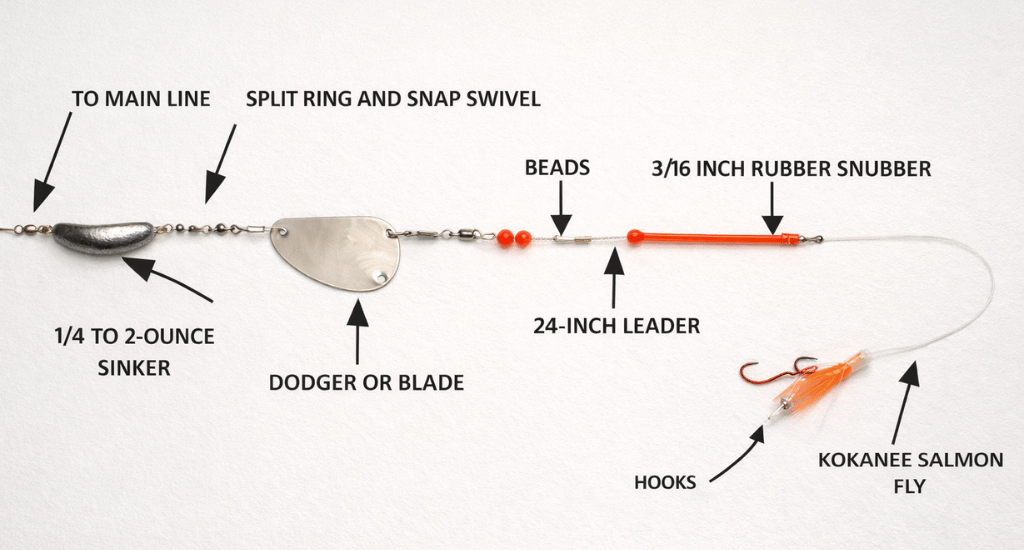
Advanced kokanee strategy is controlled depth plus efficient coverage. Fly fishing for Kokanee improves when you keep your fly in the thermocline band and repeat productive passes instead of guessing.
Trolling with Fly Tackle
Troll with fly tackle to find schools faster. Use long-line trolling with a full-sink line, a sink tip, or weighted flies to keep your presentation down. Control speed first, then control depth. Keep a slow, steady pace because speed lifts your fly and kills depth consistency.
Set depth with line length and sink rate. Let the line sink, then start trolling and note how much line is out when you start getting marks and bites. Repeat that exact setup on the next pass.
Use a downrigger when fish are deep and stable. Clip to a release and run the ball at the depth where sonar shows kokanee. Make gentle turns and avoid fast acceleration because your fly rises and falls with every change.
Manage your line to prevent twists. Keep steady tension, make wide turns, and avoid slack because slack creates tangles and ruins the fly track.
Float Tube and Pontoon Boat Tactics
Float tubes excel at stealth and depth access. Fish a tube when you want quiet positioning over suspended kokanee and small depth changes without spooking fish. Hold your angle into the wind and work a slow retrieve at a fixed depth.
Pontoons win on mobility and coverage. Use a pontoon boat when you need to move between schools, repeat drifts along drop-offs, and follow fish that slide along thermocline edges.
Anchor on the thermocline edge. Set upwind of the depth break so your drift or cast path stays in the kokanee lane.
Tips for Beginner Kokanee Fly Anglers
Beginner success comes from depth control and simple rigs. Fly fishing for Kokanee gets easier when you use a strike indicator, fish the fall spawn window, and keep your fly choice basic.
- Start with lake indicator fishing. Use a strike indicator because it holds your fly at a set depth and makes bites visible.
- Fish the fall spawn window first. Target late August through October because kokanee move shallow and become easier to locate and catch.
- Use a simple indicator rig. Tie a long leader, add a strike indicator, then fish one fly or a two-fly setup.
- Master depth control before anything else. Adjust depth first when bites stop because kokanee hold in narrow depth bands.
- Begin with two proven flies. Use a small chironomid and a small egg pattern because they match common kokanee food and spawn behavior.
- Watch the indicator for soft takes. Set on twitches, slow sinks, or a slight lean because kokanee often eat gently.
- Pick lakes and reservoirs over rivers. Stillwater is more forgiving and easier to learn than current.
- Apply trout tactics with stricter depth. Use steady drifts and slow retrieves, then keep your fly in the lane longer.
Handling, Ethics, and Conservation
Ethical kokanee fishing protects the run and the lake. Fly fishing for Kokanee often happens around staging fish and spawning water, so handling and rules matter as much as flies and depth.
Kokanee Handling Best Practices
Handle kokanee fast and gently. Kokanee can be fragile, especially during the spawn when fish are stressed, and colors are changing.
Use barbless hooks to speed release and reduce damage. Use a rubber net because it supports fish and protects slime.
Keep air time short. Unhook the fish in the water when possible, then lift only for a quick photo. Wet your hands before touching fish and avoid squeezing the belly. Release the fish upright and let them regain balance before letting go.
Avoid targeting active spawners on shallow gravel. Spawning beds are easy to see, but stepping on redds or repeatedly hooking fish in tight staging lanes can harm reproduction.
Conservation and Regulations
Follow water-specific rules every trip. Kokanee limits and seasons vary by water body, not just by state. Some areas restrict harvest during spawning runs, and some sections may be catch-and-release only to protect staging fish.
Respect population management goals. Many kokanee fisheries are stocked, but some waters have unique local runs.
Overharvest can hit these populations hard because kokanee concentrate in predictable places during the fall. Check local regulations, protect spawning areas, and take only what the fishery can support.
Common Challenges and Problem-Solving
Kokanee problems usually come from depth and bite detection. Fix those two first, then adjust flies and tippet.
- Depth challenges: Get deeper with a full sink or sink-tip line, then add weighted flies for a faster drop. Use a countdown method and repeat the same sink count until the fish move.
- Soft mouths: Set hooks with a smooth lift, not a hard snap. Keep steady pressure and avoid high rod lifts that tear hooks free.
- Small flies and light tippet: Land fish with a limber rod angle and a smooth drag. Shorten fights and avoid sudden pulls near the net.
- Finding fish without electronics: Start at creek mouths and drop-offs, then search the thermocline band by changing sink time in 5-foot steps. Watch for rolling fish in the fall.
- Seasonal timing mistakes: Prioritize fall kokanee fishing because the spawn window is narrow but productive. Focus on late August through October for consistent shallow-water fishing.
- Weather sensitivity: Fish slower and deeper when pressure swings and fronts make bites soft. Stick to proven depths instead of changing patterns.
- Strike detection: Use strike indicators in lakes and rivers. Watch for tiny twitches, slow sinks, and side slides, then lift smoothly to connect.