A reel that spins backward can surprise any new angler. Many people search for how to use a fishing reel with no anti-reverse trigger after they see the handle move back. The anti-reverse switch stops the handle from turning backward and makes the drag work at once.
Some modern spinning reels and even saltwater models do not have this switch. That can feel scary with a strong fish. You may ask how to control the fish, cast in a safe way, or stop the reel from going backward.
The reel is still usable. You need a proper drag setup, thumb brake on the spool, pump-and-reel action, and firm hand control. Read this guide to learn each step in a simple and clear way.
How to Use a Fishing Reel With No Anti-Reverse Trigger (Step-by-Step Guide)
A reel without anti-reverse may feel strange at first. The handle can move backward. That can worry new anglers. Still, you can control the reel well. You only need the right steps and calm hands.
Step 1: Set Your Drag Properly Before Fishing
Drag is your main safety system when there is no anti-reverse switch. Drag is the part inside the reel that lets the line move out under pressure. It protects your line from breaking.
Set your drag to one-quarter to one-third of your line strength. That means 25% to 33%. If you use 12 lb test line, set the drag between 3 and 4 pounds.
A very tight drag with no anti-reverse can snap your line fast. When drag slips, that is safe. When the reel spins backward hard without control, that is dangerous.
Step 2: Master Thumb Braking (Foundational Skill)
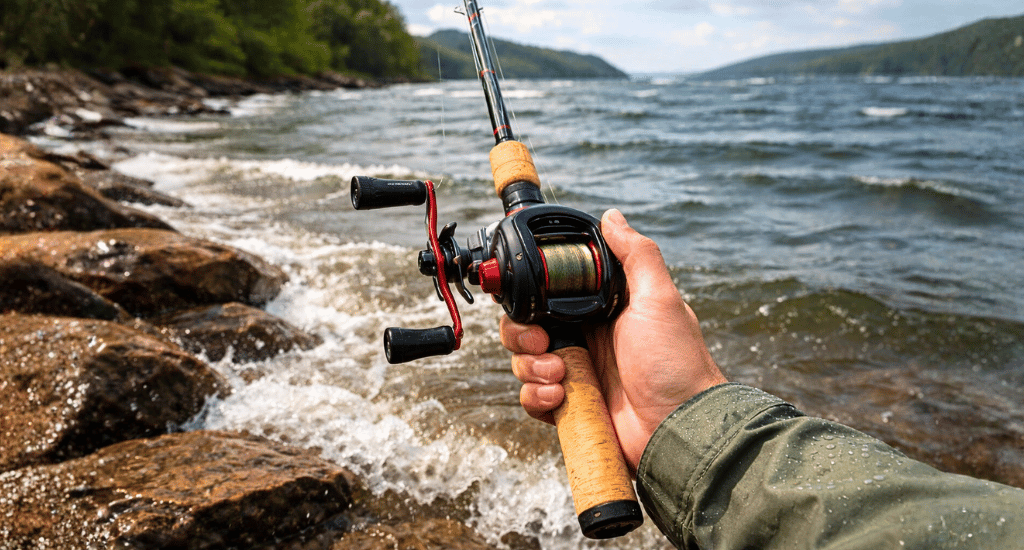
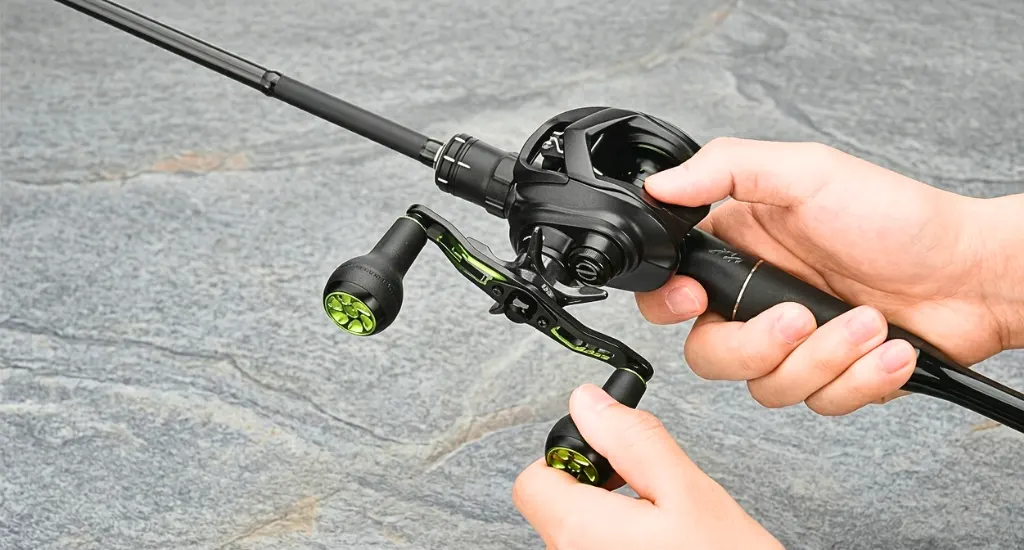
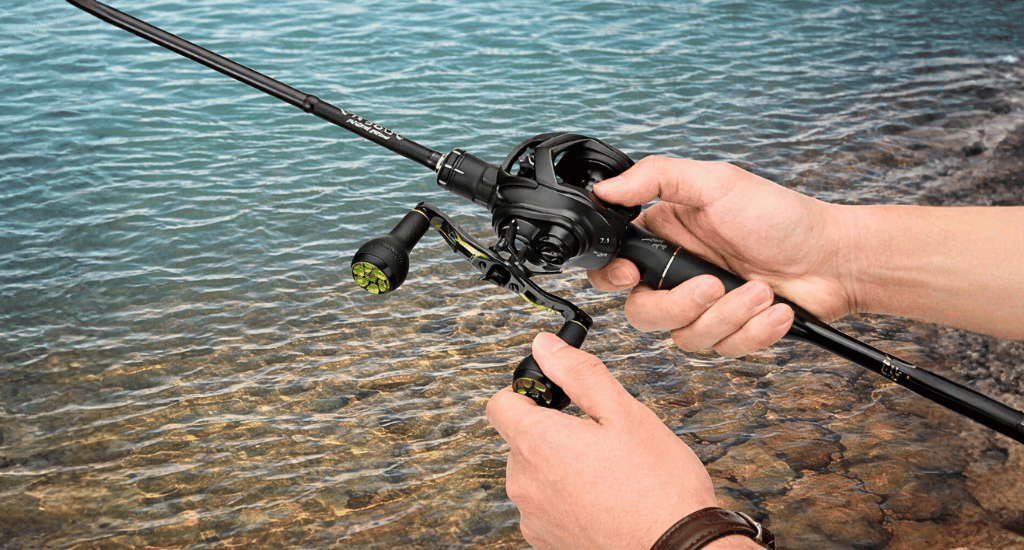
Thumb braking means you control the spool with your thumb. The spool is the round part that holds the line. Your thumb acts like a soft brake that adds extra control.
During a cast, place your thumb lightly on the edge of the spool. This light touch stops backlash. Backlash means the spool spins too fast, and the line makes a mess.
When a fish pulls the line, press your thumb a little more if needed. Do not change the drag during the fight. Thumb control is active. You must adjust pressure as the fish moves. Practice short casts in an open area to train your hand.
Step 3: Control Fish Runs Without Reeling Against Them
Never reel when a fish pulls the line fast. This is very important. The gears inside the reel can wear out. The line can loosen. Tangles may form near the spool.
When you reel against a strong pull, the line may twist. The handle may jerk back. This can hurt your hand. It also reduces your control over the fish.
The “Pump and Reel” Method
Lift your rod up to pull the fish closer. Then lower the rod while you turn the handle to collect loose line. Repeat this motion in a steady rhythm.
The rod does the pulling work. The reel only takes back the loose line. Many fishing videos from 2024 to 2026 show this method as the safest way to handle strong fish.
Step 4: When to Use Back-Reeling (If Necessary)
Back reel means you allow the handle to turn backward on purpose. Some anglers use this for extra control. It can help when the drag feels too tight.
There are risks with the back reel. The line can lose tension fast. Slack line can cause tangles near the spool. You must stay alert at all times.
Many experienced anglers prefer to pull line against the drag instead of free-handle spin. This gives smoother control. Still, some anglers trust the back reel more than drag alone.
Step 5: Managing the Reel During Casting
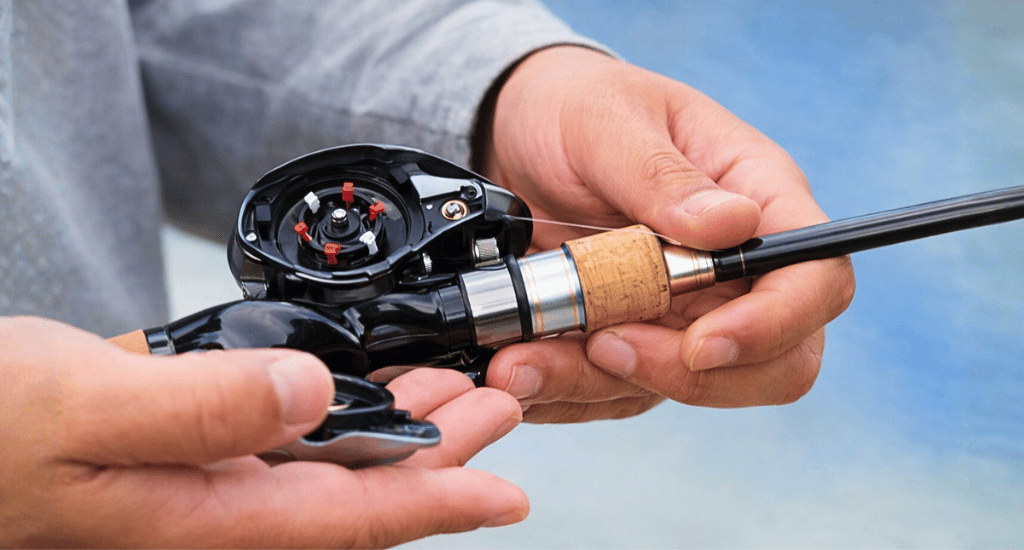
Before you cast, place your thumb gently on the spool. Keep your fingers relaxed. Your hand should feel ready, not stiff. This gives a quick response if the spool spins too fast.
After the lure lands, control the spool at once. Make sure the line stays tight. A loose line can create knots on the next cast.
A common mistake is letting the spool spin without thumb control. This causes backlash. Good thumb position prevents most casting problems.
Step 6: If the Reel Turns Both Ways
Some reels are built without an anti-reverse switch. In this case, the handle turning both ways is normal. You cannot have instant anti-reverse on a trigger reel.
If your reel has a small lever but still spins both ways, it may be broken. Many anglers search for help when their fishing reel anti-reverse problem appears.
To stop fishing reels from going backward, tighten the drag a little. Add thumb pressure on the spool. Use the pump-and-reel method for better control and safe fish handling.
Why Some Fishing Reels Don’t Have Anti-Reverse
Many anglers feel confused when they see a reel with no anti-reverse switch. Still, there are clear reasons behind this design. Some brands remove the switch on purpose to improve strength and control.
Designed for Durability and Simplicity
Reels without anti-reverse have fewer small parts inside. Fewer parts mean fewer chances of failure. This design is common in high-end saltwater reels that face strong fish and rough water. Some combo spinning reels also follow this simple and tough build style.
Preferred by Experienced Anglers
Many skilled anglers like manual control over automatic systems. They enjoy direct contact with the fish through the handle and rod. This feels similar to centrepin thumb control, where the hand guides spool movement instead of relying only on internal drag parts.
Modern Reels Without Switchable Anti-Reverse
Many new spinning reels remove the anti-reverse switch completely. Brands choose a fixed system for steady performance. Some baitfeeder reels use a second drag system instead of a switch. This extra drag lets the line move freely under light pressure when needed.
Common Mistakes When Using a Reel Without Anti-Reverse
Many problems happen due to small errors, not the reel itself. A reel without anti-reverse needs calm hands and a correct setup. If you avoid these common mistakes, you will keep control and protect your gear.
- Reeling against a running fish: Turning the handle while the fish pulls hard can damage gears and loosen the line.
- Setting drag too tight (above ⅓ line strength): Drag above thirty-three percent of line strength can snap the line quickly.
- Ignoring thumb control: Without thumb pressure, the spool may spin fast and create messy backlash.
- Tightening drag mid-fight aggressively: A sudden drag change during a fish pull can shock the line and cause a break.
- Letting the spool free-spin during cast: No thumb contact on the spool leads to overspin and tangled line.
- Panicking when the handle spins backward: Fear causes rough movements, which reduce control and increase mistakes.
Final Thought
A reel without an anti-reverse trigger is not broken. It simply works in a different way. Set your drag at one-quarter to one-third of your line strength. Use the thumb brake on the spool. Apply the pump-and-reel method. Never reel when a fish pulls hard.
Practice in an open area before you chase big fish. Train your hands so they react fast and calmly. With correct technique, these reels work very well. In many cases, they last longer than reels with anti-reverse parts.
FAQs
How do you stop a fishing reel from going backward?
Tighten the drag to about 25% to 33% of your line strength. Add steady thumb pressure on the spool for extra control. Use the pump-and-reel method to handle strong fish safely and keep tension steady.
Are all fishing reels reversible?
No. Some spinning reels allow the handle to move backward by design. Many modern reels remove the anti-reverse switch completely. In these models, the reel relies on a fixed system and proper drag setup for control.
Why do reels have anti-reverse?
Reels have an anti-reverse to stop the handle from spinning backward. It also activates the drag system at once when a fish pulls the line. This feature makes control easier, especially for beginners who need extra stability.
Where is the anti-reverse on a fishing reel?
It is usually a small lever near the reel body, close to the handle. You can flip it on or off in older models. Many new reels do not include this lever at all.