Fly fishing for bluefish requires a 9-10wt fast-action rod, sturdy reel, and wire leader to handle their sharp teeth, with topwater poppers or flashy streamers (e.g., Clousers, Deceivers) in white or chartreuse. Target schools in rips, inlets, and harbors early/late in the day, using a fast-strip retrieve to mimic baitfish.
This guide outlines proven methods for locating and catching blues, from reading bird activity and blitzing water to mastering fast retrieves and strip sets. You will also receive the critical gear setup, including the two most important items: inexpensive flies and wire leaders. Expect coverage on blitz fishing, blind casting, topwater tactics with Bob’s Bangers, safe landing, and the best timing and locations.
How Do You Find and Catch Bluefish? (Core Techniques & Strategies)
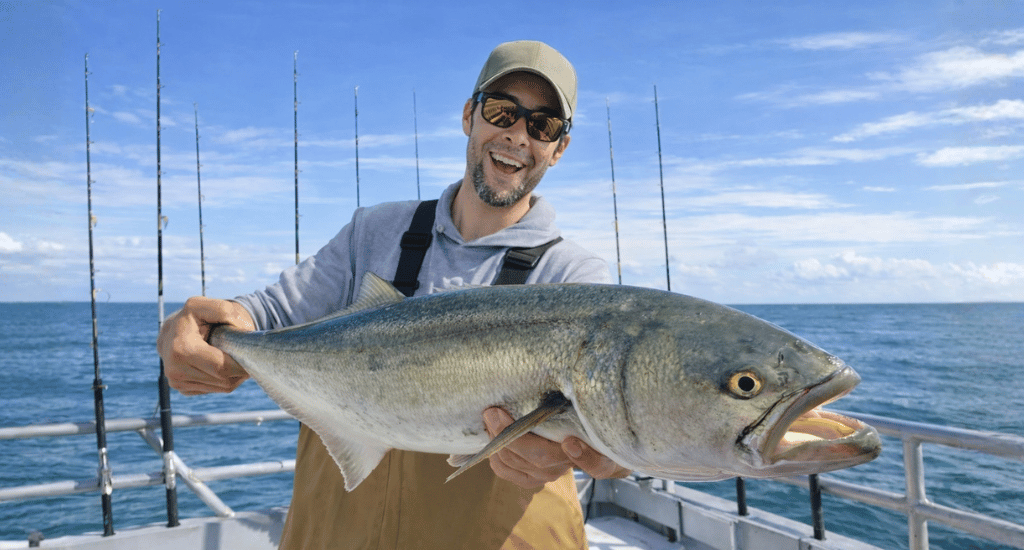
To fly fish for bluefish, think like a hunter, not a caster. Bluefish are pelagic and constantly moving, so finding them is 80% of the battle. The good news is that, given their greedy gobbling, blues can be exceedingly easy to catch once you get around them. When you locate the feed, their aggressive nature means they bite readily, and they often hit hard enough that it feels like they hook themselves.
The fastest way to become consistent is to follow one clean sequence every time: visual indicators → approach → presentation → hook-up → landing. This keeps you from getting rushed and sloppy when the ocean suddenly explodes.
1) Start with location, not fly choice
Most bluefish failures happen before the first cast. Anglers start blind-casting random water, then blame the fly. Instead, hunt for where the bait is trapped or pushed up. Bluefish rarely sit still. They appear, feed, move, and reappear. If you treat them like a stationary target, you will always feel a step behind.
A simple rule: if you do not see bait or signs of bait, keep searching. When you do see life, do not rush the boat or wade straight at it. Your job is to get into the casting position without pushing the action down or away.
Reading Visual Indicators: How to Locate Feeding Bluefish
1) Bird activity (most reliable)
Birds are the best bluefish “fish finder,” and terns are the headline species. Look for birds, terns specifically, because tight, fast diving usually means bait is pinned near the surface and predators are ripping below. Bird behavior tells you the mood:
- Diving terns: active feeding under them right now. Get there fast.
- Circling/hovering: fish may be present but not actively feeding at the surface.
- Large flocks: high odds of a major blitz or one forming.
Beginner shortcut: start your day by bird watching from a high vantage point, then follow diving terns. If you are in a boat, set upwind or uptide and let the drift bring you into range. If wading, angle in from the side, not straight at the birds.
2) Surface disturbance (blitzes vs subtle feeds)
Bluefish show themselves in two main surface modes:
- Blitzes: pure chaos. Baitfish showering, surface explosions, water “boiling.” If you see this, you must be ready, because it can last 5 minutes or 30 minutes and then vanish.
- Slurps and swirls: smaller, isolated disturbances. This can be fish pushing bait up along rips, reefs, or edges, but not staying on top long.
Watch the bait. Nervous baitfish moving in tight balls, “spraying” near the surface, or flickering in panic usually mean predators are nearby, even if you cannot see bluefish yet. On calm days, you can sometimes see bait shadows or nervous water before birds arrive. That is how you get there first.
3) The smell indicator (the weird tip that can help)
There is an old New England tip: if you smell watermelon, bluefish may be around. The idea is that diced baitfish and the oily soup left after a feed can give off a sweet, watermelon-like scent. Treat it as a clue, not proof, but if you smell it and see any life at all, slow down and scan hard for the next sign.
Also watch for oily slicks on the surface after feeding. Slicks plus scattered bait can mean the party just happened and may restart nearby.
4) Structure and habitat that concentrate pelagic fish
Bluefish are pelagic, but they still love “edges” that trap bait. High-percentage places include:
- Rips and current lines (often productive around 10–20 feet)
- Inlet mouths when the tide is moving
- Beaches with visible bait schools
- Reefs and drop-offs that create seams and ambush lanes
- Back bays and ocean shores in early spring in places like Long Island, when the water warms and the bait shows up.
If you are learning, do not overthink the map. Find birds first. Find the current lines’ second. Then fish the cleanest edges that let you present a fly without tangles.
Fishing Blitzes: Fast-Action Technique for Active Feeding (Beginner-Friendly)
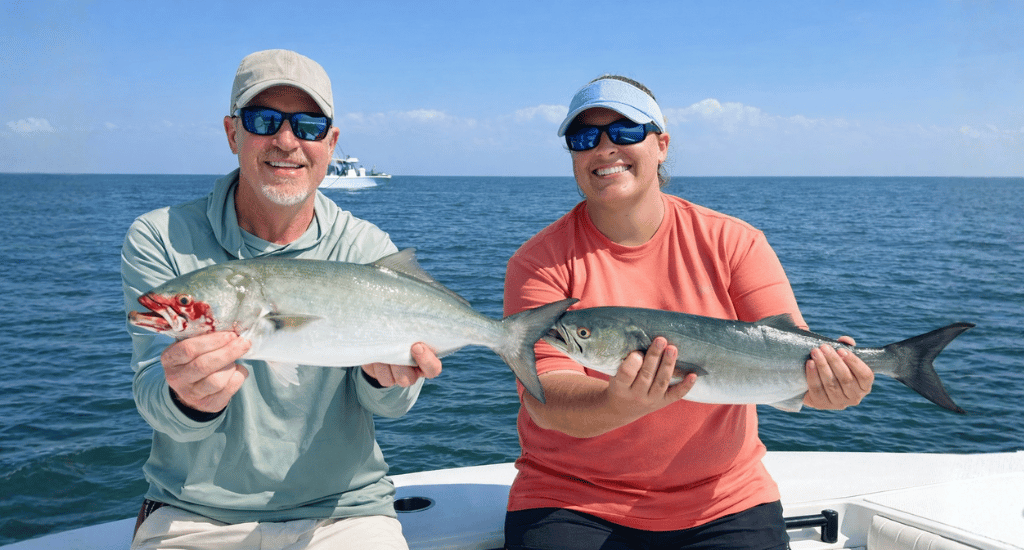
Blitzes are the easiest moments in bluefish fly fishing, and they are also where beginners blow it by getting chaotic. Your goal is simple: get the fly in the water fast, keep it moving fast, and keep your line under control.
When to use:
Surface feeding is obvious: birds diving, baitfish jumping, bluefish crashing.
Approach:
- Set up uptide or upwind of the blitz and drift toward the action.
- Do not run straight through the birds or cast directly onto the fish.
- Cast into the feeding lane or just beyond it. Landing on top of fish can push them down.
Blitz reminder: the biggest mistake is line management. In a blitz, fly lines end up tangled around feet instead of in the water. Strip your line into a basket if you have one, or into neat coils. One clean cast that fishes is worth five casts that never straighten.
Presentation:
A fast retrieve is non-negotiable. Bluefish want speed because it looks like fleeing baitfish. Use:
- Long strips, 8–12 inches
- Continuous motion, minimal pause
- Rod tip low, line hand working
Hook-up:
Use a strip-set. Pull hard with the line hand while keeping the rod low. Do not lift the rod like you are trout fishing. Bluefish eat aggressively, and often it feels like they hook themselves, but you still want that firm strip-set to bury the hook.
Fly choice for blitzes:
Keep it durable and baitfish-like. Productive options include:
- Clouser Minnow (all-white or chartreuse/white is a classic)
- Deceiver (white/chartreuse is a staple)
- Bucktail flies (simple, cheap, effective in chaos)
- Synthetic streamers (durable when blues start shredding)
A good working size range is 3–6 inches. Match the size of the bait you see, not the size you wish they were eating.
Timing:
Bluefish commonly feed most aggressively early morning and late afternoon. Blitzes can happen anytime, but those windows are consistent producers.
Expert move: when the blitz ends, do not instantly leave. Often, the fish are still there, just below the surface. That is when blind casting with an intermediate line keeps you catching while everyone else runs.
Blind Casting: Systematic Coverage When Fish Aren’t Visible (All Skill Levels)
Blind casting is how you stay effective when nothing is exploding, but you know blues are around. It is also how you catch fish before the birds show up. The key is to fish systematically and move often. Pelagic species do not reward stubbornness.
When to use:
No surface activity, but conditions and location suggest fish are present: rips, inlet mouths, reef edges, channel drop-offs, grass flats, or places that “always hold bait.”
Setup:
An intermediate line is the most versatile choice for the vast majority of blind-casting situations. You can fish near-surface by starting your retrieve immediately, or go deeper with a countdown.
Leader concept: You need a short, strong leader with a bite section because bluefish teeth will cut you off. A common style is a heavy butt section, a strong midsection, then a short wire tippet or heavy bite tippet at the end. The exact formula varies, but the principle does not: protect your fly and stop donating gear.
Method:
- Fan-cast in a 180-degree pattern to cover water.
- Count down 3–10 seconds and vary until you find the depth.
- Start with fast strips (8–12 inches).
- If no response, drop to a moderate pace.
A deadly expert retrieve is the sharp strip followed by a short pause. Many strikes happen during the pause, and they can be vicious. This is especially effective when fish are around but not fully fired up.
Where to blind cast:
- Rip edges and current seams
- Channel drop-offs
- Drift lines over 6–10-foot flats
- The same areas where blitzes just ended
- Any spot with nervous bait but no surface hits
Rule of movement:
If you are not getting signs or bites after a short, disciplined run through your fan pattern and depth changes, move. Bluefish are not usually sitting still waiting for you to “solve” them.
Topwater Popper Fishing: Giant Bluefish on Surface Flies (Intermediate Technique)
If your goal is giant bluefish on topwater flies, this is the method that creates lifetime memories. When conditions line up, bluefish can wreak havoc on a surface presentation, and the visual and auditory hit is hard to beat.
When to use:
Warm water, active fish, calmer conditions, and any time bait is near the surface. This is also a great way to target slammer fish because the biggest bluefish often commit confidently to loud surface targets.
Setup:
- Floating line
- Durable popper construction: foam, epoxy, or balsa holds up better than delicate bugs
- A proven pattern mentioned often is Bob’s Bangers, a foam popper style tied with bucktail and synthetic material for durability and profile
- Use larger poppers for giant bluefish, commonly in the 1/0 to 3/0 range, when you are hunting true slammers
Presentation:
Unlike trout-style popper work, bluefish often want commotion. Fish it like a panicked baitfish:
- Aggressive pops
- Fast, erratic movement
- Minimal dead time
- Strip-set on the explosion
Durability reality:
Bluefish destroy poppers. Plan for it. Carry 5–6 poppers minimum if you are committing to a topwater session.
Smart extra: if you are mixing with striped bass, keep a backup rod rigged with a wire leader and a streamer. When bluefish show up, switch rods fast and avoid losing expensive flies.
Fighting and Landing: Handling Powerful, Toothy Predators
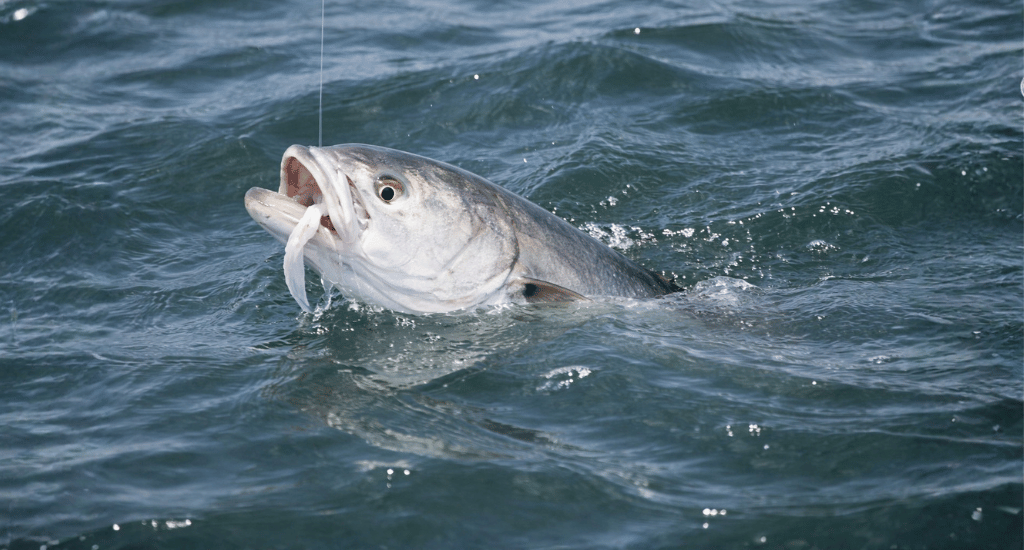
Bluefish are not complicated to hook, but they are easy to mishandle. Treat every fish like it can bite through your leader and bite you.
Hook-set:
Strip-set only. Sharp pull with the line hand, rod low. Never lift the rod to set. Lifting pulls the fly from the mouth or drags the leader across the teeth.
Fighting:
- Fight from the rod butt, not the tip
- Maintain steady pressure
- Keep the rod in a consistent position instead of constantly changing angles
- Expect strong runs, and have backing ready
After every fish, inspect your wire or bite section for kinks, fraying, and bite marks. Retie if there is any doubt. That habit saves more flies than any “secret pattern.”
Landing and safety:
Bluefish clamp down hard, making unhooking difficult. Pliers or forceps are mandatory. Keep fingers away from the mouth at all times. Control the fish, unhook with tools, and release quickly if you are letting it go.
If you follow the chain, locate first, approach smart, retrieve fast, strip-set hard, and handle safely, you will turn “random casting” into repeatable bluefish success.
What Essential Gear Do You Need for Bluefish? (Critical Equipment)
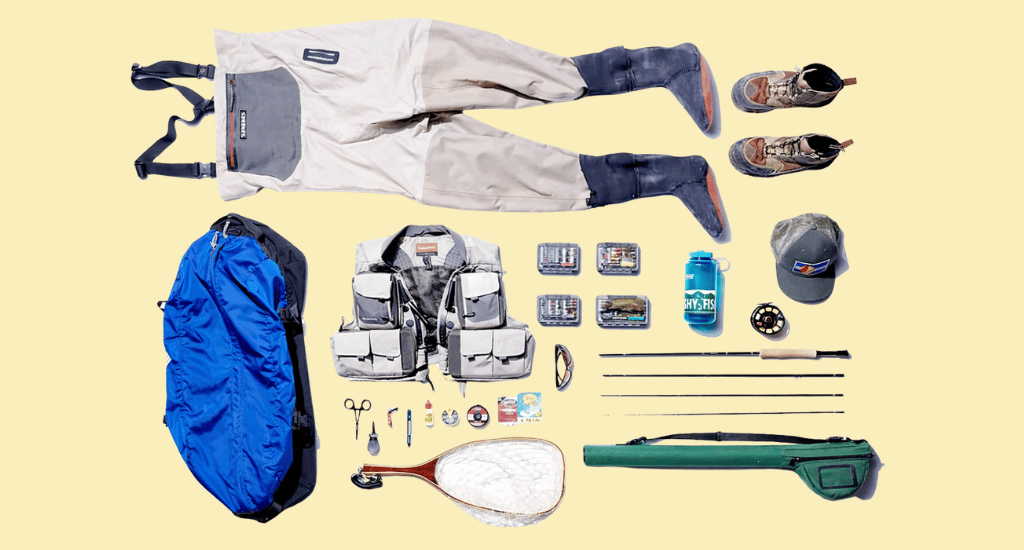
Bluefish demand saltwater-ready gear and zero sentimentality about flies. The two most important things you can have are cheap flies and a wire leader. Once you commit to tooth protection and durable tackle, fly fishing for bluefish becomes straightforward and fast-paced.
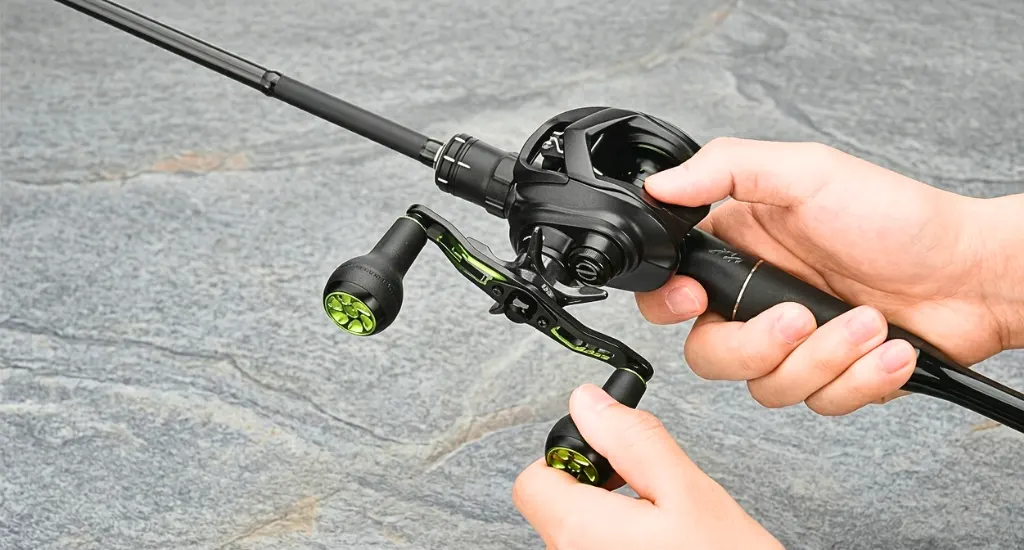
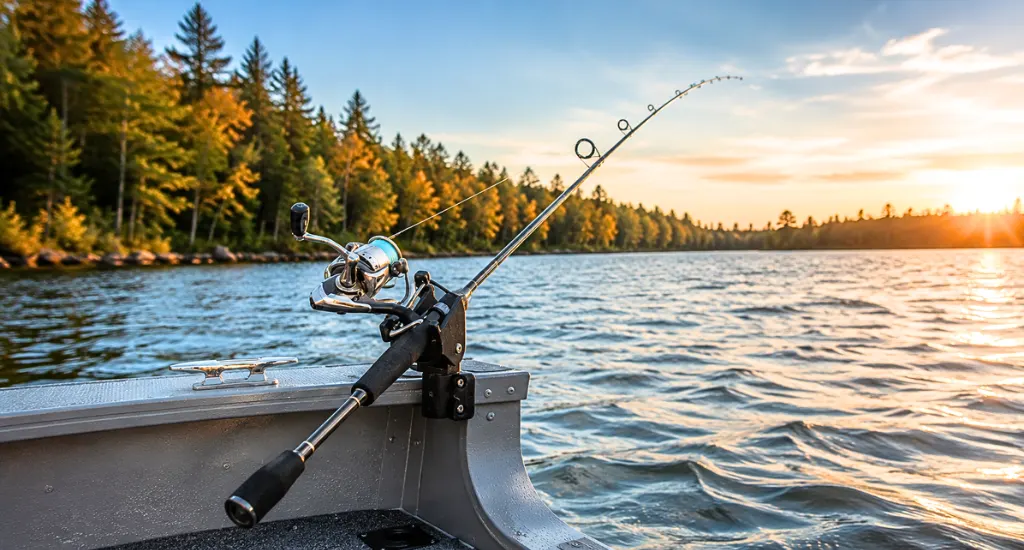
- 8-10wt fly rod, 9 feet, fast action: 8-9wt handles most blues; 10wt for wind, rips, and bigger “slammer” fish.
- Saltwater reel with strong drag: Large arbor, sealed drag preferred, plus 150- 250 yards of 20- 30 lb backing for long, sudden runs.
- Intermediate fly line (workhorse): Most versatile for blind casting and subsurface feeding. Adjust depth with a countdown, then retrieve fast to mimic fleeing baitfish.
- Floating line (topwater option): Best for poppers, calm mornings, and surface feeds. Helps you see and control the fly during explosive topwater takes.
- Wire leader system (non-negotiable): 4 ft 50 lb butt, 3-4 ft 30 lb, then 6-12 inches tie-able wire (20-30 lb) bite tippet.
- Spare wire tippets and re-tie habit: Carry multiple pre-rigged wire sections. Check the wire after every fish for kinks or abrasion; when in doubt, retie.
- Cheap, durable flies (expect losses): Clouser Minnow, Deceiver, bucktail and synthetic streamers, plus tough poppers. Sizes #2 to #3/0, mostly 3-6 inches.
- Long pliers or forceps (safety tool): Bluefish clamp down hard. Unhook with tools only, keep fingers away from the mouth, and control the fish before handling.
When and Where to Target Bluefish (Timing & Locations)
Timing and location make bluefish fly fishing feel either impossible or automatic. Because bluefish are pelagic and follow bait, most areas see a spring run and a fall run, but the strength of each season can swing with water temperature, weather, and bait availability.
Best seasons and daily timing: Early spring can start in protected water first. On Long Island, back bays and nearby ocean shores can light up in late March and April, then the broader spring run builds through late April and May when more fish arrive and stay longer.
Summer can be consistent, especially where bait stacks along beaches, inlets, and rips, but it is often less “event-driven” than the shoulder seasons.
Fall is the marquee window from September through November, when bigger chopper-style fish commonly feed hard as they migrate and fatten up.
Daily, the highest-percentage windows are early morning (dawn to about 10 am) and late afternoon (roughly 4 pm to dusk). Midday can still produce, but it usually requires better structure, a stronger tide, or deeper presentations.
Prime locations: In the Northeast, Cape Cod is a classic for fall action and easy access to beaches, jetties, and current-swept edges when bait is present. Long Island Sound is a prime “rip country” arena, especially when current lines form and bluefish push bait up along seams. Long Island’s back bays remain a key early spring option before the open-coast bite fully stabilizes. Chesapeake Bay can also be very productive from spring through fall, particularly around current funnels, river mouths, and major structures where bait concentrates.
If you want a warm-water plan, fly fish for bluefish Florida style. Florida and parts of the Mid-Atlantic can see strong winter opportunities, which is a huge advantage when Northeast water is cold. Focus on beaches, inlets, and nearshore structure, and expect aggressive takes even when average fish run smaller.
Conclusion
Bluefish offer some of the most exciting saltwater fly fishing on the East Coast, with aggressive feeding and spectacular blitzes. Fly fishing for bluefish is fun and challenging, but success is simple: the two most important things are cheap flies and a wire leader; then find fish by watching bird activity (terns first), and fish with fast, aggressive retrieves.
An 8-9wt with an intermediate line covers most situations. Given their greedy gobbling, blues can be exceedingly easy to catch, and any and all flies can work, especially Clouser Minnows and Bob’s Bangers foam poppers with bucktail and synthetic material. Check the wire after every fish, use pliers because blues hook themselves and clamp down hard, and target Long Island back bays in early spring, fall runs, or Florida year-round.
FAQs
What Weight Fly Rod for Bluefish?
An 8-9 weight is standard and covers about 90% of situations. Use a 10-12 weight for Northeast slammer blues in heavy current. Florida: 6-7 weight.
What Are the Best Flies for Bluefish?
Use cheap flies and a wire leader. Top producers: Clouser Minnow (white or chartreuse/white), Deceiver, simple bucktail streamers, Bob’s Bangers foam popper. Sizes #2 to #3/0.
Are Wire Leaders Necessary?
Yes. Wire leader is non-negotiable because bluefish teeth cut mono and fluoro fast. Use 6- 12 inches of 20- 30 lb tie-able wire, and check after every fish.
How Do You Find Bluefish?
Start with diving birds, especially terns. Then watch for blitzes, nervous baitfish, and oily slicks. A “watermelon” smell can signal chopped bait. Early spring: Long Island back bays.
What Is the Best Bait for Bluefish?
Bluefish key on baitfish schools. Match the local forage: mullet, menhaden, anchovies, or silversides. On the fly, imitate bait with fast retrieves and durable streamers.