Cold air, thin water, and wild trout set the mood before the first cast. How to fly fish mountain lakes feels different from river fishing. These lakes sit high above towns, with clear water and fewer people around.
Mountain or alpine lakes stay cold most of the year. Food sources are limited, so trout act boldly and fast. They rush to flies since real food does not appear often in these waters.
This guide shows where trout stay, when to cast, what flies work, and which tools help most. It also covers basic safety in high places. Read on to fish these lakes with calm steps and smart moves.
Fly Selection for Mountain Lake Fly Fishing
The right fly helps trout notice your line in clear water. In mountain lakes, simple fly types that match lake food bring more strikes and fewer missed chances.
Midges and Chronomids
Midges are tiny insects that live in lake bottoms. Chronomids copy these insects. Trout eat them all year. Use these flies under a float so the fly stays near fish at a slow depth.
Scuds and Freshwater Shrimp
Scuds look like small shrimp that live in weeds and soft lake floors. Trout feed on them daily. These flies work best near weedbeds. A slow pull keeps the fly close to natural food.
Dry Flies for Calm Water
Dry flies sit on the water surface and copy insects that land there. Use them early or late in the day. Cast gently so the rings stay small and do not scare nearby trout.
Small Streamer Flies
Streamers copy small fish or swimming bugs. Trout attack these flies when hungry. Use short pulls with pauses. This action feels alive. Streamers help when trout move across open lake water.
Attractor and SOS Flies
Attractor flies do not copy real food. They grab attention with color and shape. SOS flies work when trout ignore other patterns. These flies help beginners when food signs stay unclear.
Fly Fishing Techniques for Mountain Lakes
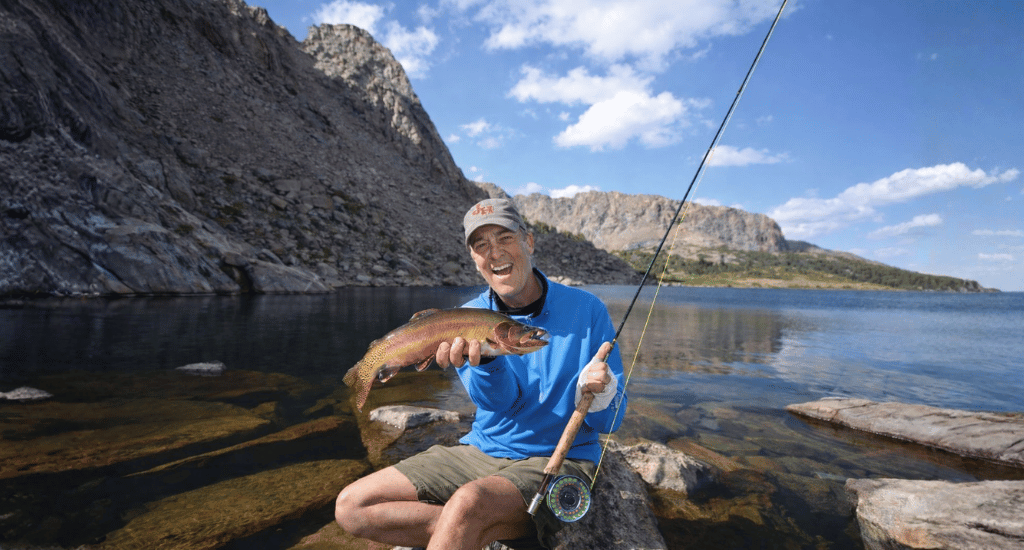
Mountain lakes need quiet moves and simple tactics. Clear water shows every mistake fast, so soft casts, slow line work, and calm steps help trout trust the fly and move closer.
Roll Cast for Tight Shorelines
High lakes often have trees, rocks, or steep banks behind you. Roll cast sends the line forward without space at your back. It lifts the line from the water and drops the fly gently ahead.
Indicator Rig to Set Correct Depth
An indicator works like a small float on the line. It shows light bites and keeps the fly at the proper depth. Adjust the length so the fly stays close to the lake bottom.
Slow Hand Pull Retrieve
Cold water trout do not chase fast food. Pull the line by hand in short pulls. Add pauses between pulls. This slow motion makes the fly look natural and easy to eat.
Target Transition Zones
Transition zones sit where shallow water drops into deeper water. Trout move along these edges to feed. Cast across the line and let the fly travel slowly along the slope.
Fish Inlets and Outlets
Water that enters or leaves a lake brings food and fresh air. Trout wait nearby. Cast across the flow and let the fly drift slowly. Watch the line for sudden stops.
Where to Find Trout in Mountain Lakes
Trout stay near food, cover, and comfort in mountain lakes. Learn these locations to place flies well, save time, and reach active fish without blind casting or constant line changes.
- Inlets bring cool water, fresh oxygen, and drifting insects, so trout hold nearby all day.
- Outlets create steady flow edges where trout rest and eat, passing food easily each day.
- Shallow flats near shore attract trout during morning and evening when the light stays low there.
- Logs, boulders, and weed edges offer shade and safety, which trout often seek for cover.
- Drop-offs mark depth change lines where trout travel, easy to spot in clear water here.
Best Time of Day to Fly Fish Mountain Lakes
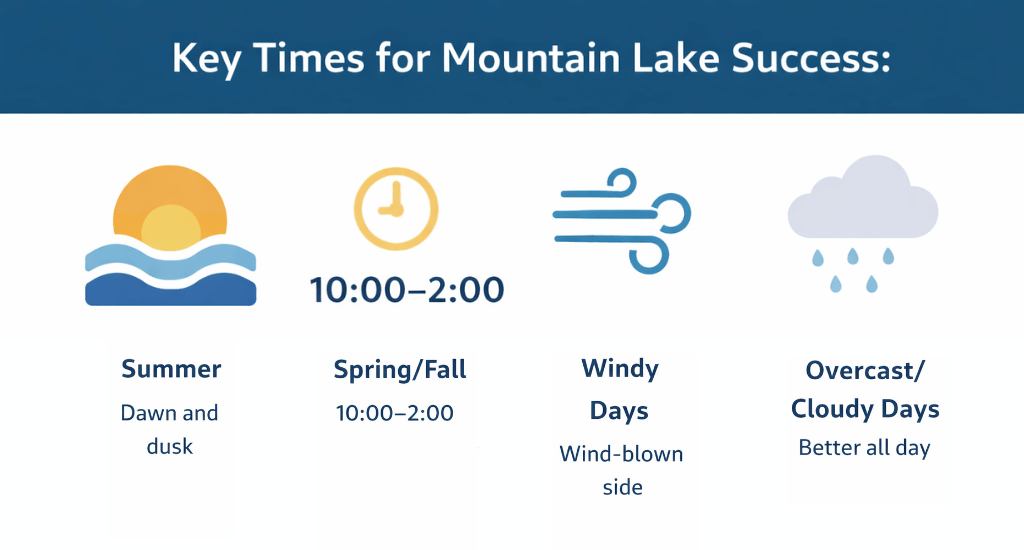
Time matters a lot in mountain lakes. Light, wind, and water temperature change trout’s mood. Fish during active periods to see more rises, better strikes, and calmer water for clean casts.
- Early morning offers smooth water, cool air, and surface insects that draw trout upward.
- Midday hours still work when clouds block the sun or light wind breaks a clear surface view.
- Late evening brings strong surface feeding as insects fall and trout move into shallows.
- Early summer days keep trout shallow longer due to cold water and steady food flow.
- Late summer periods push trout deeper by noon as the sun warms shallow lake areas.
Essential Gear for Fly Fishing Mountain Lakes
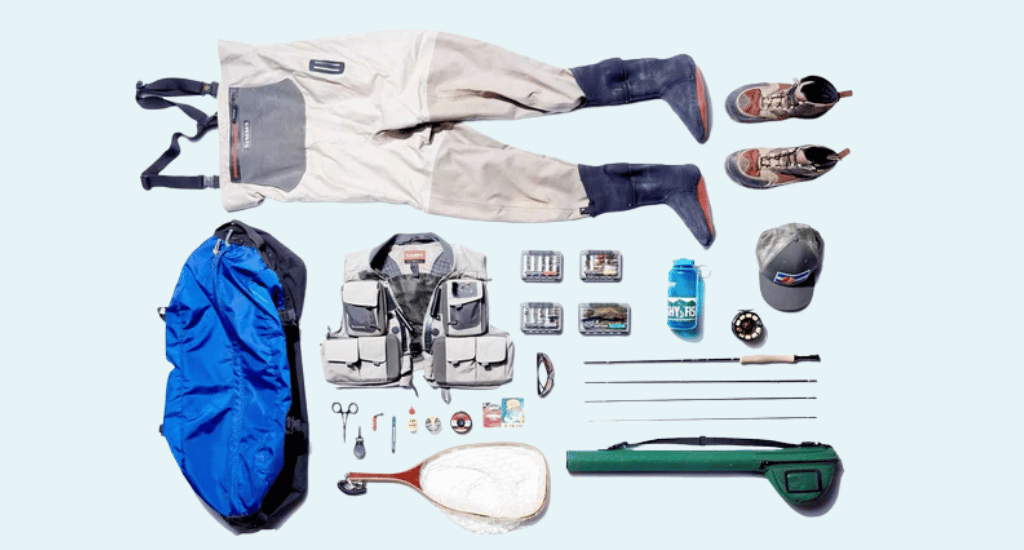
Simple and well-matched gear makes mountain lake trips easier. Clear water, sudden weather shifts, and long shore casts demand tools that feel light, balanced, and easy to control all day.
Rod and Reel Setup
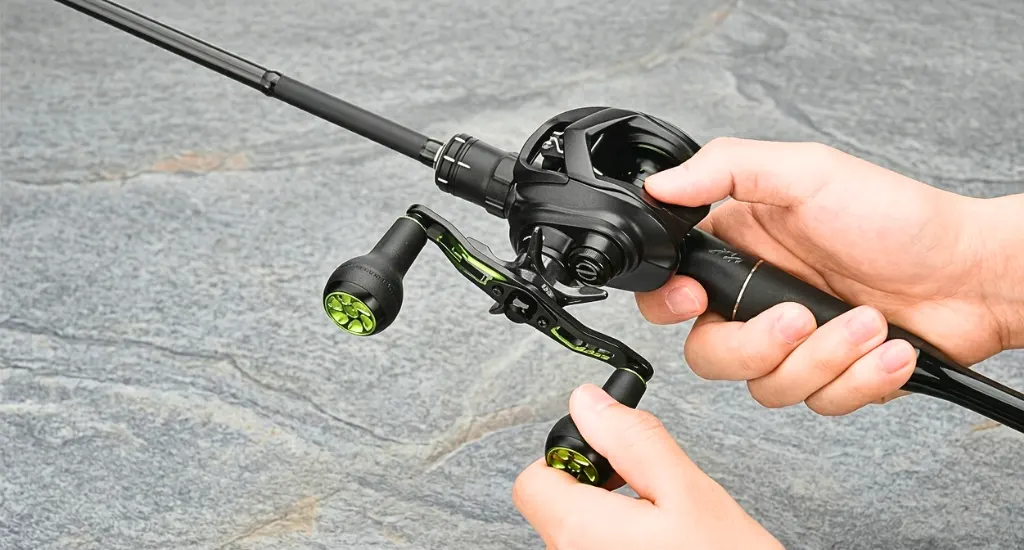
A 9-foot rod works best for most mountain lakes. A 4-weight suits calm days and small flies. A 5-weight handles wind and larger flies better. One setup covers dry flies, lake flies, and stream flies.
Fly Lines for Mountain Lakes
A floating fly line fits most lake situations. It helps with surface flies and depth control. For deep water or early summer, a sink-tip line reaches trout that stay below colder layers.
Leader and Tippet Setup
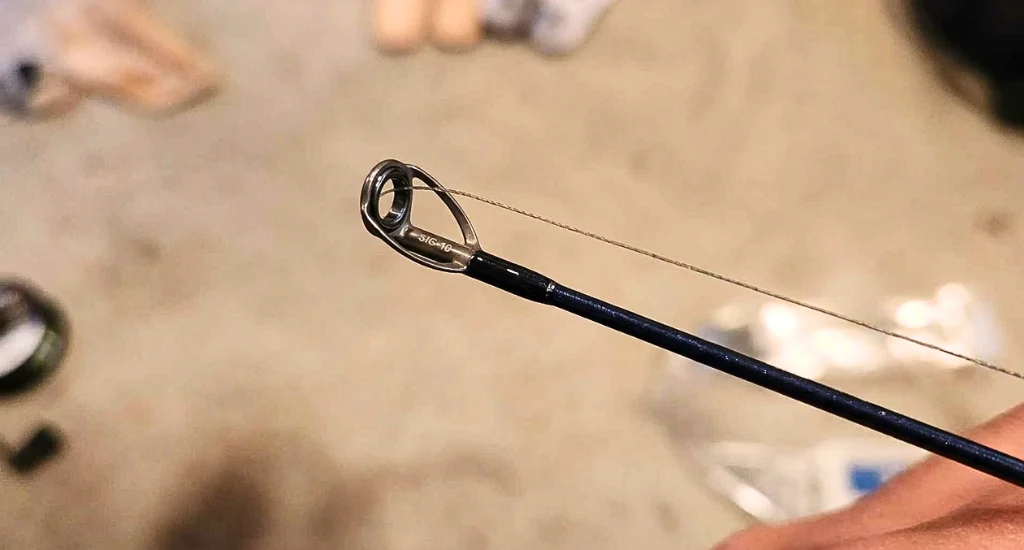
Clear water calls for longer leaders. Use nine to twelve feet so trout stay calm. Match tippet size to fly size. Thin tippet suits small flies. Stronger tippet helps with wind and larger trout.
Must-Have Accessories and Safety Gear
Polarized sunglasses cut surface glare and protect eyes. A long net helps land trout from shore. Dry fly floatant keeps flies riding high. Pack warm and rain-ready clothes since mountain weather changes fast.
Simple Storage and Carry Options
A small chest pack or waist pack keeps tools close. Carry only the flies and tools. Light gear helps with long walks around lakes. Simple storage keeps focus on water and trout movement.
End Note
Mountain lakes reward anglers who focus on the basics. Know where trout stay, pick the right time, and use flies that match the lake’s food. Stay flexible. Change depth, line pace, or fly type when trout ignore the first choice.
Each lake feels different every day. Wind, light, and weather shape trout behavior. Accept these changes and fish with patience. Enjoy quiet water, fresh air, and wide views. Success matters, but calm moments matter more.
FAQs
What is the best fly line for mountain lakes?
A floating fly line works best for most mountain lakes. It handles dry flies, indicator rigs, and shallow lake areas well. Use a sink-tip line only when trout stay deep in cold water.
Can you catch trout in mountain lakes during midday?
Yes, trout still feed during midday in mountain lakes. Cloud cover, wind, or cooler water keeps them active. Fish deeper zones, edges, or inlets instead of bright shallow water at this time.
How deep should I fish for nymphs in a mountain lake?
Fish nymphs live close to the lake bottom where trout rest and eat. Set depth with an indicator. Adjust slowly until bites appear. Depth often changes by location, light, and water temperature.