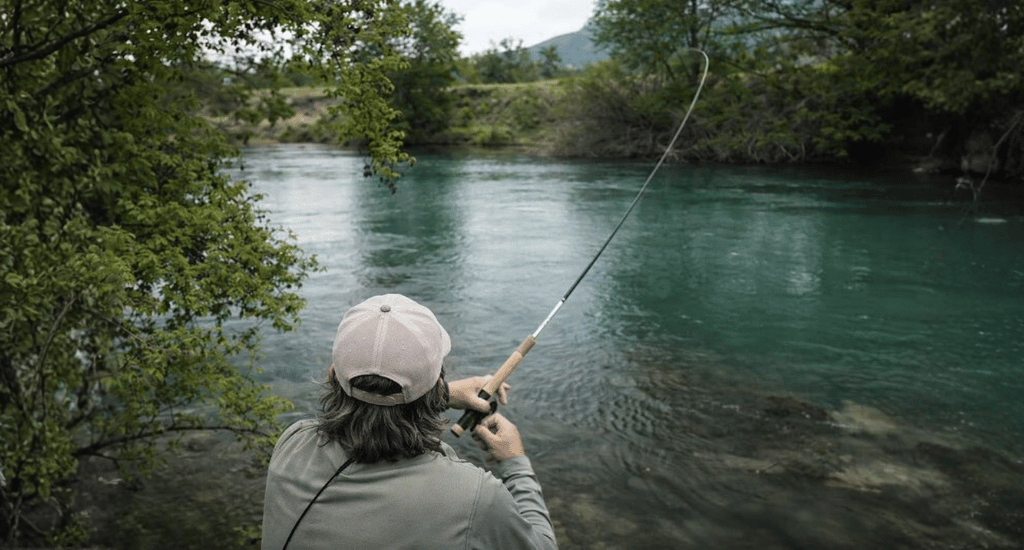
Rivers are nature’s moving classroom for anglers, full of currents, foam lines, and hidden trout. Fly fishing a river gives every cast a purpose, letting you place your fly where fish wait and watch how water shapes their behavior. It’s a mix of skill, patience, and observation that makes each trip rewarding.
Flowing water forms natural feeding lanes. When fast currents meet slower pools, trout gather to feed. Rivers give space to try dry flies, nymphs, and upstream casts while learning how to read water effectively.
This guide suits beginners and improving anglers. Read on to learn step by step how to spot trout, select the right gear, and fish rivers confidently.
Understanding River Fly Fishing Basics
River fly fishing has its own rhythm. Unlike lakes, rivers constantly move, and trout use currents to feed and hide. Each section of the river offers new challenges, making every cast feel different and rewarding.
Fish in moving water behave carefully. They often stay near edges, behind rocks, or where fast water meets slower pools. Watching foam lines or ripples can show where fish wait, giving anglers a clear chance to place flies effectively.
- Current, depth, and river structure guide where fish hide and feed.
- Fast water next to calm pools creates perfect feeding lanes.
- Trout, bass, and grayling are common targets in rivers.
- Foam lines, drops, and bends help identify likely fish spots.
- Using dry flies and nymphs adapts to trout behavior and water conditions.
If you can understand these basics, they will help you read water, select the right gear, and improve your fly fishing success in rivers.
Reading a River Like a Fly Fisher
Rivers are full of hidden patterns. Reading a river like a fly fisher means spotting where trout and other species gather, understanding how water moves, and placing your fly where fish naturally wait. This skill helps catch more fish with less effort.
Identifying Fish-Holding Water
- Riffles: Shallow, fast-moving water with bubbles often holds small fish and attracts feeding trout.
- Runs: Smooth, flowing sections allow fish to swim easily while conserving energy.
- Pools: Deep, calm areas provide resting spots and hide large fish.
- Seams and eddies: Boundaries between fast and slow water are perfect feeding lanes.
How Current Affects Fish Position
- Fish rest in slower water while feeding in currents where insects drift naturally.
Trout face upstream to watch for food, using currents to guide flies into their mouths. - Understanding these patterns lets anglers cast upstream, mend lines effectively, and make accurate presentations to catch more trout.
Fly Fishing Techniques for Rivers
Rivers demand techniques that match moving water. Successful anglers watch currents, cast precisely, and use flies that drift naturally. Fly fishing a river becomes easier when you understand how trout react to different currents and water depths.
Each river section may need a different approach. Calm pools, fast runs, and foam lines all require subtle adjustments in fly presentation. Mastering basic techniques gives beginners confidence and helps improve catch rates in both small streams and bigger rivers.
Dead Drift Technique
A dead drift lets a fly move naturally with the current. It’s essential because trout rarely chase; they take food drifting past. Achieve a natural drift by casting upstream, mending your line, and letting the fly float freely without drag.
Nymphing Techniques
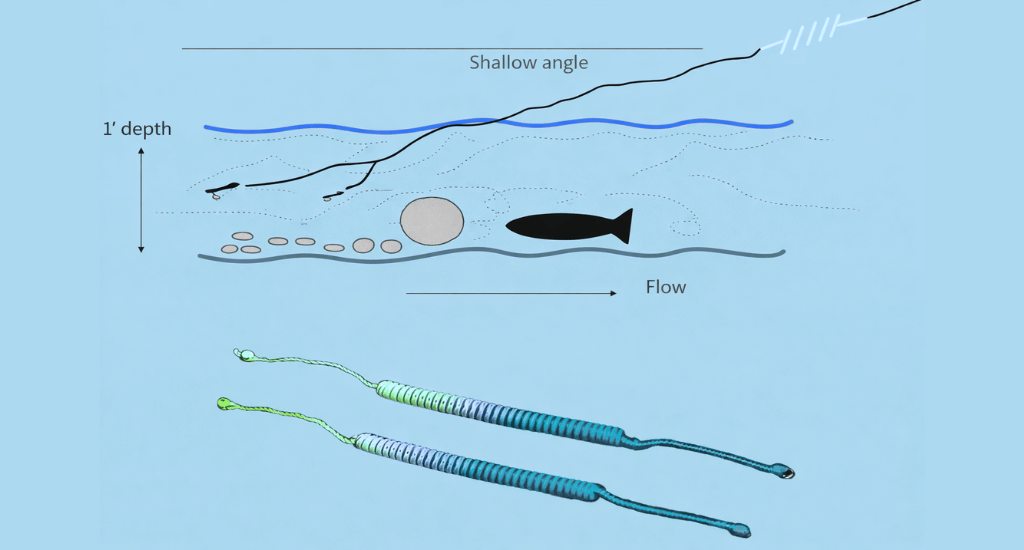
Indicator nymphing uses a small floating tip to detect bites while keeping the fly below the surface.
Euro nymphing allows tight-line fishing for precise control, especially in faster or deeper water, letting anglers feel subtle strikes directly through the rod.
Swinging Flies
Swinging wet flies or streamers works best in runs or downstream currents. Cast across, let the fly swing naturally, and adjust speed to imitate fish movement, attracting strikes from active trout.
Essential Fly Fishing Gear for Rivers
Having the right gear makes river fly fishing more productive and enjoyable. Selecting rods, lines, leaders, and flies suited to moving water helps anglers cast accurately, handle currents, and reach fish hiding in seams, riffles, and pools.
Rods, Lines, and Leaders
A 9-foot, 4-6 weight rod works well for most rivers. Pair it with a floating line for dry flies or bead-head nymphs. Use the thickest leader and tippet you can get away with to avoid breaks.
- Rod: 9-foot, 4-6 weight for versatility in small and big rivers.
- Line: Floating for dry flies; sinking for deep nymphs.
- Leader: 9-12 feet, strong enough for trout but delicate enough for natural drift.
- Tippet: 8-12 lb fluorocarbon preferred for strength and invisibility.
Hooks, Flies, and Accessories
Barbless hooks help protect fish and make release easier. Dry flies imitate insects on the surface, while nymphs and streamers target feeding below. Accessories like forceps, floatant, and nets improve efficiency.
- Dry Flies: Imitate adult insects on the surface.
- Nymphs: Subsurface flies for feeding trout in currents.
- Streamers: Imitate small fish or bait for aggressive strikes.
- Accessories: Forceps, nets, and floatant improve handling and presentation.
Choosing the Right Flies for River Fishing
Rivers offer a mix of currents, depths, and feeding zones that change constantly. Choosing the right flies for river fishing means observing fish behavior, matching natural food, and presenting flies where trout feed. Using the correct fly helps catch more fish with less effort and makes fishing more enjoyable.
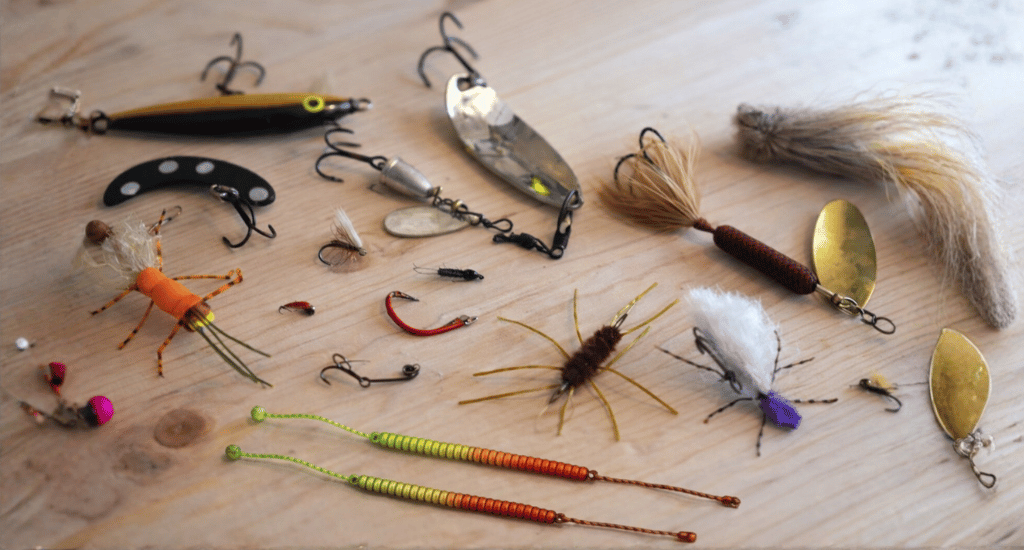
Dry Flies
Dry flies float on the water surface, imitating insects landing or drifting. Use them when trout are rising or feeding near foam lines. Popular river dry flies include Adams, Elk Hair Caddis, and Blue Wing Olive. Cast upstream for a natural drift and watch for subtle rises.
Nymphs and Wet Flies
Nymphs and wet flies imitate underwater insects and larvae, which trout eat most of the time. They are effective in riffles, runs, and pools. Common patterns include Pheasant Tail, Hare’s Ear, and Prince Nymph. Use a small floating indicator to detect subtle bites.
Streamers
Streamers imitate small fish, leeches, or baitfish. They work best in faster runs, deep pools, or when fish are aggressive. Swing or strip streamers to attract strikes from large trout or bass, especially when natural food is moving.
Matching Hatch
Observe insects and larvae in the water and choose flies that closely resemble them. Adjust size, color, and type depending on what fish are feeding on and the river conditions.
Seasonal Fly Selection
Different flies work better in different seasons. Spring favors midges and caddis, summer brings mayflies, and fall trout often take streamers, larger nymphs, or wet flies. So, you should choose whichever season suits you the best.
Conclusion
Fly fishing a river requires patience and practice. Every outing teaches how currents, pools, and feeding lanes affect trout. Spending time observing the water helps you develop skill, confidence, and a deeper connection with the river.
Use what you’ve learned to try new techniques, experiment with different flies, and watch how fish respond. Make upstream casts, adjust presentations, and enjoy each drift. Over time, reading the river becomes easier, and every trip grows more rewarding and full of exciting catches.