A quiet lake can hide more fish than a fast river. Can you fly fish in a lake? Yes, you can, and many anglers enjoy great action there. Wide water and steady depth make lakes a smart place for fly rods. Fish swim close to shore, and also far out, so many cast styles work well.
Many people think fly fishing fits only rivers and streams. That idea falls short. Lakes hold trout, bass, and panfish that eat flies each day. Calm water helps a fly look real. Weeds, banks, and deep edges guide fish to feed.
Read this blog to learn fish types, gear, seasons, and tips. You will see how to find the fish and how to fly fish a lake from shore.
Can You Fly Fish in a Lake?
Yes, you can fly fish in a lake with great success. Calm water gives space for long casts and clean fly work. Fish still chase insects and small prey across wide, open areas.
Lakes may look quiet, yet life stays busy under the surface. Flies move slowly and naturally there, so fish rise with ease. Many anglers feel that lake water offers more control and steady bites.
Is Fly Fishing in a Lake Harder Than in a River?
Lake fly fishing takes a fresh style. Water has no flow, so fish do not line up in one path. Anglers must watch ripples, weed edges, and depth changes. Patience and closed eyes guide each cast.
What Fish Can You Fly Fish for in a Lake?
Many fish live in lakes and take flies with joy. Trout like rainbow, brown, brook, and lake trout feed near the top and deep zones. Bass, both largemouth and smallmouth, strike bold flies.
Bluegill and crappie give fast action. Carp test skill, while pike and musky hit hard. Cold lakes hold trout. Warm lakes suit bass and panfish.
Fly fishing works in many lake types. Natural lakes, mountain lakes, large reservoirs, and small farm ponds all hold fish. Each place has edges, weeds, and deep water that guide fish to food, which makes fly use very effective.
Best Fly Fishing Techniques for Lakes
Lake water stays calm and wide, so fly work needs a clear plan. Right fly choice, good depth, and steady line control help flies look real. These skills lead fish to strike with trust.
Dry Fly Fishing in Lakes
Dry flies work best during calm mornings and soft evenings when bugs sit on the surface. Watch for small rings on the water. Cast near those rises. Let the fly rest with no line pull.
Nymph Fishing in Lakes
Nymphs copy young insects that live underwater. Many lake fish feed on them all day. Use a small float, called an indicator, to track depth. Let the fly sink near the fish zone.
Streamer Fishing in Lakes
Streamers copy small fish and long insects. They shine on windy days and in deep water. Pull the line in short strips to make the fly swim. Fast moves push fish to strike by force.
Stillwater Chironomid Fishing
Chironomids are tiny lake bugs that trout eat in huge numbers. Fish hang under the surface to wait for them. Use a floating indicator to hold the fly at one set depth. Keep the line tight.
Where to Fly Fish in a Lake
Shallow water near the lake edge holds bugs, small fish, and tiny plants. Big fish come here to eat, mainly early and late in the day. Deep water stays cooler, so fish move there when the light feels strong.
Shore fishing gives simple access to many feeding areas. You can reach banks, weeds, and small drop-offs with ease. A boat, kayak, or tube helps reach deep zones and wide flats where large fish stay for long hours.
Key Spots to Target
These areas act like food paths inside the lake, where fish travel each day to feed, rest, and stay safe.
- Shorelines
Fish swim along the bank to eat insects that fall on the water’s surface - Points
These narrow land tips push food into open water, so fish pass here - Weed edges
Weeds hold bugs and small fish, which bring larger fish to hunt - Submerged logs and rocks
These give shade and a safe place where fish wait for food - Inflows and outflows
Freshwater brings oxygen and food, so fish gather in these areas
Fly Fishing Gear for Lakes
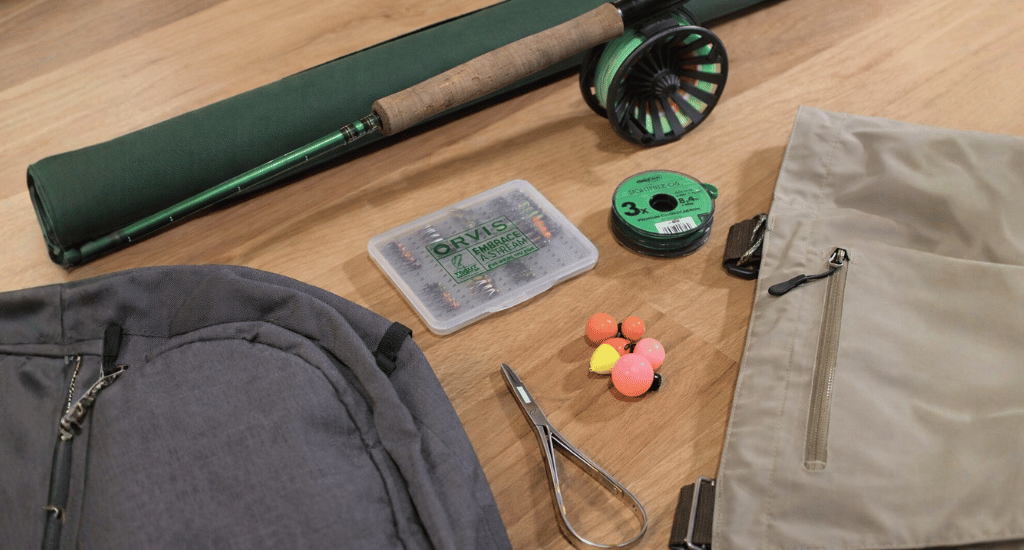
Lake fly fishing needs gear that casts far and keeps flies at the right depth. Wide water, light wind, and slow fish moves call for rods, lines, and leaders that give clean control.
Rod and Line Setup
A light rod suits small fish, while a strong rod helps with big lake species. A 4 to 5-weight rod fits trout and panfish. A 6 to 8-weight rod suits bass and pike.
- Rod length: 9’6” or 10’ helps long lake casts
- Floating line: best for dry flies and shallow nymphs
- Intermediate line: sinks slowly for mid-depth fish
- Sink tip or full sink: reaches deep-water fish
Leaders and Lake Tools
Long leaders help flies sink in calm water. Use 9 to 12 feet for most lakes. Fluorocarbon sinks and stays clear in water. Monofilament floats and costs less.
- Indicator: shows bites underwater
- Stripping basket: holds loose line
- Polarized glasses: cut glare and help spot fish
Best Flies for Fly Fishing in a Lake
Lake fish eat bugs, small fish, and tiny water life each day, so the fly choice matters a lot. The right size, color, and sink level help a fly look like true food to hungry fish.
Dry Flies for Lakes
Dry flies sit on the surface and copy adult insects. Adams, Callibaetis, Elk Hair Caddis, and Griffith’s Gnat work well on lakes. Use these flies when bugs float on water and fish rise to feed.
Nymphs and Emergers
Nymphs copy young bugs that live underwater. Pheasant Tail, Hare’s Ear, chironomids, and damselfly or dragonfly nymphs suit lakes. Pick a light or dark color based on the water tone and bug size near the bank.
Streamers and Wet Flies
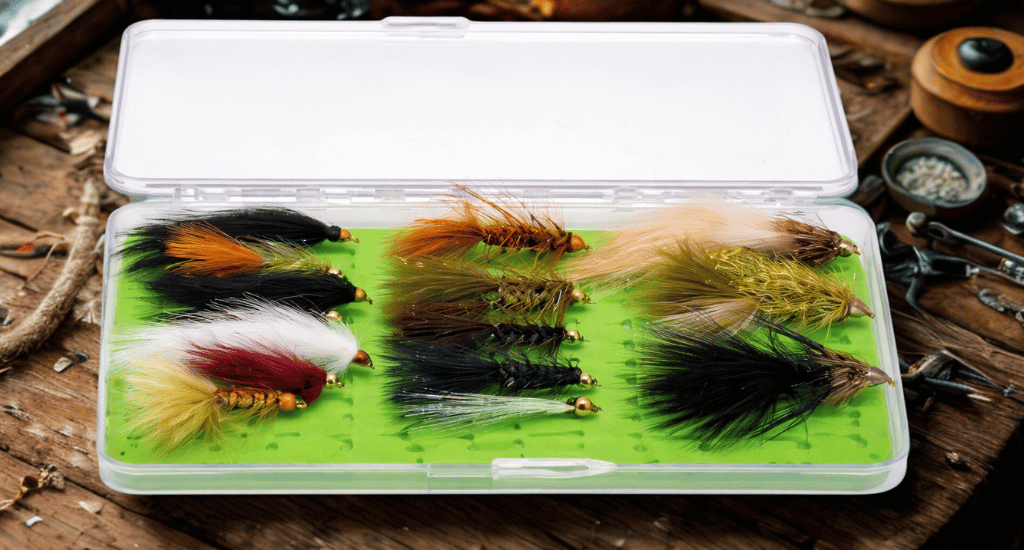
Streamers copy small fish and long insects. Woolly Bugger, leech flies, Zonkers, and minnow styles bring strong strikes. Dark colors work in cloudy water. Light colors suit clear water and bright days.
Flies that match the lake’s food bring more bites. Watch bug life on the water. Match the fly color and size with that food. This simple step helps fish trust the fly and take it with force
Conclusion
Fly fishing in a lake is not only possible but can be very rewarding. Calm water, open space, and varied fish make lakes an excellent place to enjoy the sport. With the right gear and approach, action is always possible.
Experiment with different flies, retrieves, and depths. Watch the water, notice fish behavior, and adjust your technique. Patience and observation turn quiet lakes into exciting fishing spots. Beginners should try lake fly fishing, which offers learning, fun, and the thrill of landing fish in a peaceful setting.
FAQs
Do you need a special fly rod for lake fishing?
Yes, you do need a special fly rod for lake fishing. A 4-7 weight rod, 9’6″ to 10′ long, with proper line gives better distance, control, and makes casting easier for lake species.
Is fly fishing in a lake better than spinning gear?
Fly fishing in a lake can be better than spinning gear for precise presentation. Flies imitate insects naturally, allow long casts, and help spot fish visually, giving an advantage over spinning in stillwater environments.
How deep can you fly fish in a lake?
You can fly fish in a lake from the surface down to deep water. Floating lines work for top- and mid-depth fish, while sink-tip or full-sinking lines let anglers reach deeper zones where fish feed.