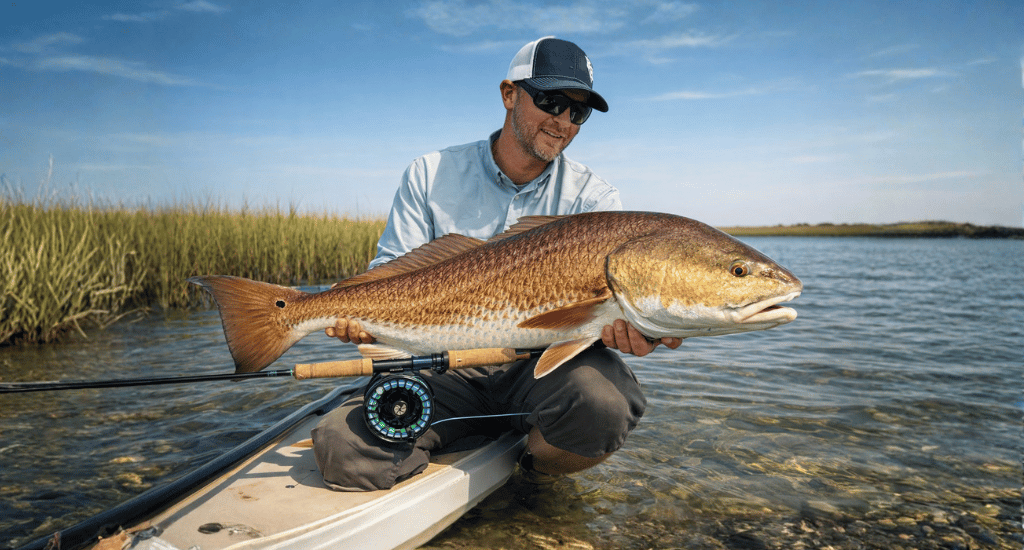
Redfish shine in shallow coastal waters, flashing copper sides as they hunt for crabs and shrimp. Fly fishing for redfish offers a rare chance to spot them tailing in the grass and cast with precision, making every catch feel like a small victory.
Anglers love the challenge of moving quietly across flats and presenting a fly just right. Sight-casting excites beginners and pros alike, and using a 9-foot, 8- or 9-weight rod with shrimp or crab patterns brings the experience to life.
This guide will show you where redfish gather, how to approach them, and which flies work best. Read on to learn practical tips for successful fly fishing for redfish.
Key Takeaway: Fly Fishing for Redfish
- Fly fishing for redfish works best in shallow flats with clear water.
- Tailing fish and surface wakes help you spot redfish fast.
- A 9-foot, 8- or 9-weight rod gives good control and reach.
- Crab, shrimp, and minnow flies attract redfish well.
- Quiet movement and steady strips lead to more strikes.
Effective Fly Patterns for Redfish
Choosing the right fly is key to success on the flats. Redfish respond well to patterns that look like crabs, shrimp, or small baitfish. Using the right fly makes sight-casting more exciting and increases your chance of a solid hookup.
Crab Patterns
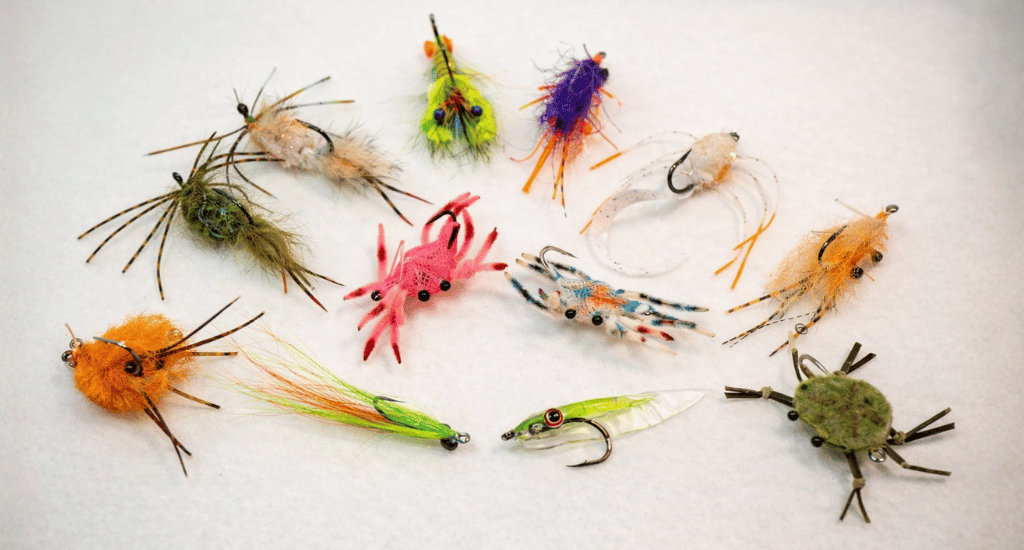
- Plantation Crab: This fly mimics a small crab moving along the bottom. Strip it slowly in 12-16 inch pulls to match the crab’s natural steps. Redfish often strike when it pauses, so keep your line ready.
- Borski’s Chornobyl Shrimp: Shaped like a shrimp, this fly works well in shallow grass or oyster flats. A steady medium-speed retrieve with short pauses brings it to eye level, tempting reds to hit it aggressively.
Shrimp Patterns
- RIO Guido Shrimp: This fly looks like a tiny shrimp feeding near the surface. It floats lightly and sinks slowly, perfect for sight-casting to tailing redfish. Use steady strips to imitate natural movement.
- Redfish Scampi: A versatile shrimp pattern that triggers strikes in both clear and murky water. Strip it in smooth, even pulls and watch for sudden bursts as reds attack from below.
Minnow Patterns
- Clouser Minnow: This fly imitates small baitfish, ideal for reds hunting near mangroves or channels. Strip it steadily with short pauses to let it sink, and keep your line tight for fast hook sets.
- Bendback: A minnow-style fly with subtle movement. Its slender profile appeals to cautious reds. Gentle, consistent strips work best to make it appear like a real fish gliding through the water.
Topwater Flies
- Crease Flies: These flies create small surface splashes, exciting reds into explosive strikes. Ideal for calm mornings, strip them in short, sharp pulls to imitate crabs or shrimp hopping on the water.
- Gurglers: A classic topwater pattern that floats and moves erratically when pulled. Use long, slow strips with pauses to entice redfish, especially on shallow flats where tailing fish are visible.
Key Fly Fishing Tactics and Techniques for Redfish
Success on the flats depends on how you approach, cast, and present your fly. Redfish notice movement quickly, so combining stealth, sight-casting, and correct retrieves greatly improves your chance of a solid hookup.
Approach & Stealth
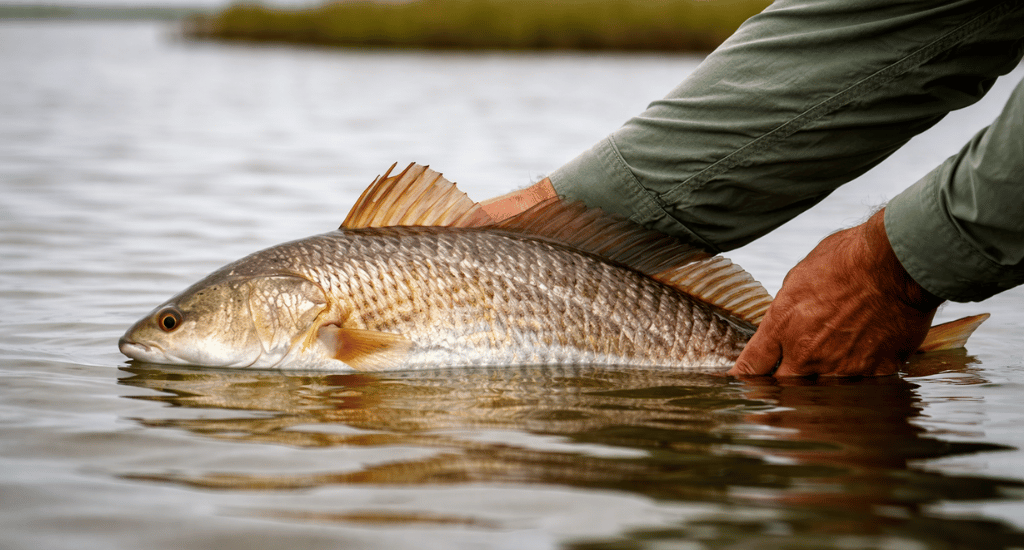
Redfish spook easily in shallow, calm water. Move slowly and quietly across the flats. Make long, accurate casts from a distance to avoid alerting the fish. Small, careful steps keep you hidden while presenting your fly naturally.
Sight Casting
Look for tailing redfish or wakes on the water surface. Cast slightly ahead of them so the fly drifts into their path. Let it sink to eye level, giving fish time to strike with confidence.
The Retrieve
Pull the fly steadily in medium-speed strips of 12- 16 inches. Pause occasionally to let it sink. If a fish ignores the fly at first, keep stripping; it may circle back and strike when it seems safe.
Hook Set
Do not lift the rod like a trout set. Instead, use a strong strip-set by pulling the line toward you with the rod tip low. This ensures the hook drives firmly into the redfish’s mouth.
Best Locations and Conditions for Redfish
Redfish gather in shallow waters where food is easy to reach. Knowing where to fish and when the conditions are right makes sight-casting exciting and increases the chance of a strike.
Prime Locations
- Shallow grass flats: Reds hunt here for crabs and shrimp.
- Oyster beds: These provide cover and attract baitfish.
- Mangrove edges: Fish linger along roots for food.
- Clear water: Easier to see tailing fish and cast accurately.
Ideal Conditions
- Tides: The incoming tide is often best, bringing fish onto flats.
- Seasons: Reds bite year-round. Winter in Louisiana can work, but fish may be slow at times.
- Water Depth: 3 feet or less allows effective sight-casting.
Advanced Tips for Successful Redfish Fly Fishing
Redfish respond to careful presentation and subtle adjustments. Small changes in casting, retrieval, or approach can make a big difference. These advanced tips help anglers connect with more fish and enjoy a more successful day on the flats.
- Long Casts: Casting farther keeps you out of the redfish’s sight and places the fly directly in their path, increasing the chance of a strike.
- Eye-Level Presentation: Keep the fly at the fish’s eye level while retrieving. It looks natural and tempts redfish to strike confidently.
- Double Hauling: Use this technique to add distance and line control, especially in windy conditions. It helps the fly reach wary fish farther away.
- Adjust Retrieve Speed: Watch how fish react and change your strip speed. Slower pulls or brief pauses often trigger strikes from cautious reds.
- Heavier Rods: A 10-weight rod works well for large “bull” reds. It gives power to fight big fish without sacrificing casting control.
- Stealth: Move quietly and avoid splashing. Minimal disturbance prevents spooking fish, keeping more opportunities for successful hookups.
End Note
Fly fishing for redfish rewards patience, precision, and careful observation. Using the right rod, reel, and fly patterns, combined with stealthy movements and proper retrieves, turns each cast into an exciting opportunity to see reds strike in shallow flats.
Whether you are a beginner or have some experience, practicing sight-casting and experimenting with crab, shrimp, or minnow patterns will improve your results. With the tips in this guide, you can enjoy the thrill of fly fishing for redfish and make every trip memorable.
FAQs
What is the best rod for fly fishing redfish?
The best rod is an 8- or 9-weight, 9-foot fast-action fly rod. For larger “bull” reds, a 10-weight rod works better. A properly sized rod helps with long casts, accurate presentation, and controlling strong fish.
Which flies work best for redfish?
Redfish respond well to crab, shrimp, minnow, and topwater patterns. Try Plantation Crab or Chornobyl Shrimp, Guido Shrimp or Redfish Scampi, Clouser Minnow or Bendback, and Gurglers or Crease Flies. Matching the fly to natural prey improves strikes.
Where do I find redfish?
You will find redfish in shallow flats three feet or less, oyster beds, grass flats, and along mangrove edges. Clear water helps sight-casting. Look for tailing fish or wakes, especially during incoming tides when fish move onto feeding flats.
How do I set the hook?
To set the hook, you can use a firm strip-set by pulling the line directly toward you with the rod tip low. Avoid lifting the rod like a trout set. This technique ensures the hook drives securely into the redfish’s mouth.