Fly fishing for frogs is a topwater method that uses frog-patterned flies to trigger bass and pike. It works best around low light and shade, especially early morning, evening, and cloudy days. Fish deer hair or foam frog imitations along lily pads, shorelines, docks, and undercut banks.
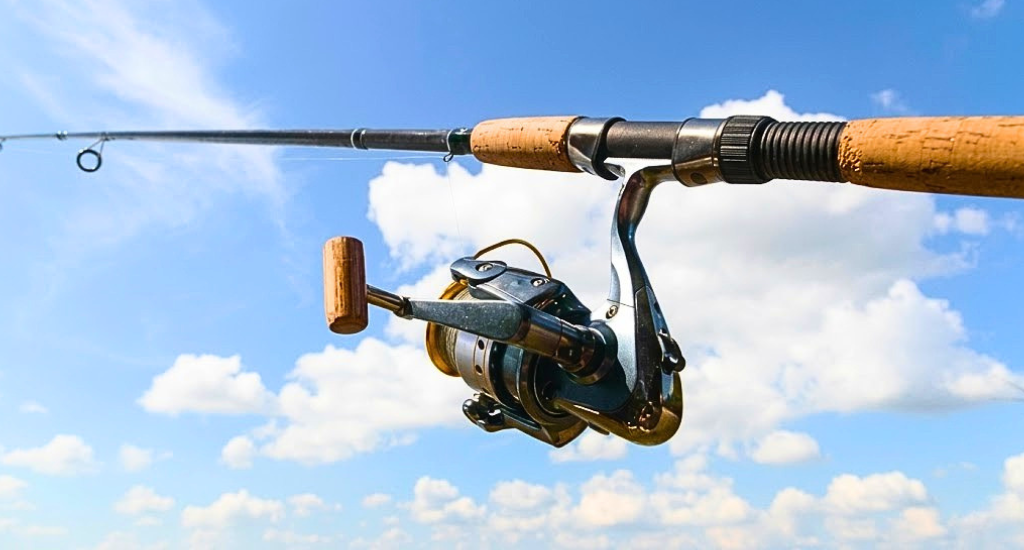
Cast tight, pop with control, and pause until the ripples fade. Run a 6 to 8-weight rod with a sturdy weight-forward floating line so you can turn over bulky flies and pull fish from cover.
This guide shows exactly how to fish frog flies. You will learn which patterns work, how to retrieve them, where each species holds, and when the frog’s bite peak occurs. Everything is built for clear answers and real results in 2026.
Why Predatory Fish Target Frogs
Frogs are a high-value prey item. Predatory fish hit them hard because the meal is large, easy to track, and worth the effort in an ambush-feeding setup.
- High protein meal: Frogs deliver more protein content than most insects and small bait.
- Easy target in open water: Frogs swim exposed, so ambush feeding fish get clean shots.
- Long seasonal forage base: Frogs stay in the forage base most of the year, except in deep winter.
- Movement triggers strikes: Frog kicks, and pauses trigger predatory instincts fast.
- Habitat overlap is common: Frogs share edges with bass, pike, and trout in weedy zones.
Best Frog Fly Patterns and When to Use Each
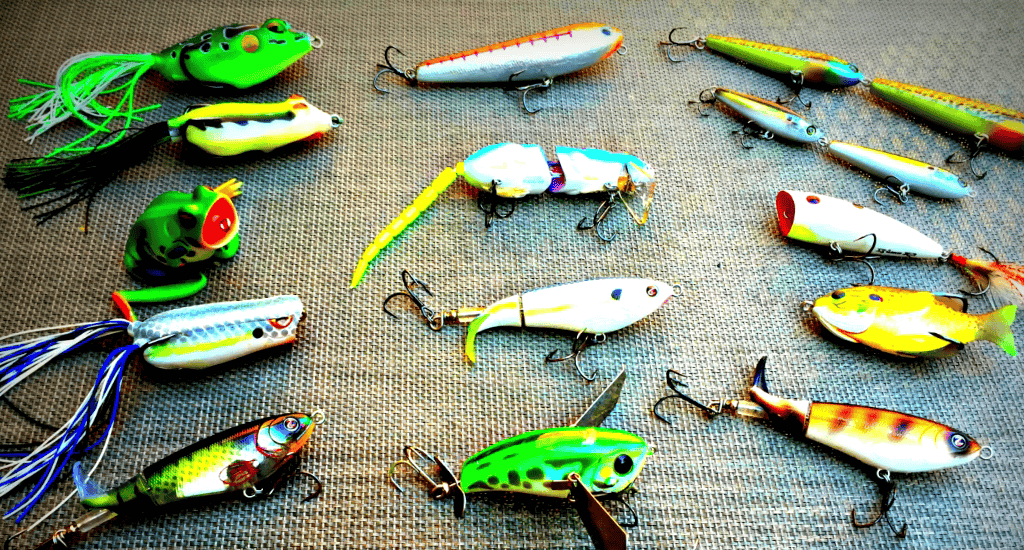
Frog flies are confidence baits on a fly rod. They draw violent eats from bass, pike, and big panfish. Pick patterns by cover, water clarity, and fish mood. Match the profile first, then match the action.
| Pattern Type | Best Water Clarity | Fish Activity | Best Retrieve | Size Range | Best Colors (Go-To) |
| Deer Hair Popper | Stained to Clear | Aggressive | Pop-pause | #2 to 2/0 | Natural in clear, High-vis in stain, Two-tone anytime |
| Foam Popper | Clear to Slight Stain | Moderate to Active | Pop-pause | #4 to 1/0 | Natural in clear, Two-tone anytime, High-vis in low light |
| Diver / Slider | Clear | Pressured | Strip-pause | #2 to 1/0 | Natural + Two-tone, High-vis only when needed |
| Tadpole | Clear | Any | Slow twitch + pause | #6 to #8 | Dark natural (black, olive, brown), Two-tone if glare is high |
What Are Deer Hair Frog Poppers and Why Are They So Popular?
Deer hair frog poppers are loud topwater flies. They call fish up fast. They have a spun-deer-hair body, a concave face, and rubber legs. They also throw a clean silhouette in weeds.
The pop is the whole deal. A hard strip makes a “bloop” and surface disturbance. Fish them for aggressive bass in lily pads and open pockets. Use Dahlberg Diver, Whitlock’s Swimming Frog, Umpqua Swimming Frog, or Boogle Bug.
Match size to target. Throw #6 for bluegill and panfish. Fish #2 to 1/0 for bass. Step up to 1/0 to 3/0 for pike. Add Thin UV Glue on the belly so it lands right. Cut the weedguard for better hookups, except in heavy slop.
How Do Foam Frog Poppers Compare to Deer Hair Patterns?
Foam frog poppers are easy-casting surface flies. They stay light, float high, and take abuse. They use 2mm or 4.5mm foam, plus foam legs or rubber legs. Semperfli foam is a common build choice.
Foam wins on castability. It tracks better in the wind and throws farther with less effort. It also lasts longer after misses and bites. Fish RIO Foam Slice Frog, Surface Seducer Double Barrel Bass Bug, or a Gurgler style frog.
Foam shines in low water and bright days. It sits with its legs in the film and its head up. That profile looks natural to cruising fish. Work it all day with pop-and-pause. Let it sit longer when fish follow.
When Should You Use Diving and Slider Frog Patterns?
Diving and slider frogs are subtle surface-to-sub flies. They fool pressured fish. They use a streamlined head and a tall hair collar. The shape helps the fly dive, then float back up.
The action mimics a swimming frog. A strip makes it dip and push water. A pause makes it rise like real prey. Fish Whitlock’s Diving Frog, Pat Cohen’s Deerhair Slider, or Pat Cohen’s Deerhair Diver.
Use them in clear water. Use them when fish are spooky. Use them when poppers get refused. Work slowly with long pauses. Keep the fly in the lane longer. This style also covers variable depth without changing flies.
Why Are Tadpole Patterns an Overlooked Opportunity?
Tadpole patterns are small, easy bites. They get eaten when the frogs feel too big. They match spring and early summer life stages. They also look harmless to cautious fish.
Keep them short and dark. Tie 1 to 1.5-inch bodies with a small tail. Add a foam head or epoxy head for lift. Run #6 to #8 hooks like Kona Big Game Hunter. Fish them from April through June.
Target bass, bluegill, and panfish. Bass often sips them rather than crushes them. Twitch the fly with tiny taps and long dead stops. Use a lighter tippet, around 8 lb, for better action. This is a quiet pattern for clear water days.
How Do You Retrieve Frog Flies for Maximum Success?
Frog fly retrieves win on timing first. You get more eats by controlling pause length, rod angle, and ripple dissipation. Fly fishing for frogs is simple when you pick one cadence and commit to it.
| Water condition | Best retrieve | Pause length | Rod angle |
| Stained water | Aggressive pops | 1 to 2 seconds | 10 o’clock |
| Clear water | Dead-stick | 15 to 30 seconds | Low, 9 o’clock |
| Windy or choppy | Continuous twitch | Minimal | 10 o’clock |
| Calm or glassy | Pop-and-pause | 5 to 10 seconds | 10 o’clock |
| Heavy current | Mending drift | N/A | Variable |
1. The Classic Pop-and-Pause (Standard Approach)
Pop-and-pause is the baseline retrieve. It triggers ambush feeding with surface disturbance. It works best on active bass. It shines mid-morning through the afternoon.
Cast beyond the target, then let it settle for 2 to 3 seconds. Pop with a sharp wrist pop at a 10 o’clock rod angle for a loud bloop. Pause 1 to 2 seconds in stained water, or 3 to 5 seconds in clear water. Let the ripples from your last pop disappear completely before popping again.
2. Continuous Twitch and Aggressive Retrieve (Feeding Frenzies)
Continuous twitch is the chase trigger. It sells a fleeing frog with panic movement. It fits schooling fish and blowups. It excels in warm water.
Work rapidly with 1-inch twitches & minimal pauses. Keep the cadence fast and erratic, not smooth. Run it during post-spawn aggression from late May to June. Lean on it in 75 to 85°F water when bass are blowing up baitfish. Smallmouth bass often prefer this faster look.
3. Dead-Stick and Mending Approach (Pressured Fish)
Dead-stick is the commitment maker. It beats ultra-clear water and pressured fish. It keeps the fly in the strike zone. It forces slow, deliberate eating.
Cast and let the fly settle with zero movement. Wait 15 to 30 seconds, then add one subtle twitch. Count to 20 before your first twitch when fish follow but refuse. Currently, switch to mending for a dead-drift. Cast along the structure and only mend the line so the fly stays put.
4. Swimming Retrieve (Diver Patterns)
Swimming retrieve is the natural mover. It matches diving frog designs and sliders. It mimics a swimming frog that dips. It works in open water lanes.
Strip steadily and slowly in 6 to 8-inch pulls. Pause briefly so the fly can resurface and breathe. Fish it between cover and along edges where fish cruise. Use it for spooky fish that avoid loud pops. Let the dive-and-resurface do the selling, not speed.
Hook-setting timing decides most eats. Do not sit on the splash on the bass. Wait until the fish goes completely under before setting the hook. Set immediately on the pike because the mouth is bony.
How Do You Target Different Species with Frog Flies?
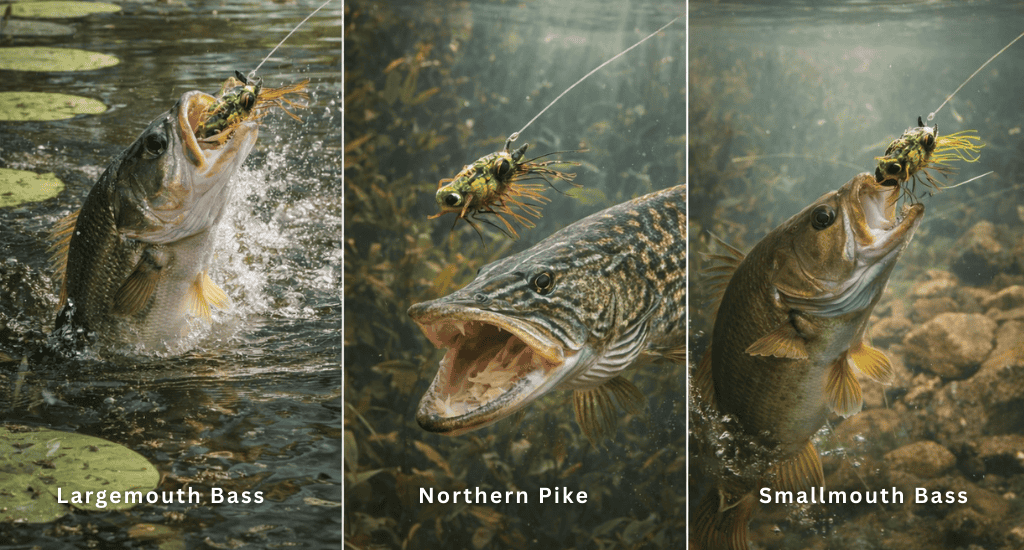
Frog flies target predators that hunt shallow water. You win by matching cover, cadence, and hook timing to the species. Fly fishing for frogs becomes consistent when you fish the right zone and make clean casts.
Largemouth Bass
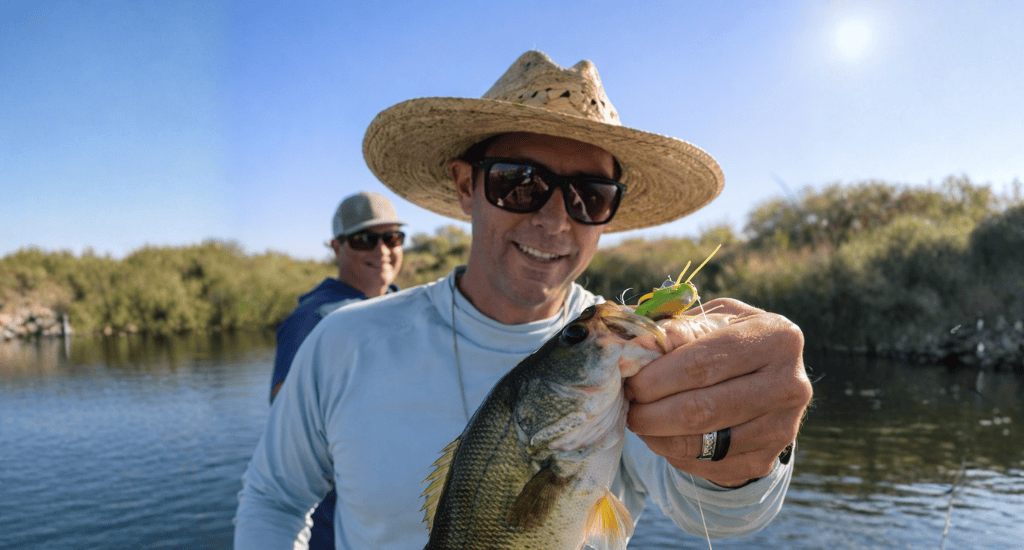
Largemouth bass crush frog flies in heavy cover. Target lily pads, grass mats, docks, and logjams, and land the fly inside an 8-foot zone of interest. Fish pop-and-pause with 2 to 3 second pauses, and let it sit 5 to 10 seconds in pockets first. Hit dawn 6-9 am and dusk 6-9 pm, and expect the best bite at 70-85°F, with overcast extending the window.
Throw a 9-foot fast-action 7-8 weight rod, a bass bug taper line (Scientific Anglers Bass Bug Taper or RIO Bass), and a 7.5-foot leader, 30lb to 20lb to 15lb. Use weedless hooks, a micro swivel, and a loop knot.
Northern Pike
Northern pike eat frog flies on reaction. Target shallow weed bays, pad edges, and weedy shorelines, and focus on fish 30 inches plus in vegetation. Fish oversized frog poppers on 1/0 to 3/0 hooks, and move them with aggressive strips and 1 to 2 second pauses. Set immediately and hard, because a pike’s bony mouth and fast hit punish hesitation.
Rig an 8 to 9-weight rod for wind-resistant flies, plus a bright fly line for tracking in weeds. Add a heavy leader with a 30 to 40lb butt section, and always run a wire bite tippet. Use 12 to 18 inches of 20 to 30lb wire, because teeth cut mono and fluoro fast. Fish June through August on northern lakes.
Smallmouth Bass
Smallmouth bass eat frog flies with speed. Target rocky structure in rivers, not weeds. Fish rocky points, drop-offs, boulder banks, plus eddies and slack water near seams. Downsize to #4 to #6 frog patterns, 1 to 2 inches.
Retrieve with aggressive continuous twitch and short pauses. Land tight to rocks, keep the fly moving like it is escaping, and stay accurate because rocks punish sloppy drifts.
Can You Use Frog Flies for Trophy Trout at Night?
Trophy trout take frog flies at night. Big brown trout and rainbow trout hunt banks where frogs live, often more than mice. Fish dusk through midnight on low-elevation streams. Focus on deep pools and undercut banks.
Skate or wake the fly like mouse fishing, but retrieve slower and pause longer. Throw dark colors like black or brown for the silhouette. Fish Ed McCoy’s Amphibious Assault, and use articulated designs for better hookups. Wait for the weight before lifting.
When and Where Should You Fish Frog Flies?
Frog flies peak in warm water. Fish summer first because 70 to 85°F drives frog movement and topwater feeding. Work dawn to dusk, then fish all day on overcast days.
Shift to spring at 55-65°F, with tadpole patterns and slower retrieves. Fish fall in the 65 to 75°F range with bigger meals. Skip winter below 55°F and go subsurface. Target lily pads, grass mats, hydrilla, milfoil, docks, logjams, and undercut banks in 1 to 3 feet.
| Time Period | Water Temp | Best Retrieve Speed | Success Rate |
| Dawn (6-9am) | Any | Moderate | Excellent |
| Mid-morning (9-11 am) | 70°F+ | Slow | Good |
| Midday (11am-3pm) | 75°F+ | Dead-stick | Fair |
| Afternoon (3-6pm) | 70°F+ | Moderate | Good |
| Dusk (6-9pm) | Any | Moderate-Fast | Excellent |
| Night (9pm-midnight) | 65°F+ | Slow skating | Good (trout) |
Essential Gear Setup for Frog Fly Fishing
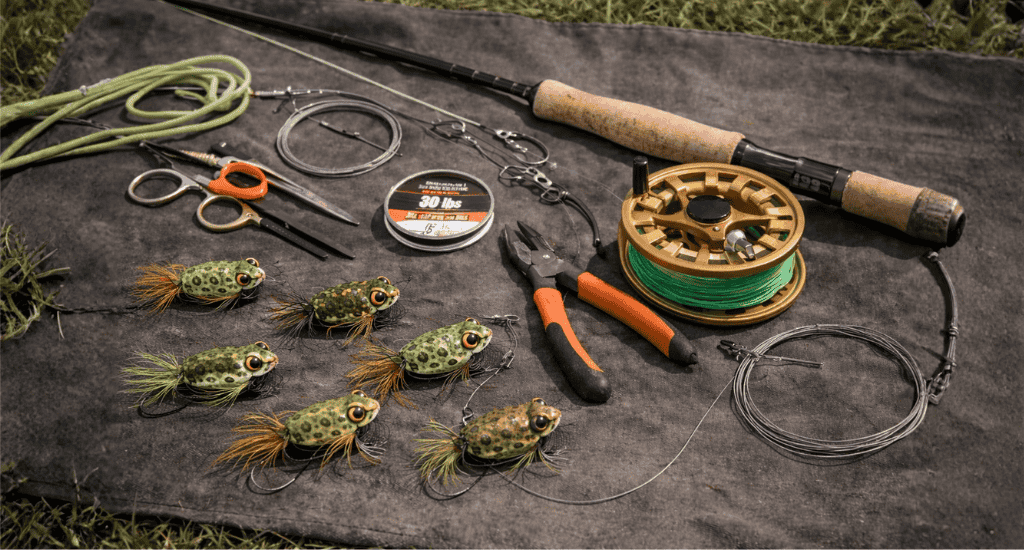
Frog fly gear needs control in the cover. The right setup casts wind-resistant frog flies, drives solid hooksets, and keeps fish pinned in weeds. Keep it simple, durable, and sized for bass or pike.
Here are some essential gears:
- 9-foot fast action fly rod: Best control; accurate casts, hard hooksets, strong line control.
- 7-weight rod: Best bass standard; turns frog flies, handles pads, fights clean.
- 8 to 9-weight rod: Best pike upgrade; throws 1/0 to 3/0 frogs in wind.
- Large arbor reel: Best pickup; clears slack fast and stays smooth under pressure.
- Strong drag system: Best weed tool; stops runs before fish buries in cover.
- Weight-forward floating line: Best surface line; loads quickly and mends clean.
- Bass bug taper line: Best turnover; flips bulky poppers on short, accurate casts.
- 7.5-foot stout leader: Best turnover; lands frogs straight and reduces twist.
- Micro swivel: Best twist fix; prevents leader spin from rotating frog patterns.
- Wire bite tippet: Best pike safety; 12 to 18 inches stops bite-offs.
Other accessories: Polarized sunglasses for tracking eats, fly floatant like Gink or Loon Aquel for deer hair, long-nose pliers and forceps for fast unhooking, nippers, a fly patch for quick swaps, and hard monofilament leader material for better turnover.
Common Mistakes & Advanced Tips to Overcome Them
Hookups drop fast with frog flies because bass often miss first. Fix timing first, then fix distance and pause control. This section builds on your retrieves and gear setup, so you can keep fish pinned and still fish lily pads, grass mats, and docks.
- Strike zone control: Over-stripping drags the fly out of the lane. Pop once, then pause, and move it inches with short strips.
- Ripple timer: Popping again too soon looks wrong. Let the ripples from your last pop disappear completely before popping again.
- Zone of interest: Landing too far wastes good targets. Put the frog within an 8-foot circle of cover, then work pockets and edges.
- Weedguard tuning: Thick weedguards can block hookups. Trim or remove in open water, keep full weedless hooks only in heavy slop.
- Leader twist control: Spinning frogs twist leaders and ruin tracking. Add a micro swivel above the tippet and keep the leader straight.
- Deer hair landing right: Sideways landings kill the pop. Add Thin UV Glue to the belly so the fly keels upright.
- Store-bought fly tuning: Stock legs and buoyancy can be off. Trim the rubber legs for balance, and add floatant to the deer hair so it rides high.
Conclusion
Frog flies are a topwater shortcut to big eats. They match a high-protein prey item, slide through heavy cover, and trigger ambush feeding from bass, pike, and even trophy trout. Use the right pattern for the cover, then lock in one retrieve and let the pause do the work.
Time your trip to water in the 70 to 85°F range, fish the pad edges and pockets, and stay disciplined with hook timing so you do not pull the fly away.
For more proven patterns, retrieves, and species-specific tactics, check All for Fishing’s other articles. You will find expert fly fishing techniques, gear guides, and location breakdowns to help you catch more fish on every trip.